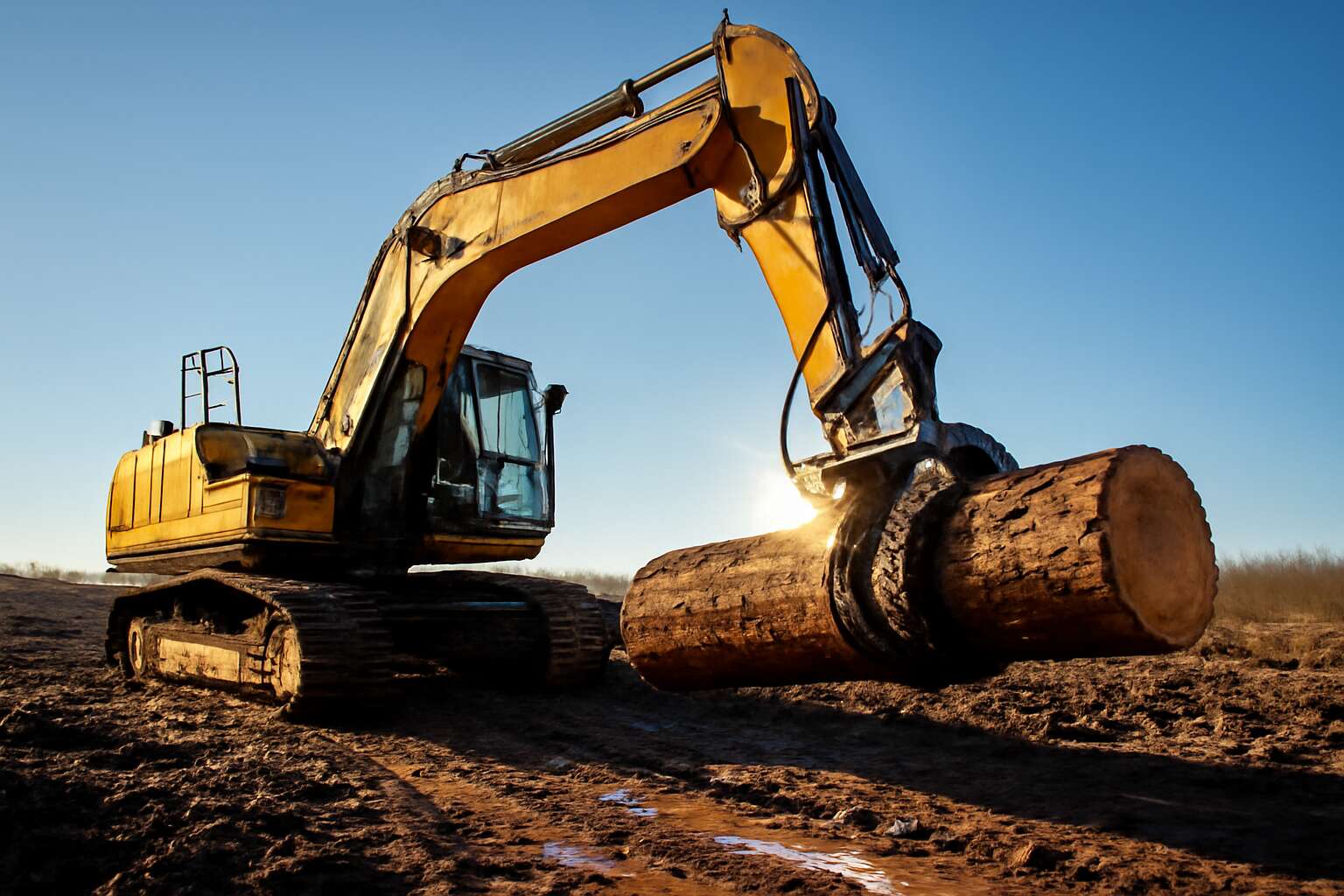
Understanding hydraulic thumbs on excavators
What is a hydraulic thumb and how it works
Understanding hydraulic thumbs on excavators starts with the notion that the thumb acts as a controlled second hand, turning a bucket into a nimble grappling tool. On South Africa’s rugged sites, I’ve seen crews report up to a 25% boost in material handling when an excavator with thumb joins the fleet. Impressive, right?
How it works is straightforward. A hydraulic cylinder mounted beside the bucket pushes the thumb through a compact arc, allowing grab, cradle, and release with steady, predictable force.
- Mounted to the dipper arm with solid pins
- Hydraulic actuation from the same circuit as the bucket
- Adjustable grip range for varied materials
That synergy—between hydraulic power and careful positioning—defines the appeal of the excavator with thumb: it expands reach, reduces cycle time, and adds finesse to tough jobs.
Key benefits of a thumb attachment for excavators
Across South Africa’s rugged sites, the value of a thumb attachment goes beyond grip. Operators report noticeable gains in material handling when working with an excavator with thumb—a lean partner that can sort, cradle, and place in one pass. The result is smoother cycles and less manual effort on challenging loads of rock, timber, or scrap.
Here are the standout benefits that help crews push projects forward:
- Expanded grip range to tackle diverse materials without switching tools
- Faster cycle times thanks to secure grabs and controlled releases
- Enhanced safety with fewer manual interventions and safer material handling
Coupled with durable construction and straightforward maintenance, the thumb preserves reach while adding finesse on tight sites, making the work feel lighter even on the harshest days.
Common configurations and mounting options
On South Africa’s rugged sites, the excavator with thumb becomes a partner, not a gadget. Operators say the thumb’s bite turns tricky material handling into a smooth, one-pass task. Understanding hydraulic thumbs on excavators means recognizing how different configurations tune reach, force, and finesse for the job at hand.
Common configurations balance reach with control. Pin-on thumbs enable quick swaps and easy rotation, while weld-on frames offer rock-solid reliability for heavy lifting. Some setups connect to a dedicated hydraulic circuit to maintain consistent grip pressure, protecting the system on variable loads. For mounting, most South African fleets ensure compatibility with existing quick-couplers so the excavator with thumb fits seamlessly with the bucket and other attachments.
Mounting options vary, letting teams tailor the setup to the job at hand. Consider these common approaches:
- Pin-on thumbs — quick, tool-free attachment to the bucket
- Weld-on frames — maximum rigidity for heavy-duty work
- Bolt-on adapters — flexible compatibility with older buckets
Thumb materials and durability for demanding jobs
Across South Africa’s rugged sites, an excavator with thumb becomes a partner, turning rough material into clean piles in a single pass. A veteran operator quips, “The thumb is the hinge between effort and outcome.”
Thumbs are forged from high-strength steel and heat-treated for fatigue resistance, built to chew through tough clay, shale, and rubble. In demanding jobs, durability matters as much as grip pressure, and coatings guard against abrasive dust and moisture common in SA environments. Here are key material choices:
- Forged high-strength steel for rigidity
- Heat-treated components for fatigue resistance
- Protective coatings against corrosion and abrasion
- Seals and wear plates engineered for grit and dust
These choices tune how sharply the thumb bites, how it travels, and how long it serves in relentless South African terrain.
Applications and use cases
Urban demolition and debris handling
In South Africa’s bustling urban sites, debris management can consume a full third of a project schedule—until the right machine steps in. The excavator with thumb turns chaotic rubble into tidy, sortable piles with surgical precision, reducing manual labor and speeding up clearance. A well-handled grab means safer streets for pedestrians and fewer close calls for operators, a small revolution in the way demolition teams work.
Key applications and use cases include:
- Precise debris sorting and material separation for recycling on site.
- Safe lifting and placement of heavy components without damaging nearby structures.
- Rapid cleanup of sidewalks, stairwells, and constrained urban work zones.
From street-level redevelopment to storm debris cleanup, this setup keeps sites orderly when space is tight and regulations are strict, and it does so with a touch of quiet efficiency that South Africa’s busy cityscapes deserve.
Landscaping and material sorting
On South Africa’s busy landscapes, a neatly ordered site can shave weeks off a project. In the right hands, up to 40% of landscape debris can be redirected on-site, turning rubble into ready-to-use material rather than waste.
Landscaping and material sorting hinge on a sculptor’s precision. The excavator with thumb shuttles boulders, mulch, and subsoil into tidy piles, ready for reuse or recycling. It reshapes contours, separates topsoil from rubble, and makes irrigation layouts easier to install.
- On-site material sorting to reclaim topsoil, mulch, and aggregates
- Safe lifting and precise placement of landscape features without damaging surrounding structures
- Rapid cleanup of tight courtyards and stepping-stone pathways
From municipal parks to private estates, this setup blends efficiency with care, leaving spaces ready for planting and play.
Utility and pipeline work
In municipal and private utility corridors across South Africa, every trench counts. Some South African crews report up to 30% faster trenching with an excavator with thumb, keeping service lines safe and projects on schedule.
Utility work requires controlled lift and exact pipe placement. The thumb lets operators grab heavy pipe sections, align joints, and position bedding with minimal disturbance to surrounding soils and existing assets.
- Precise pipe handling and alignment
- Trenching around utilities with minimal disturbance
- Clean backfilling and bedding to protect lines
- Debris removal and site tidying around trenches
Compact spaces, such as curbside plots and industrial yards, are where this setup shines, turning tight corridors into smooth workflows and reducing risk to utilities.
Forestry and root removal
In South Africa’s rugged landscapes, a single attachment can rewrite forestry work. Some operators report up to 25% faster root removal with an excavator with thumb, turning stubborn root mats into orderly, recoverable treasure and protecting the living soil as if it were a gem.
Forestry and root removal demand finesse as much as force. The thumb offers a sure grip on irregular root balls, tangled brush, and debris, letting operators sort, lift, and place without raking soil or bruising saplings. It reads the site like a story, shaping clean cuts and a tidy recovery.
- Root ball isolation and extraction with minimal soil disturbance
- Branch and brush feeding into chippers for neat separation
- Stump nudging and precise positioning for rehab planting
- Path clearances that protect young growth and soil structure
Buying guide and specifications
Size, capacity, and weight considerations
As South Africa’s construction rhythm quickens, the excavator with thumb emerges as a beacon of versatility. A recent industry pulse reports a 22% uptick in demand for excavator with thumb attachments across Southern Africa. For buyers, this buying guide focuses on size, capacity, and weight considerations that shape performance on demanding jobs. Size, reach, and weight aren’t just numbers—they set the tempo of every lift.
- Size class and footprint to suit the site
- Lift capacity and reach to match the task
- Operating weight and transport needs for site mobility
Designed for landscapes of SA—quarries, farms, urban blocks. With the right balance, an excavator with thumb becomes a trusted companion on every job, turning clumsy rubble into orderly progress. In a market thirsty for efficiency, choosing the right size, capacity, and weight is the quiet magic behind durable results.
Hydraulic flow, pressure, and performance
Power, tempo, and a whisper-soft grip—an excavator with thumb can turn rubble into rhythm on any site! In Southern Africa, demand for this attachment has surged 22% this year, underscoring a shift toward nimble, controlled material handling. When buying, zero in on hydraulic flow, pressure, and performance to ensure the thumb responds with precision, even under heavy load, and keeps pace with your crew.
- Hydraulic flow (GPM or L/min): drives smooth opening/closing at working load
- Relief pressure (PSI or bar): protects the system during peak bites
- Cycle time and response: governs rapid sorting and debris handling
Match the thumb’s capabilities to the excavator’s engine and hydraulic kit for a seamless partnership on South Africa’s quarries, farms, and urban blocks.
Pin and mounting compatibility
Choosing the right pin and mounting kit for your excavator with thumb is not merely a purchase—it’s a guarantee of reliability on South Africa’s demanding sites. Start by confirming pin diameter and spacing, ensure the mounting pattern matches the machine, and verify compatibility with your hydraulic kit and cylinder strokes. A precise fit keeps the thumb snapping shut with accuracy, even under heavy loads and gritty conditions.
- Pin diameter, width, and spacing must mirror the machine’s mounting rails.
- Mounting style and quick-coupler compatibility with your model and ISO standard.
- Hydraulic control compatibility and safety features for uninterrupted operation.
Always reference the OEM specs and consult a South Africa dealer who understands the terrain—from quarries to farms to urban construction. For the excavator with thumb, the right pin and mounting kit reduces wear, minimizes downtime, and keeps your crew in rhythm with the job at hand.
Cost ranges, warranty, and ROI
On South Africa’s demanding sites, uptime is a currency you can’t overpay for. An excavator with thumb can redefine productivity, but price bands swing with size, mounting pattern, and hydraulic integration. In rand terms, basic mechanical thumbs start in the low five figures, while hydraulic, ISO-compatible kits can push into six figures—reflecting durability and robust dealer support.
- Cost ranges: roughly R25,000–R320,000 depending on size, mounting, and kit options.
- Warranty: standard 12–24 months, with extended terms and on-site service.
- ROI: improved cycle times, reduced wear, and lower downtime translate to long-term savings.
Shop with OEM specs in mind and a South Africa–savvy dealer network; the right choice protects uptime and returns on your excavator with thumb over the life of the asset. That way your excavator with thumb stays a reliable partner across SA’s quarries, farms, and city builds.
Maintenance, safety, and best practices
Routine inspection and wear checks
Under a bruised South African sky, the excavator with thumb keeps a silent vigil—an iron heartbeat that thrives on care. Maintenance is a ritual that guards power, preserves seals, and quiets stubborn creaks of age.
Safety reads like a shared oath: proper PPE, secure mounting, and a respectful distance from moving parts. A mindful operator acts as a shield against the chaos of the jobsite.
Routine inspection and wear checks form the spine of reliability, a gothic vow that the machine rises to the call again and again. The following observations sustain that trust:
- Visual wear on pins, mounts, and quick‑couplers
- Hydraulic lines and seals for leaks or abrasion
- Cleanliness and protection of exposed surfaces
Lubrication, grease points, and service intervals
Lubrication is the quiet hero on a South African jobsite, and downtime is a luxury no one can afford. A disciplined grease routine keeps hydraulics smooth, seals intact, and the machine ready to answer the call.
Grease points are the machine’s best friends—and worst enemies if neglected. For an excavator with thumb, the pins, mounts, swing gear, and the thumb pivot deserve keen attention; dust and heat conspire to turn precision into slack.
Safety comes first, and maintenance is a pact with the job’s tempo. Keep a steady lubrication cadence, honor service intervals, and use OEM-approved lubricants that stand up to South Africa’s dust, heat, and long horizons.
- Lubrication discipline: stick to the recommended grease points
- Grease points: monitor pins, mounts, and the thumb hinge
- Service intervals: align with OEM guidance and site conditions
Safe operation, training, and PPE
On South African job sites, downtime is the real cost of corner-cutting. Up to 30% of unplanned stops come from skipped checks and a lax safety mindset. The excavator with thumb thrives when maintenance is predictable and safety is non-negotiable; a practiced operator keeps rhythm with the machine and respects its pinch points.
Safe operation hinges on proper training, clear communication, and PPE that fits like it should. Before work begins, run through a brief site briefing, confirm load paths, and observe access zones. PPE is not an accessory; it’s the first line of defence against dust, heat, and flying debris.
- Hard hat with chin strap
- Safety glasses or goggles
- High-visibility clothing
- Steel-toe boots and gloves
With disciplined habits, the machine answers the call—and the site stays productive.
Troubleshooting common issues and signs of wear
Downtime costs South African sites big: up to 30% of unplanned stops come from skipped checks and a lax safety mindset. For an excavator with thumb, maintenance becomes rhythm, not reaction. When seals leak, pins loosen, or the thumb grip stiffens, productivity drops and costs rise fast. A proactive stance keeps this machine humming.
- Oil leaks at fittings or hoses
- Worn or cracked thumb teeth
- Loose pins or mounts
Troubleshooting starts with simple signs: oil seepage, unusual vibration, or erratic response from the thumb all indicate wear. This applies to the excavator with thumb, too. Quick visual checks and adherence to service intervals help catch issues early.
Parts availability and service options
On South African sites, downtime from skipped checks costs up to 30% of unplanned stops. With an excavator with thumb, maintenance isn’t a reaction; it’s part of the workflow that keeps money from leaking away and work on track. A steady rhythm of inspection and minor adjustments protects both machine and margins.
Safety starts with a culture that treats oil seepage, loose pins, or a stiff grip as signals to pause and evaluate, not ignore. When maintenance is baked into daily routines, the thumb stays responsive and dependable across tough jobs.
Parts availability and service options matter, and the right network makes all the difference.
- OEM and trusted aftermarket parts availability
- Authorized dealers with reliable stock
- Mobile service teams for on-site support



0 Comments