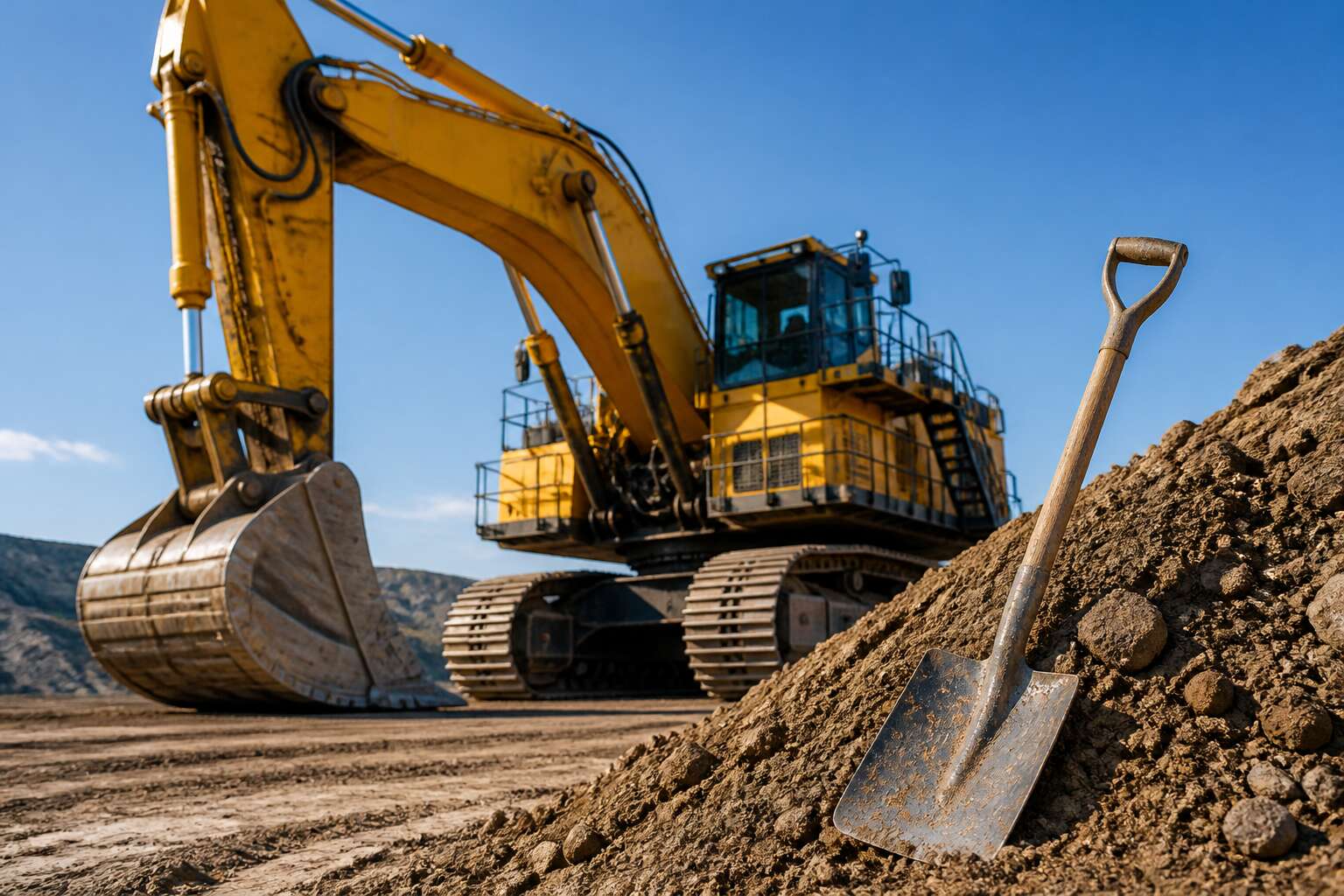
Understanding the Digging Equipment Landscape
In South Africa, the excavator vs shovel debate is not about which tool ends up in your garage. It is about understanding how machines and muscle divide the work of moving earth. The average hydraulic excavator can shift more material in an hour than a team of twenty workers with hand tools can manage in a full day. That is a stark difference!
But the choice is rarely simple. A shovel costs a fraction of the price, starts instantly, and never needs a service plan. In tight spots, it remains the only practical option. Consider the key gaps:
- Access: shovels fit anywhere, excavators need space.
- Output: an excavator wins by volume, every time.
- Cost: shovels are cheap, but slow.
For a small foundation or a garden trench, a shovel makes sense. For bulk earthworks on a plot in Gauteng, the excavator is the only sane answer. In the excavator vs shovel matchup, the winner depends entirely on the task at hand.
Performance and Capability Differences
There is a world of difference between raw force and human finesse. The excavator vs shovel debate often ignores this basic truth. Machinery brings brute power, moving tonnes of earth in a single, controlled bite. A shovel, however, operates on a different scale entirely. It provides a level of surgical precision that no bucket or arm can ever replicate.
Consider the specific performance attributes of each tool:
– The excavator excels at bulk excavation, trenching, and demolition, performing heavy lifting with hydraulic efficiency.
– The shovel relies on human leverage and stamina, making it ideal for planting, clearing debris, or working in tight spaces.
– Excavators quickly lose efficiency on soft, muddy ground where they sink and struggle to gain traction.
– A shovel is nimble and adaptable across any terrain, from rocky highveld soil to waterlogged coastal sands.
For massive earthworks, speed is crucial, yet for detail work, the shovel reigns supreme. Where an excavator must fight gravity, a shovel works with it. This fundamental difference in capability determines the success of any project, whether it is a large-scale mining operation or a simple home garden.
Cost Analysis and Return on Investment
A shovel costs R400. An excavator costs R4 million. The math seems clear until you factor in the true cost of your own spine. In South Africa, where labour rates and site delays bite hard, the cost analysis swings on volume. A weekend trench in Sandton barely justifies a fuel bill. A bulk earthworks job in Midrand will bankrupt you with a spade.
The excavator vs shovel debate gets properly spicy when you calculate return on investment. Here is the unglamorous truth from my own project ledger:
- Shovel overhead: R400 once, plus R900 in chiropractor visits.
- Excavator overhead: operator wages, diesel, hydraulic fluid, and the quiet despair when a seal blows.
The excavator’s ROI only appears past three hundred cubic metres. Below that, you are simply paying for the privilege of not sweating. The shovel never needs financing. It also never gives you a lunch break.
Safety, Training, and Environmental Impact
The excavator vs shovel debate rests on a brute fact: one is a machine, the other is a manual tool. For safety, the shovel punishes your spine, while the excavator punishes your arrogance! A loose grip on the first leaves blisters; a loose grip on the second leaves a vacancy.
Training separates them firmly. I’ve met shovel victims and excavator survivors. Shovels need no certificate, just a strong back and a quiet grudge. Excavators demand formal instruction, machine hours, and an operator’s licence. Ask yourself what your project truly requires:
- Shovel: watch one video, learn to lift properly.
- Excavator: weeks of courses, load charts, and blind spot drills.
Environmental impact shows the scale. Shovels ruffle the topsoil, excavators rearrange whole landscapes. That power demands planning to limit dust and erosion. So when weighing excavator vs shovel, think beyond the glory and consider the land you leave behind.
Selecting the Right Equipment for Your Project
The choice is not about brand loyalty; it is about physics. The excavator vs shovel debate rests on how you approach the earth. A shovel attacks from a static position, pushing immense hydraulic power into a single cutting edge. An excavator swings and pivots, offering reach and the flexibility to work from different elevations. On a South African opencast mine, that difference is measured in rands per ton.
Consider the constraints:
– Ground hardness and material density
– Required depth relative to the machine’s tracks
– Maneuverability and haul truck compatibility
The financials diverge sharply. A shovel might excel in a massive quarry, but an excavator offers distinct mobility for trenching or uneven terrains. The excavator vs shovel decision dictates your entire site logistics. Picking the wrong one means watching your schedule get buried under its own inefficiency. That is the excavator vs shovel gamble.



0 Comments