The Educational Value of Toy Excavators
Building Fine Motor Skills
The pincer grip a child uses to nudge a toy excavator’s joystick activates the same neural pathways required for handwriting. In South Africa, where construction sites are a familiar backdrop, excavator kids often gravitate to these machines without realising the developmental value they hold. Each lever push demands controlled pressure, wrist stability, and hand-eye coordination. These movements build intrinsic hand muscles that crayons alone cannot reach.
Consider the operations involved:
- Grasping the cab handle with a tripod grip
- Rotating the boom with tiny wrist rotations
- Pressing the bucket trigger with isolated finger strength
Every action requires sequenced motor planning. The child must decide when to lift, swing, and dump. For excavator kids, this repetitive practice wires the brain for dexterity. It also strengthens bilateral coordination, as one hand steadies the base while the other operates the arm. This quiet play prepares young hands for scissors, shoelaces, and penmanship.
Encouraging Creative Problem Solving
A toy excavator carries a big question: how does one move the unmovable? At a sandpit in Johannesburg, a child discovers the load is too heavy for the bucket. The first attempt tips the cab. The second attempt lifts the stabilisers. The third attempt changes the angle of attack. For excavator kids, this is creative problem solving at work.
Consider the cognitive moves inside that small head:
- Diagnosing why the load shifted
- Adjusting the lever sequence
- Testing a new scoop position
- Evaluating the outcome and revising
For excavator kids, every mound of soil becomes a puzzle with open ended variables. Steering a toy machine backwards to free a stuck track, or using the bucket’s flat edge to pack down loose dirt, teaches a child to read a situation and respond with purpose. The machine does not think for them. It amplifies their decisions, turning hesitation into measured attempts and those attempts into strategy.
Introducing Basic Engineering Concepts
A full sized excavator produces nearly 500 kilonewtons of breakout force. A plastic one produces a very determined push. Both obey the same mechanical rules, which is why excavator kids get an early lesson in engineering without a textbook.
The boom’s pivot is a lever. The bucket’s curve is a wedge. The rotating cab uses a gear train. These parts are cheap to make, so toy brands include them. The child picks up the principles through play.
- Levers change the direction of force
- Wedges split material with less effort
- Gears reduce speed to increase turning power
Manoeuvring a toy excavator to lift a load tests each idea. A longer reach feels lighter but less stable. A smaller bucket empties faster. That is applied mechanics, delivered one scoop at a time.
Promoting Spatial Reasoning
Watch a child manoeuvre a toy excavator at a sandpit and you are observing spatial reasoning being exercised. Children calculate how far the arm must extend to reach the pile, adjust the bucket angle to scoop without spilling, and rotate the cab to dump precisely where intended. This is mental rotation and depth perception, practised with concentration.
The child is measuring distance through trial, adjusting grip, and refining their understanding of how objects occupy and move through space. Each successful lift reinforces spatial judgement.
Spatial skills practised with toy excavators include:
- Estimating the height of the arm arc against the target
- Aligning the bucket with the load centre
- Visualising the dump trajectory before the bucket tips
Excavator kids gain hours of practice in reading three dimensional space, a capability research links to later mathematical performance.
Best Books About Diggers and Excavators for Young Readers
Interactive Board Books for Toddlers
They wait on shelves like dormant machines, these books. Their covers, a promise of diesel and dirt. For the small enthusiast, the ones we call excavator kids, a good book is a doorway to a world of grinding gears and vast, open pits. It is not about the mechanics here, but the ritual. The turning of a page, the discovery of a hidden lever. The very weight of a board book in a small lap offers a comfort as solid as a bucket full of earth.
The finest interactive tomes are those that invite touch. They feature latches to lift, revealing the secrets of a hydraulic arm, and wheels to spin, simulating the turn of massive tracks. The tactile experience is paramount, a quiet conversation between child and object. Many parents report that these books become treasured possessions, read until the cardboard corners are soft and worn.
For those seeking a starting point, consider the following popular titles:
- Diggers and Dumpers by Felicity Brooks
- Roar! Roar! Bulldozer by Priddy Books
- My First Touch and Feel: Things That Go
These are more than simple stories. They are a shared expedition into the half-light of a construction site, a place where the world is being shaped by sheer force. The best books whisper of a world where the machines are the heroes, and the narrative is driven by the singular, profound purpose of the load. This quiet focus brings a unique peace to bedtime, a gentle end to a day of imaginative play for our excavator kids.
Storybooks for Preschoolers
Three bedtimes into a digger phase, most parents can recite the plot of every construction storybook they own! That repetition is not monotony. It is the child’s way of mastering a world where machines think, feel, and solve problems.
Storybooks for preschoolers about diggers and excavators move beyond the mechanical. They give the machines names, friendships, and obstacles. A stuck bucket or a muddy site becomes a narrative problem with a satisfying solution. Parents in South Africa will find several excellent titles at local bookstores:
- Goodnight, Goodnight, Construction Site by Sherri Duskey Rinker
- Digger Dog by William Bee
- The Little Excavator by Anna Dewdney
These stories hold attention without screens, building the listening stamina that school will demand. For excavator kids, each reading builds readiness for the longer stories ahead. The repeated request for the same book is not simple habit. It is how excavator kids learn that stories have beginnings, middles, and ends.
Non-Fiction Picture Books
A three year old who can identify a Komatsu PC490 before breakfast is ready for more than fiction. Non fiction picture books for excavator kids offer the real names, the actual mechanics, and the raw scale of the machinery they adore. These books validate their intense focus and feed it with genuine knowledge. This shift from story to fact is a significant cognitive step. It moves a child from passive listening to active data collection. For South African parents, this is a chance to build a library that mirrors the growing complexity of their child’s questions.
Here are a few strong choices that deliver accurate information without dropping the visual energy toddlers need:
- DK’s Big Digger ABC is a sturdy board book with real photographs, not illustrations.
- My Big Book of Trucks and Diggers by Marie Fordacq uses durable pages and clear labels.
- National Geographic Kids Look and Learn: Dig is perfect for the very young, focusing on simple vocabulary.
These titles will not teach a child to operate machinery. They will teach an excavator kid to categorize, compare, and recall specific details. The satisfaction here is different from a storybook. It is the quiet joy of recognizing the real world. That recognition builds confidence. A child who knows the difference between a backhoe and a wheel loader is a child who trusts their own observations. This trust is the foundation for later academic persistence. The facts stick because the passion is already there, making every page turn a reward for their own curiosity.
A Parent’s Guide to Buying Excavator Toys
Age-Appropriate Toy Selection
A typical South African toy shop displays more excavator machinery than some municipal depots. The range overwhelms many parents, yet the right match for excavator kids emerges from tactile calibration. A two year old performs whole arm throws, so the toy must absorb impact. A five year old performs precision pokes, so the toy needs responsive joints.
The market organises itself into three observable tiers:
- Chunky press and go diggers for children who grasp with entire palms.
- Lever operated models with articulated scoops for fine motor control.
- Programmable or remote units for children tracking cause and effect.
Children’s attention settles in different places. Some study the scoop tip. Others inspect the tracks. That gaze, not packaging, reveals the correct scale.
Material Quality and Safety Standards
A 2023 Johannesburg audit found one in four imported diggers failed scoop joint stress tests. Material quality and safety standards deserve more scrutiny than packaging suggests. SABS certification remains the baseline, yet sharper parents examine deeper. The plastic’s tensile strength matters because excavator kids apply torque in ways that strain ordinary polymers. A scoop that snaps during a two year old’s wrist flick sends shrapnel across the lounge floor.
Check for:
- Phthalate-free PVC or food-grade polypropylene
- Embedded metal axles instead of pressed-in plastic pins
- Paint that passes EN71 heavy metal leaching tests
Injection moulded tracks with interlocking lugs survive punishing driveway terrain better than stamped alternatives. Rotational moulding on the cab shell distributes impact stress. Examine joint housings for reinforcement ribs. A digger surviving three months of Cape Town sun without fading indicates adequate UV stabilisers. Weight reveals structural honesty. Quality excavator toys carry a heft that excavator kids recognise while cheap units feel hollow.
Choosing Between Remote-Controlled and Manual Models
Load shedding changed how Johannesburg parents choose between remote controlled and manual diggers for their excavator kids. A rechargeable RC unit needs four to six hours of charging. When the grid drops to stage six, that window disappears. Manual models skip the problem entirely!
The argument extends beyond Eskom. RC diggers respond at the fingertips. Hydraulic rams and knuckle booms mimic real machines, and children as young as six manage the dual sticks. Manual diggers require small hands to oscillate the scoop.
- RC units suit driveway or pavement play.
- Manual diggers tolerate sand and mud without dead servos.
- RC’s battery bay needs regular inspection.
Observation matters here. Children who command the toy entirely gravitate toward manual controls. Those who love machinery sounds prefer the remote interface. The child’s temperament decides.
Finding the Right Size for Play Spaces
Most Johannesburg gardens span 30 square meters or less, yet parents often buy excavator kids toys sized for a construction site. The mismatch creates frustration. A compact 40 centimeter model performs better in a paved courtyard than a meter long hydraulic unit that needs turning room.
Size considerations start with the play surface. Sandpits demand smaller scoops for easier manoeuvring. Lawns swallow tiny wheels entirely. The best approach is measuring the actual play space before purchase.
- Measure the width of doorways and gates.
- Consider storage space when the toy is not in use.
- Match the turning radius to the widest open area.
For excavator kids who grow quickly, adjustable boom lengths extend usability without dominating the space.
Educational vs. Entertainment Focus
Many parents stand in toy aisles, their minds oscillating between a gleaming replica that digs dirt and a simpler model that teaches hydraulic principles. The split between educational and entertainment focus is not always clear. For excavator kids, the choice shapes how they play long after the novelty fades.
Educational toys encourage experimentation. They might have adjustable scoops or manual levers that demand effort. Entertainment toys deliver instant action, often via remote control or flashing lights. Both have merit, but their value shifts with the child’s age. Excavator kids who thrive on steady tinkering often outgrow flashy models within weeks.
- How long does the toy hold attention without batteries?
- Whether the child can repair or modify the toy?
- If the toy supports solo play or only adult supervision?
Budget-Friendly Options
For many South African families, a gleaming excavator toy costs more than a week’s groceries. Yet excavator kids thrive on simple, sturdy designs that survive rocky backyards. The key is knowing where to compromise.
Second-hand shops and community swap groups hide excellent finds. Parents can inspect for bent scoops or cracked wheels, which signal weak builds. Manual levers often outlast battery-operated parts.
- Steel axles rather than plastic
- Adjustable arm angles
- Available spare parts online
A budget price does not mean fragile. Excavator kids who play daily will appreciate a R250 model with good grip and smooth lever action.
Engaging Excavator-Themed Activities for Children
Sandbox Excavation Games
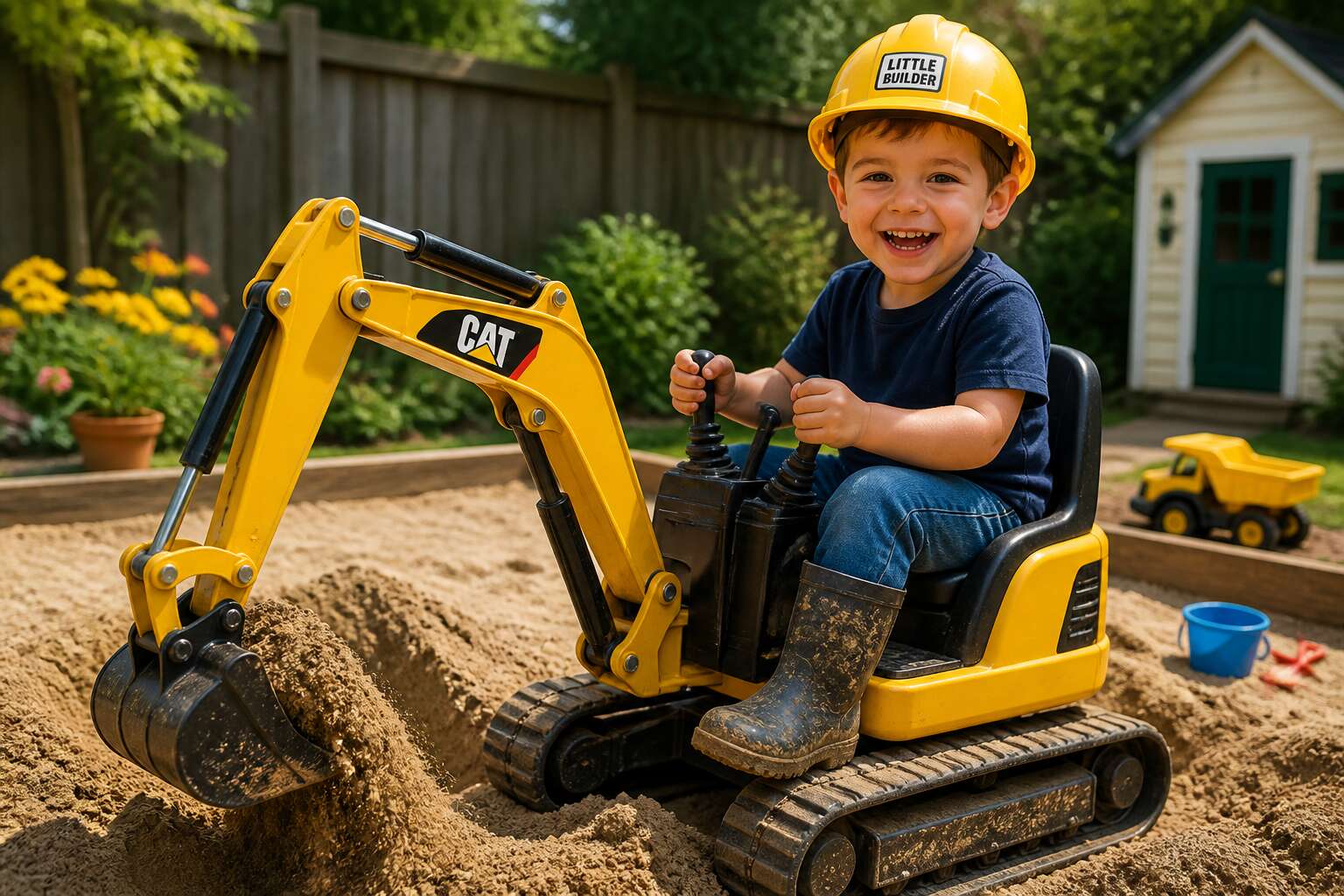
Nothing teaches cause and effect faster than a bucket of sand and a toy excavator. Sandbox excavation games transform a boring pile of dirt into a high stakes operation. For excavator kids, the sandpit becomes a worksite, and every scoop is a decision.
Try a buried treasure hunt. Hide small objects, then let your child dig, sift, and discover. Add water to create mud, which changes how the bucket digs. Build slopes and ramps to test how the excavator moves under load. These games keep excavator kids absorbed for hours, much to your relief.
- Set up zones with different sand depths
- Use sieves to separate hidden items
- Create obstacle courses for the excavator
The best part? No expensive equipment needed. Just sand, water, and a sturdy toy. Your child learns through trial and error, and you get to watch their engineering debut.
Simple DIY Digger Crafts
The hum of a small electric motor, the deliberate scoop of a plastic bucket, and the intense concentration on a young face. That focus, that singular drive to move material from one point to another, is a beautiful thing to witness. For many families, this fascination is not a passing phase. It is a calling. When you have excavator kids, the world becomes a landscape of potential projects, and the living room floor transforms into a bustling construction zone.
While the sandbox offers its own brand of messy education, the craft table presents a quieter, more focused arena. Here, the machine itself becomes the project. Creating a simple DIY digger craft from recycled materials invites a child to understand the mechanics of their obsession. A cardboard box becomes the chassis. The cab, a milk carton. The arm, a series of straws and string, carefully articulated.
This is where fine motor skills are refined without a single worksheet. The process is deliberate. Threading the string through the straws to create a working lever system requires patience and precision. It is a tangible puzzle. A child sees a flaw in the design, dismantles it, and rebuilds with a better approach. This is the essence of the engineering mindset, cultivated in the quiet of the afternoon.
To build a working model, you will need a few simple items:
– A sturdy cardboard base
– Two empty toilet paper rolls
– String and a wooden skewer
– A hot glue gun (for adult use)
– Craft paint for the final detail
Watching a child attach the cab to the base, their small hands working with deliberate intent, is a study in focus. They are not just playing. They are building a tool from scratch. The reward is the successful lift of a small toy block from the carpet. The moment the string pulls taut and the arm swings, their pride is palpable. This craft is a gateway, turning a love for big machines into a personal story of creation. For that afternoon, they are not just the operator. They are the architect and the builder. This simple activity builds confidence that lasts far beyond the craft table, extending into a cardboard box city or a full-scale excavation site in the backyard dirt.
Printable Coloring Pages
The whir of a home printer is a modest sound, but for excavator kids, it means a new page to colour. Printable coloring pages deliver engagement unlike the sandbox or craft table. The machine appears in black and white, stripped of colour, waiting on a child’s judgement. Which shade for the cab? Should the tracks stay grey or turn brown? These decisions carry weight.
The strength of printable pages lies in their repeatability. Print ten copies of the same design and watch the evolution. The first attempt may be cautious, the second bold. Each pass brings familiarity with the machine’s structure, from the boom to the bucket.
For excavator kids, these pages travel well. They slip into a backpack or fit on a waiting room table. A finished page, coloured with care, earns a spot on the fridge, marking a child’s work as worthy of display.
Building a Mini Construction Site
The average child asks “why” over 70 times a day. A mini construction site answers most of those questions before they are even asked. Excavator kids transform a simple patch of garden or a sandpit into a working landscape with zones for digging, hauling, and dumping. They decide where the road curves and where the foundation pit goes. This is planning with dirt under the fingernails.
To build a mini construction site, gather materials from around the house:
– Cardboard boxes become site offices or tool sheds.
– Old towels or fabric scraps serve as tarpaulin covers for “materials.”
– Small pebbles or bottle caps stand in for gravel and boulders.
– Wooden blocks create retaining walls or loading ramps.
Excavator kids learn to work with constraints. The bucket only reaches so far. The truck needs a clear path. When the ramp is too steep, the load spills. They adjust the angle or choose a lighter cargo. The site evolves based on trial and error. Parents provide the raw materials but the design belongs to the child.
A mini construction site also supports solo play. Children narrate their own workflows. They move from one task to the next without adult direction. Even a modest patch of ground becomes a busy yard. The child becomes the site manager, the operator, and the safety inspector all at once.
Safety Considerations for Kids’ Excavator Play
Adult Supervision Essentials
In South Africa, where outdoor play is a cherished pastime, the sight of excavator kids hard at work in a sandpit is a common joy. Yet the very realism that makes these toys thrilling also demands a firm parental hand. Supervision is not about hovering; it is about anticipating the split second when a child decides to test the bucket’s strength against a sibling’s toe.
A responsible adult should establish a clear play perimeter before the engines start. This ensures that running feet and swinging digger arms remain separate entities. It also allows for gentle correction of unsafe techniques, such as using the toy as a climbing frame or launching gravel skyward. For excavator kids, the lesson is simple: the machine is for moving earth, not for mischief.
- Keep the play zone dry and free of trip hazards
- Check the digger’s joints and edges before each session
- Set a clear signal for stopping all operation
Attentive presence transforms a potential hazard into a structured learning experience. When adults engage with the play, explaining why a certain angle is risky or why the cab must be entered carefully, the child absorbs these safety instincts naturally. The goal is not to police the fun, but to shepherd it toward productive, injury-free discovery.
Checking for Choking Hazards
Excavator kids often overlook the tiny components that make their machines feel authentic. A detachable mirror, a plastic hinge, or a worn rubber track can become a mouth-sized object in seconds. The fleet of toy loaders and diggers in many South African homes contains parts that loosen during vigorous play, and those parts travel from sandpit to mouth quickly.
Check for these warning signs before each session:
- Loose or wiggling plastic components
- Exposed screws or bolts
- Deteriorating rubber or silicone pieces
The bucket hinge on a manual excavator is a common failure point. Inspect every pivot where small pins hold sections together. A piece that fits entirely inside a toilet roll core is a choking risk. Excavator kids depend on adults to catch these hazards early. The tiny plastic wheels on some models can shear off entirely during rough terrain play, becoming loose objects. A two minute inspection saves a frantic afternoon.
Safe Outdoor Play Practices
Summer sun in Johannesburg reaches 30 degrees by 10 a.m. Excavator kids need more than a hat; they need a play site that responds to the season. South African soil heats quickly, so the digging area should rest in morning shade or under a tree canopy. Level ground prevents small machines from tipping, and a clear border of pebbles keeps the operator within a safe radius.
Water breaks come every twenty minutes, and the session ends the moment a child wants a rest. Inspect the ground for ant nests and glass splinters after each rainfall. Look up too, for low branches that can poke an eye!
Outdoor play here depends on simple habits:
- One child per machine
- No digging at faces
- Stay within the marked area
These practices let excavator kids navigate the landscape safely while they move sand and soil.




0 Comments