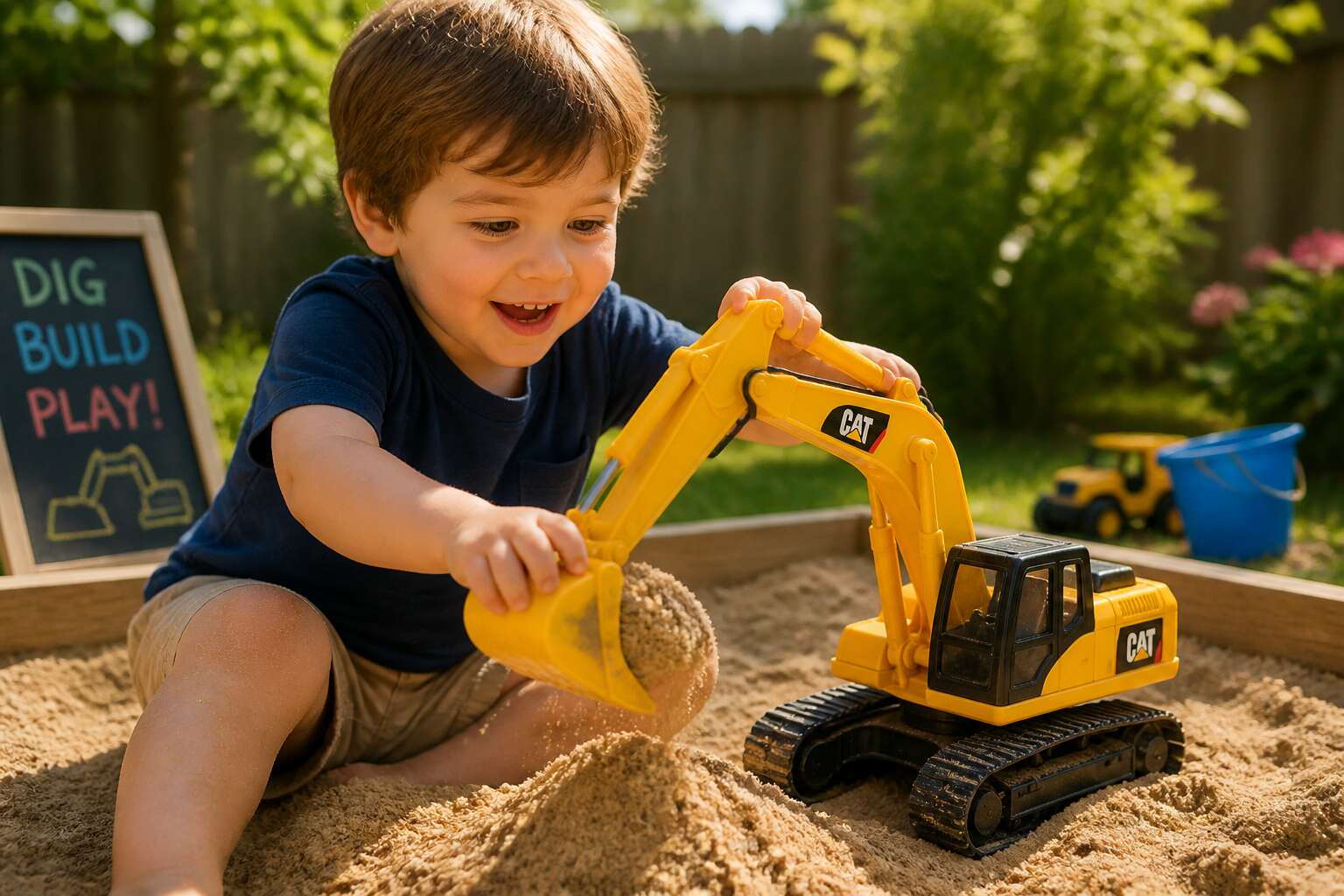
Why Kids Love Construction Vehicles
There is something honest about a machine that moves earth. Children see it immediately. An excavator toy for kids brings that raw power into small hands, and the appeal is instant.
In my years watching children play on dusty plots and suburban lawns, I have noticed a pattern. The fascination begins with the arm. That long, deliberate scoop rises and falls. Kids repeat it, not out of boredom, but because it gives them a sense of mastery.
- The lever gives control over a real force.
- The bucket creates visible results.
- The tracks leave a trail.
This is why the excavator toy for kids remains a popular choice here in South Africa, from sandpits in Joburg to farms in the Free State.
Key Factors When Selecting a Pretend Digger
Parents in South Africa often underestimate how much a pretend digger shapes a child’s imagination. The best excavator toy for kids balances durability with realistic movement. Since children operate these machines with both hands and feet, look for robust joints and a bucket that actually pivots. I have watched toddlers spend hours loading sand, so the material matters more than the paint job.
Consider these factors before buying:
- Weight and grip for small hands
- Moving tracks or wheels
- Stability on uneven ground
A lightweight model might tip over on grass, while a heavy one frustrates a younger child. Safety comes from rounded edges and non toxic plastic, not from extra bells. The right choice turns a simple toy into a catalyst for storytelling and motor skill growth. Prioritise function over flashy features.
Types of Mini Excavators Available
Mini excavators for kids break down into three practical categories. Pedal models, which rely on leg power, are perfect for developing motor skills. Battery-powered versions bring genuine hydraulic motions, though they cost more. Remote-controlled units offer a different challenge, letting children operate the arm from a distance. From my experience, parents often underestimate how much coordination these toys require. Here is a quick comparison:
- Pedal excavators: best for ages 2 to 4, no charging needed.
- Battery-powered: realistic digging action, heavier and pricier.
- Remote-controlled: precise control, ideal for older kids.
Whatever the choice, matching the toy to the child’s physical strength matters most. A sturdy excavator toy for kids should survive rough play. A lightweight one might frustrate a robust five year old. So assess your space and your child’s temperament before committing.
Safety Tips for Playtime
An excavator toy for kids turns a sandpit into a construction site. My son’s crew works for hours, but loose hinges worry me! A cracked bucket can send a child to the emergency room. South African heat also demands attention, since dehydration sneaks up quietly.
Mud puddles are irresistible! They make the toy slippery. The swinging arm has real force, so a clear space around the play area is essential. Wet sand clogs wheels, causing the toy to tip on uneven ground. Stones and sharp objects often hide beneath the surface.
- Flat, soft grass reduces the impact of falls.
- Loose gravel and small parts create tripping hazards.
Supervision remains essential. Children forget danger when digging gets intense, and a watchful eye lets them explore freely.
How to Extend Play Value
In the middle of a construction site, the child stops. The excavator toy for kids in their hands is not a machine. It is a living thing, with a temperament and a job to do. Inside the cab, they are the operator, and the world outside their window is a problem to solve.
We watch them repeat the same scoop for twenty minutes. This repetition is not a sign of boredom. It is the child learning the machine’s limits, testing its strength, and finding its personality. The play value of this excavator toy for kids depends entirely on what the child brings back to it.
The best play sessions never follow the manual. Scrap wood becomes steel girders. Garden soil becomes bedrock. The machine takes on new roles:
- Rescue vehicle for stranded toy animals
- Demolition unit for old blocks
- Precision lifter for precious stones
When the toy feels ordinary again, change the terrain. Take it to sand, mud, or pavement. Offer the child a tape measure and let them record every lift. The game transforms when you treat the machine as a tool with purpose, not a static object. Ask the child to build a dam, then break it, then build it again. That tension between destruction and creation is where the real engagement lives.
So leave them alone with the dirt. The longest conversations happen between a small hand and a metal bucket.



0 Comments