Play Value of Construction-Themed Playsets
Cognitive Growth Through Pretend Play
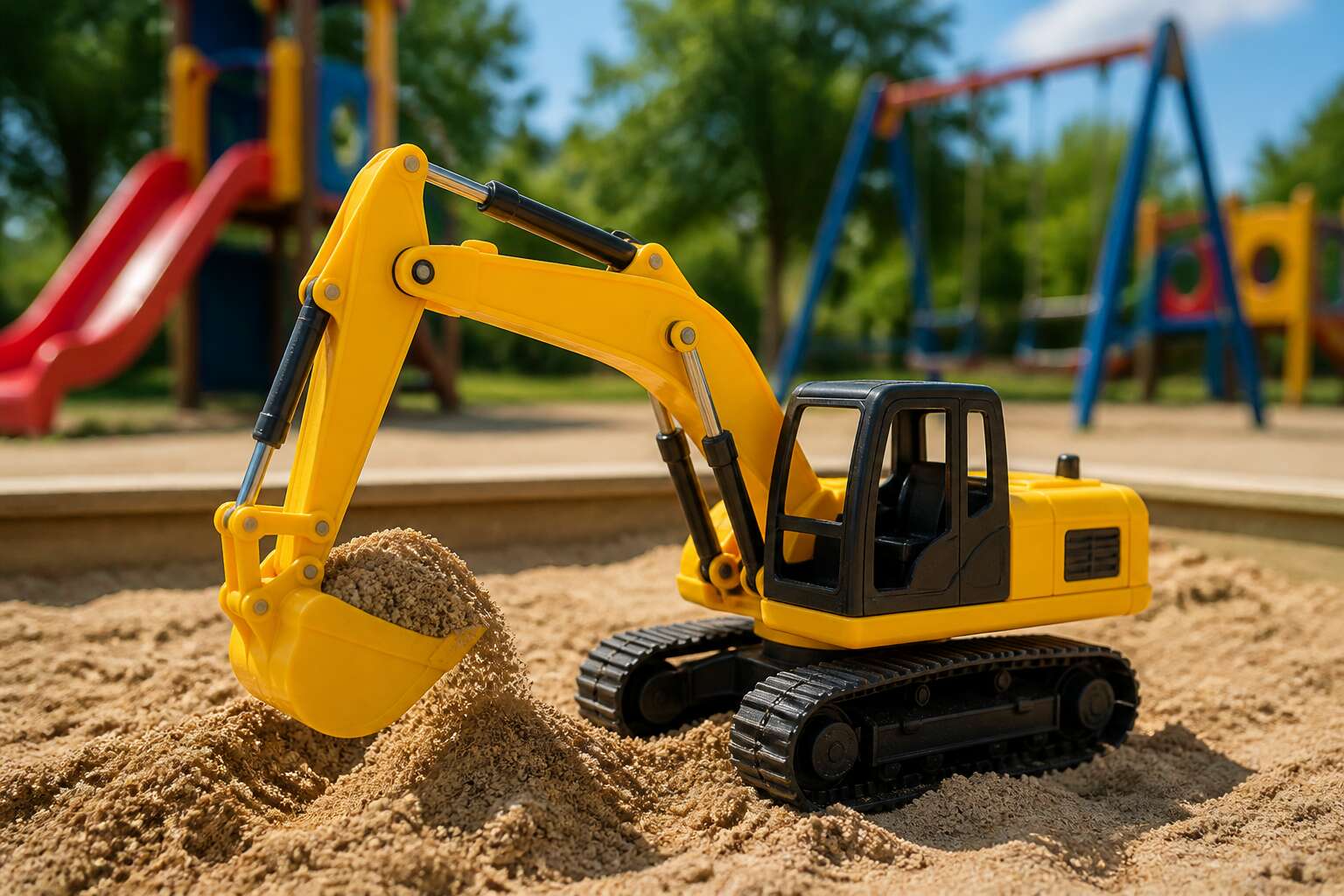
Children rarely forget the first time they command a machine. A sturdy excavator toy turns a sandpit into a construction site, where every scoop of gravel carries weight. The play value rests in the tactile feedback: levers that click, buckets that tilt, wheels that grip. This is not abstract learning. It is the child’s hand guiding a tool toward a goal, and the goal keeps changing.
Pretend play deepens that experience. When a child imagines being a site manager, they practice sequencing, negotiation, and cause and effect. The excavator toy becomes a character in their story, not just a prop. I have watched children assign voices to their machines, then solve problems like uneven ground or stuck loads. That is cognitive growth in motion!
- Planning a dig sequence
- Estimating bucket capacity
- Adapting when the sand collapses
These moments build executive function without a single worksheet. The joy of operating the excavator toy masks the mental work, which is exactly why it sticks.
Developing Hand-Eye Coordination
The humble excavator toy asks more of a child than it appears. Every lever pull requires the eyes to track the bucket while the hands adjust pressure. It is a small coordination test. The child learns to judge distance, speed, and angle in one continuous motion. For parents watching from the patio, it looks like simple play. For the child, it is a lesson in timing.
Consider what happens during a typical session:
- The eyes lock onto the pile of sand.
- The hand nudges the joystick to align the bucket.
- The wrist rotates to tip the load into the dumper.
Each step loops back into the next. The excavator toy becomes a tool for building coordination, disguised as noisy fun. And in South African gardens, where soil is often rocky and unforgiving, that feedback is honest. Miss the target, and the load hits the ground. No screen can replicate that.
Encouraging Language and Social Skills
Construction playsets turn a solitary digger into a shared story. When two children operate one excavator toy, they must negotiate who loads and who drives. That negotiation builds social skills. The child learns to request, ‘Pass the bucket,’ or suggest, ‘Let me tip it this time.’ These small exchanges enlarge a child’s vocabulary of cooperation.
In a South African garden, an excavator toy gives children a reason to talk. They name the parts, describe the action, and invent scenarios. The dumper carries sand for the foundation. The loader moves rocks to clear a path. Each role demands speech, listening, and response.
Consider the exchange that happens naturally:
- One child announces the plan.
- Another offers a correction.
- Both adjust their play to keep the story moving.
STEM Learning Opportunities
An excavator toy demonstrates mechanical principles directly. The arm functions as a lever. The bucket position changes the fulcrum. Each scoop applies force through a simple machine, though the child will call it digging.
The STEM learning appears in planning. Children estimate distances visually. They judge load weight before lifting. They test soil consistency through trial and error. The playset becomes a practical engineering exercise where failed attempts cost nothing and repetition builds understanding.
- The cab swivels, demonstrating rotational movement.
- The tracks distribute weight, showing stability principles.
- The bucket angle alters digging force.
South African children absorb these concepts through sand and sun, not worksheets. An excavator toy delivers physics education without a syllabus. The lessons stick because the play is genuine.
Exploring Different Styles of Kid-Friendly Diggers
Hydraulic Mini Diggers with Movable Arms
The excavator toy has evolved beyond simple plastic casings. Modern hydraulic mini diggers with movable arms offer intricate mechanics that mimic real machines. Their joints and pistons respond to small hands, creating a tactile experience. I have watched children spend hours adjusting booms and buckets, fascinated by cause and effect. These toys come in diverse forms, from rugged outdoor models to precise indoor replicas. Consider the variations available!
- Single arm units with rotating cabs
- Tracked bases for uneven terrain
- Remote control hydraulic systems
Each style demands different handling! A tracked base grips sand and soil, while wheeled versions glide on smooth floors. The movable arms range from simple levers to multi stage joints. Material choices affect durability, with metal components in premium sets. The best excavator toy for a young enthusiast often prioritises sturdy construction over flashy extras. This variety allows collectors to appreciate engineering distinctions.
Remote-Controlled Earthmovers
Remote controlled earthmovers turn the excavator toy into a test of patience. Kids love the chaos of a machine that ignores their commands. Battery life becomes the true limit. Some units stall mid scoop, while others dig for hours.
Choose rubber tracks for South African soil, since wheels slip on dry grass. Controller design matters. Simple two stick remotes win over smartphone apps every time. Consider these styles:
- Wheeled loaders for patios
- Tracked crawlers for rough ground
- Hybrid versions with swappable buckets
The pro grade diggers rotate their cabs with precision, but the budget ones waddle sideways. The garden gnome never stood a chance.
Sandbox-Compatible Scoopers
Most parents underestimate how much sand a child can move in an afternoon. The right scooping tool changes everything. For South African gardens, where wind scatters dry soil, a sturdy plastic excavator toy with a wide bucket outperforms cheap alternatives. Choose rounded edges and thick walls that survive repeated drops.
Style options vary by movement. Some use a simple lever to tip the bucket forward. Others rely on a rotating handle for twisting actions. Each design alters how a child grips and controls the scoop.
- Single arm diggers for easy lifting
- Double arm versions for added resistance
- Push along models that double as loaders
The sandbox compatible scoopers often include sifting trays or moulds. A heavier base prevents tipping on uneven ground.
Educational Dump Truck Kits
In my years observing playgrounds, I have seen a child’s excavator toy shift from a simple object to a central piece in their play. The variety of styles available today means each child finds a unique way to engage with earthmoving.
Educational dump truck kits take this further. They pair a loading mechanism with a specific task, such as sorting blocks by weight or matching colours on a target mat. Some kits feature tilt beds that release cargo in a controlled arc, while others use a spring loaded gate for sudden drops.
- Manual crank systems that require two hands
- Gravity fed hoppers for continuous pouring
- Magnetic loaders for quick attachment and release
The beauty of these kits lies in their open ended nature. A child can load, transport, and dump endlessly. For South African families, durability matters, but so does the quiet satisfaction of a well executed operation.
Pull-Back Construction Cars
Pull-back construction cars carry a strange quiet gravity. No remote, no charging cable, no lag. You drag the vehicle backwards, feel the spring bite, then release it into a steady crawl across the patio. For a child, that direct link between effort and motion holds real fascination.
The styles differ more than one might expect. Some copy the excavator toy’s tracked silhouette, gripping loose sand and lawn edges. Others use hard rubber tyres suited to smooth tiles or rough paving. A few rotate their cabs, letting the driver track an imaginary dig site from any angle.
- Single-gear pull-backs that trundle patiently
- Friction wheels that spin long after the push
- Multi-stage springs that unfurl a lengthy journey
These machines do not require batteries or constant maintenance. They survive the South African heat and the weight of a determined hand. When the spring finally wears out, the excavator toy becomes something else, a fort, a wreck, a relic of an afternoon’s engineering.
Guidelines for Selecting the Perfect Playset
Age-Appropriate Features and Complexity
One well chosen excavator toy can outlast three cheap ones. Selection demands attention to age and aptitude. The child’s physical coordination and patience govern what makes sense. A three year old thrives with chunky controls and a single scooping motion, while a six year old craves articulated joints and realistic resistance.
Complexity should escalate with skill. Too simple, and interest wanes. Too intricate, and frustration takes root. Observe how the child handles failure, then adjust.
For South African families, consider the play environment. Sand, grass, and pavement each test different mechanics. Seek robust materials that withstand coastal humidity or harsh sun.
A personal note: I have watched children ignore flashy gadgets for a straightforward excavator toy that moves exactly as they command. That predictability builds confidence.
Assessing Material Durability
Most parents overlook how a playset degrades invisibly. A crack in the chassis can appear after six months of coastal sun, and suddenly the excavator toy becomes a hazard rather than a joy. Material durability is not about heft alone. It is about the polymer’s UV stability, the metal’s corrosion resistance, and the hinge’s tolerance for sand grit. I have seen toys fail not from impact but from fatigue. The plastic softens, the screws seize, the boom droops. For South African conditions, where humidity and direct light punish cheap compounds, look for:
– Food grade polyethylene or virgin ABS, not recycled blends that become brittle.
– Stainless steel or zinc plated fasteners, since ordinary screws rust fast.
– Sealed gearboxes, because sand acts as grinding paste.
A predictable excavator toy endures because the materials respect their environment. That endurance shapes a child’s trust in their tools.
Safety Considerations for Young Builders
Every parent knows the pang of watching a child hover near a machine they cannot yet control. The right excavator toy should deliver joy, not an urgent care visit. I have seen playsets with exposed springs and sharp edges marketed as ‘learning tools.’ Parents deserve better. Begin by examining stability. A wide wheelbase prevents tip-overs when your young operator leans out to capture a handful of sand. Check for pinch points where the boom joins the cab. Those gaps trap curious fingers quickly. Weigh the noise factor. A shrieking siren feature amuses for ten minutes. Your neighbours will disagree.
When evaluating a playset, keep these safety checks:
- Confirm bucket edges are rounded and smooth.
- Look for a weighted base that resists toppling on uneven ground.
- Verify that no small components detach easily for children under three.
A well-designed excavator toy offers robust fun with a low anxiety quotient for parents.
Realistic Details vs. Imaginative Styling
Parents face a dilemma in the toy aisle: the miniature replica with working hydraulics, or the cheerful plastic machine in primary colours? It depends on who will operate the excavator toy. A three year old cares little for scale accuracy. They want a bucket that scoops mud and a cab big enough for a plastic dinosaur. The detailed model has tiny levers that snap off in the first hour. The stylised version offers chunky controls and survives collisions with walls and siblings. For older children, realism feeds curiosity. They examine the tracks and ask why real machines have counterweights. The best playset matches the child’s developmental stage, not the parent’s aesthetic preferences. I have watched children choose the goofy scooper.
Consider what the child will do:
- Build sandcastles and knock them down
- Load trucks with gravel and leaves
- Role play construction site dramas
A detailed model stays pristine on the shelf. An imaginative excavator toy gets played with.
Entertaining Activities for Your Little Operator
Sensory Play with Kinetic Sand and Pebbles
Kinetic sand and pebbles transform a play table into a miniature worksite. Children press an excavator toy into the sand, feeling resistance before it breaks apart. Pebbles click against metal and roll away. These activities keep young operators engaged:
- Bury pebbles under sand, then excavate them with the toy.
- Stack pebbles into piles, then knock them down with a swipe.
- Fill the bucket with sand and pebbles to see how they settle.
Each action gives immediate feedback. The sound of pebbles, the crumble of sand, the weight of a full bucket. This sensory dialogue builds a child’s understanding of texture and volume. The excavator toy responds directly to their hands, shaping raw materials with precision.
Constructing an Indoor Obstacle Course
Statistics show indoor play increases on rainy days, so turn your lounge into a construction zone. The excavator toy takes on a cardboard box mountain.
Build a course with pillows as ramps, towels as barriers, and a stack of plastic cups as a demolition target. Your little operator must guide the machine through these obstacles without knocking over the cups. Or maybe knocking them over is the objective. Let the child decide.
- Line up books to form a narrow bridge.
- Cut a hole in a shoebox to create a tunnel for the arm.
- Mark a finish point with tape for a controlled stop.
Each run sharpens spatial judgement while the family cheers. The excavator toy offers pure indoor fun without a grain of sand.
Storytelling Around the Job Site
Every construction site has a narrative. A child with an excavator toy becomes the foreman, the operator, and the safety officer at once. They narrate the morning shift: the bucket lifts, the dirt moves, the truck arrives late.
I have watched children build entire story arcs around a single dig. They assign voices to the machinery. They invent breakdowns and rescue missions. The excavator toy performs tasks with purpose and direction.
- The operator announces the load capacity before each lift.
- The machine rests during lunch, complete with a parking spot.
- A rival machine appears, and the child mediates the dispute.
This kind of play lets children direct every outcome. They learn to sequence events, solve problems as they arise, and assert control over their invented world. The story keeps the play focused and coherent.
Gardening Tasks with Toy Loaders
Spring in South Africa means planting season, and a small excavator toy can turn garden prep into a morning of purpose. Children love moving real material, not just sand. Give them a patch of loosened earth and a clear assignment.
The loader’s bucket becomes a tool for transferring mulch into a wheelbarrow or scooping fallen leaves into a compost pile. These tasks reward patience, because the payload shifts with every slight tilt of the arm. Your child learns to read the soil’s resistance.
- Carry potting mix to empty flower pots
- Dig shallow furrows for onion sets
- Clear pebbles from a vegetable bed
Each job ends with a visible change in the garden. The excavator toy keeps the work playful, and the beds get ready without anyone noticing the effort.
Keeping Construction Playthings in Top Shape
Simple Cleaning Routines
Dust settles on a stationary excavator toy within days. I have seen a bright yellow arm turn dull across a fortnight of Highveld winter, and that grime does more than spoil the finish. Fine grit works into the joints, the pivots, the small hydraulic seams.
A soft brush and a barely damp cloth handle most of it. I keep the excavator toy away from running taps; water lodges in the electronics and stays there. The grit comes back regardless, summoned by nothing I can name.
- Brush the tracks and bucket after every session.
- Wipe the cab, boom, and chassis with a damp cloth.
- Dry each pivot point before the machine goes back on the shelf.
Battery Replacement and Care
Battery hatches on an excavator toy endure more abuse than the tracks. Alkaline cells leak when left idle, and the corrosion creeps into the contact springs within weeks. I check the terminals on my son’s digger every second Sunday, a habit born from one ruined tractor.
Remove the batteries before long storage. Keep the hatch screw loose enough to avoid stripping the plastic threads. A cotton swab dipped in vinegar cleans the crusty residue from old cells, but dry the contacts completely before reinserting anything. Rechargeable packs need different care than disposables.
For lithium units, avoid full discharges unless the manual insists. Most modern circuits prefer top-ups. Store the excavator toy with its battery compartment facing upward so condensation runs away from the contacts, and the machine remains ready for the next sandpit session.
Outdoor Storage Solutions
The Highveld sun does not discriminate. It bleaches plastic and cracks rubber seals on any excavator toy left sprawled across the lawn. One December afternoon reduced a bright yellow digger to a brittle husk.
Shade matters most. A covered stoep or a wooden toolbox keeps ultraviolet at bay. But airflow matters too. A sealed container holds heat, and trapped warmth warps the cabin windows. I store ours under the braai cover, raised on a brick so morning dew drains away.
- Rinse sand and mud from the tracks before the toy rests.
- Loosen knobs and levers to relieve pressure on plastic pivots.
- Rotate the machine weekly so tracks wear evenly.
The wind along the Cape coast carries salt that finds every hinge. A light coat of silicone spray keeps the metal pins moving. The excavator toy survives only when you respect the weather.



0 Comments