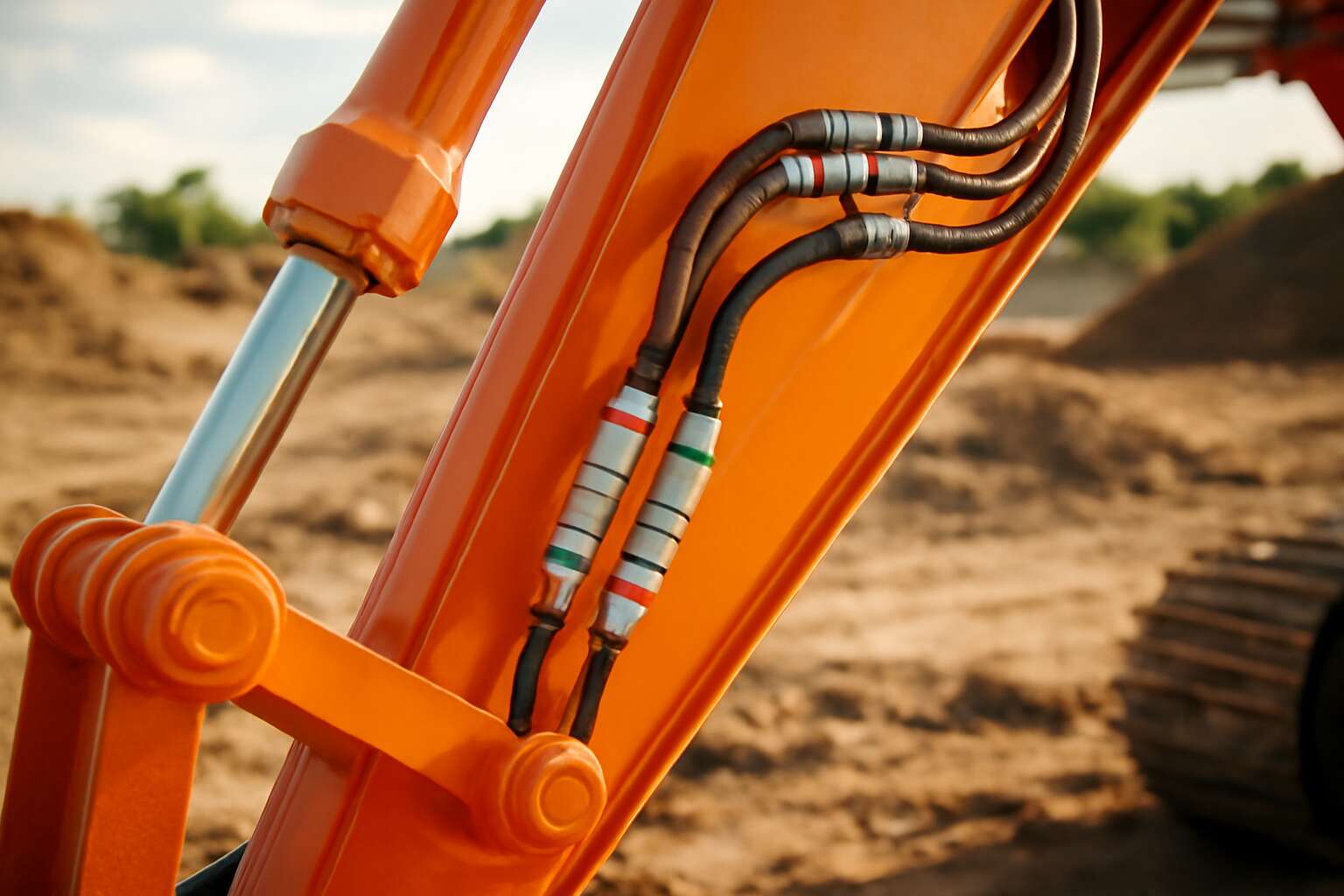
Main Outline: Excavator Hydraulic Systems
Overview and Fundamentals
On rural South Africa job sites, the hydraulic system of excavator is more than metal—it’s the heartbeat that stirs earth and shapes landscapes. When the engine hums, pressure builds and precision follows, letting an operator coax a bucket through stubborn soil with quiet authority.
Its inner workings hinge on a few essential partners.
- Hydraulic pump that creates flow and pressure
- Control valves that direct power to the boom, arm, and bucket
- Cylinders and hoses that translate pressure into motion
Fluid quality, cleanliness, and routing matter as much as raw power; this quiet complexity helps machines work through dust and heat, turning heavy loads into progress.
Key Components and How They Work
A rural SA site runs on a heartbeat you can’t see—yet it governs every scoop: the hydraulic system of excavator. “Every season, a single stubborn leak costs more than a bucket of sand,” says a maintenance supervisor. The power to move earth with certainty sits behind a dust-lashed panel, waiting for a precise touch to wake.
Its main components work in concert:
- Hydraulic pump that creates flow and pressure
- Control valves that direct power to the boom, arm, and bucket
- Cylinders and hoses that translate pressure into motion
Flow meets control in a carefully engineered circuit. Clean oil and proper routing keep temperature down and demand steady, so cycles remain smooth even under South Africa’s heat and dust. The result is predictable, quiet efficiency that turns heavy loads into progress.
Fluid Power Principles and System Design
Across South Africa’s tough terrain, refined fluid power turns back-breaking work into a measured rhythm; studies show up to a 15% improvement in cycle times when hydraulics are tuned for the task. The hydraulic system of excavator translates raw power into precise, patient motion, a quiet chorus behind every scoop and throw of earth.
Fluid power principles guide this architecture, balancing pressure, flow, and energy loss in a single loop of motion. Three core ideas shape the design:
- Pressure management preserves component life and smooths digging cycles
- Controlled flow coordinates the boom, arm, and bucket with grace
- Filtration and cooling fight heat and dust, sustaining performance
In compact form, system design becomes a story of circuit pathways, efficient routing, and robust materials that endure SA heat. When these elements align, the machine breathes a reliable, economical cadence—turning weighty loads into steady forward motion.
Maintenance and Troubleshooting for Excavator Hydraulics
Across SA sites, numbers flatten hills: a well-tuned hydraulic system of excavator can trim cycle times by up to 12%. Listening to its weathered voice—the rattle of a loose hose, the faint whine at the limit of stroke, and the steady warmth under a demanding sun—remains essential. In South Africa, where stones bite and dust stings the lungs, upkeep becomes daily work and troubleshooting a shared language between operator and technician. It’s about tracking heat, flow, and pressure to protect life, equipment, and the rhythm of the day.
Here are telltale signs to watch for in the field:
- Unusual noises during operation
- Erratic movement of boom, arm, or bucket
By catching these signals early, crews keep the machinery breathing steady and the job-site’s pride intact—simple checks that honour craft and climate alike.




0 Comments