Understanding Excavators
Definition and Primary Uses
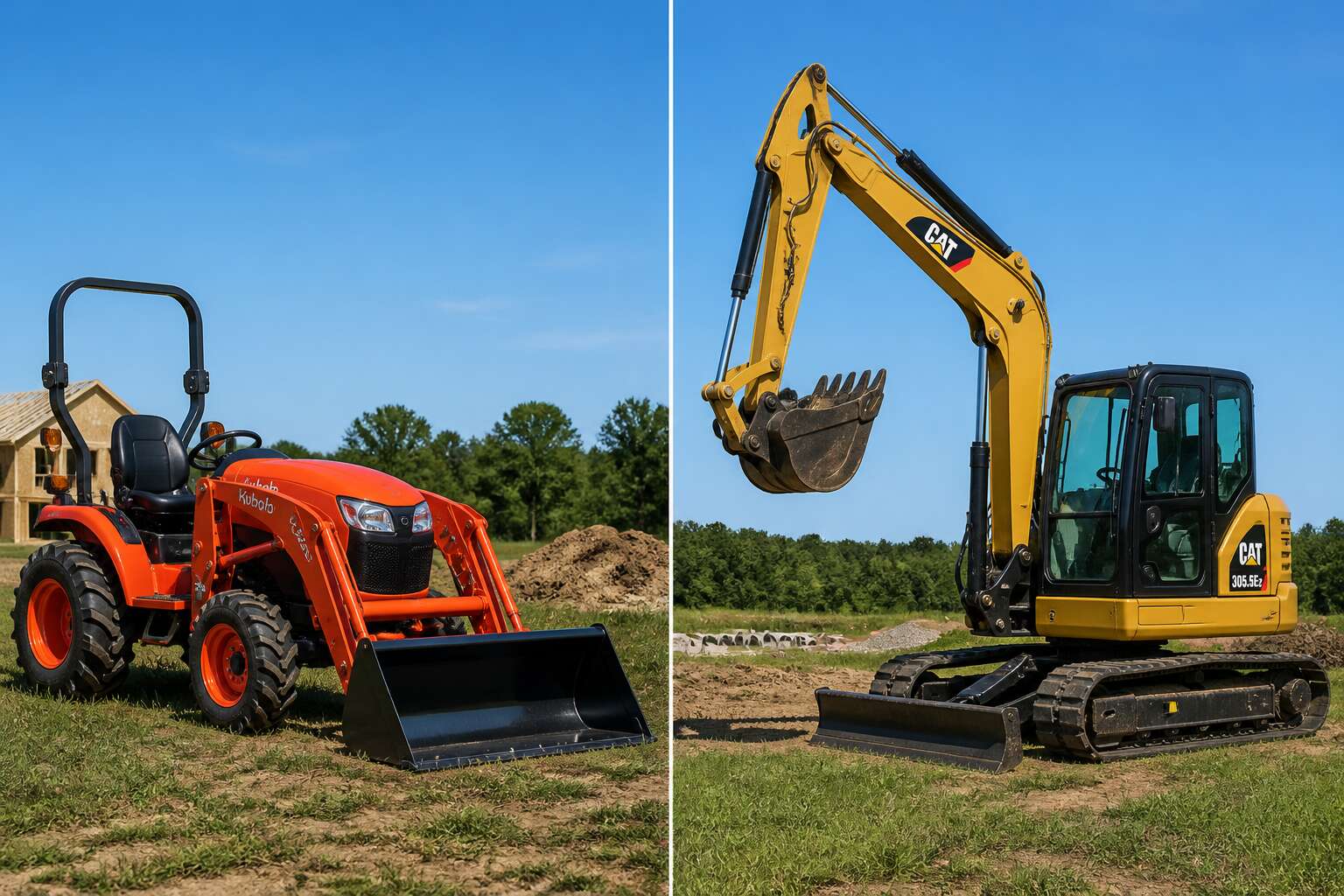
An excavator is not a tractor, yet the question “is excavator a tractor” lingers on every construction site. The confusion makes sense at a glance. Both are heavy machines with tracks or wheels. But the excavator has a distinct anatomy: a rotating cab, a boom, and a bucket that digs downward with brutal efficiency. Tractors pull and push. Excavators scrape and claw.
Primary uses center on earthmoving and demolition. You will find them digging foundations, trenching utilities, and clearing debris. They excel at precise depth control.
– Digging basements and trenches
– Lifting heavy pipes and concrete
– Grading slopes and shaping terrain
The cab rotates 360 degrees, which separates it from any tractor’s fixed frame. So when someone asks “is excavator a tractor,” the answer is a firm no. It is its own category of heavy machinery, built for a different kind of work.
Key Components: Boom, Stick, Bucket
Here is a useful truth: the boom, stick, and bucket are the excavator’s working trio, and they settle the question “is excavator a tractor” without debate. A tractor uses a fixed hitch. An excavator swings a hydraulic arm that rotates, reaches, and bites.
Three components carry the load:
- Boom: the primary arm anchored to the cab
- Stick: the extension that adds reach and angle
- Bucket: the attachment that digs, scrapes, and lifts
This setup gives the machine its full rotation. No tractor can match that movement. The anatomy alone explains the difference.
Tracked vs. Wheeled Excavators
The undercarriage decides where the machine can work. A tracked excavator spreads its weight over soft ground, so it performs well on muddy sites and loose fill. A wheeled excavator moves faster on hard surfaces and often travels short distances under its own power. The question is excavator a tractor gets the same answer either way: no. These machines share little with farm equipment beyond the engine and the seat.
- Tracked units push through soft, wet conditions without sinking
- Wheeled units roll over paved areas and shift position quickly
Tracked machines climb over rubble and work on slopes. Wheeled machines suit urban sites where operators must respect the surface. For South African contractors, the right choice depends on ground conditions and how often the machine needs to relocate. And yes, the answer to is excavator a tractor stays the same no matter which one you choose.
Mini Excavators and Their Applications
Mini excavators operate where full sized units cannot fit. A 1.5 ton machine slips through a single gate and works inside a residential garage. These compact units dig trenches for water pipes, break out old foundations, and grade garden terraces with surprising precision.
Their rubber tracks protect paving and lawn. Their reduced tail swing allows work beside walls without risking damage. For contractors, the economics are simple: a mini excavator replaces a crew of manual labourers for less than the cost of a bakkie.
- Utility work in narrow servitudes
- Pool excavations in confined backyards
- Tree planting and landscaping jobs
So is excavator a tractor? Even at this small scale, the answer stays no. A tractor pulls and lifts. An excavator digs and reaches. The distinction matters when you rent or buy.
Understanding Tractors
Definition and Primary Uses
A tractor earns its name from the Latin ‘trahere,’ meaning to pull. In South African agriculture, these machines pull ploughs, tow trailers, and drive implements through a power take-off system. I often hear the question ‘is excavator a tractor’ because both machines share engines and steel tracks, yet their roles diverge completely.
Consider the primary uses of a tractor:
- Soil preparation with disc harrows and cultivators
- Planting and seeding operations
- Harvesting and hauling produce
- Powering stationary equipment via PTO
A tractor prioritises low-speed torque and draft power. An excavator prioritises lifting and digging. That distinction settles the matter with a firm no!
Two-Wheel vs. Four-Wheel Drive Tractors
Understanding how a tractor channels its power makes the question is excavator a tractor easier to answer with confidence. Two-wheel drive tractors drive only the rear axle, which keeps mechanics simple and purchase price lower. Four-wheel drive tractors activate the front wheels as well, giving the machine a stronger grip on muddy fields or steep inclines.
The choice between them depends on the land you work. A two-wheel drive model often suits dry, flat regions like the Free State, where light tillage and hauling do not demand extra traction. Four-wheel drive shines in wetter climates, such as the mist belt of Mpumalanga, where soggy soils can stall a lighter drivetrain. Fuel consumption also differs, with two-wheel drive generally using less diesel under moderate loads. Yet neither configuration turns a tractor into an excavator, because both drivetrains still serve towing and pulling, not digging or lifting.
Common Attachments for Farming and Construction
To understand whether is excavator a tractor, look at the implements each machine carries. A tractor’s rear three-point hitch accepts dozens of attachments, from ploughs and planters to front-end loaders and balers. In South African agriculture, a farmer might swap a mower for a trailer hitch in under twenty minutes, yet every tool still depends on the tractor’s drawbar pull. Construction sites use tractor attachments like box blades and post hole diggers, but these only shape the ground’s surface. An excavator’s hydraulic boom performs vertical digging and precise material placement. The attachments differ because the power delivery differs. A tractor pushes and pulls. An excavator lifts and swings. Common tractor implements include:
- Rotary mowers for pasture maintenance
- Box blades for grading gravel roads
- Post hole diggers for fencing lines
- Front-end loaders for moving manure or feed
These implements broaden a tractor’s usefulness, but none grant the articulated digging capability of an excavator. The question is excavator a tractor remains answered by function: no.
Utility Tractors vs. Agricultural Tractors
Utility tractors and agricultural tractors serve different purposes on South African farms. Utility models are smaller, with lower horsepower and agile frames, ideal for loader work and grounds maintenance. Agricultural tractors are larger, built for heavy tillage and row cropping. Their power and clearance suit open fields, not tight yards.
One practical way to see the distinction is by testing their lifting capacity and tyre configuration. For instance, a utility tractor often has a narrow front end or compact chassis. Meanwhile, an agricultural unit uses wide rear tyres for traction. The question is excavator a tractor becomes easier once you separate these categories. Neither tractor type can dig vertically like a boom excavator. Consider their roles:
- Utility tractor: handles fencing, feeding, and light grading.
- Agricultural tractor: ploughs, plants, and harvests on expansive land.
Direct Comparison: Excavator vs. Tractor
Core Function: Digging vs. Pulling
Watch one hour on a construction site and you will stop asking is excavator a tractor. A tractor pulls. It drags ploughs, trailers, and mowers across open ground. An excavator digs. It uses hydraulic force to break soil and lift it away from a fixed position. That distinction shapes every other design choice.
Tractors sit high for visibility and use wheels or tracks built for traction. Excavators have a rotating cab and a heavy counterweight, because their centre of gravity shifts constantly. The task dictates the machine.
- Tractors excel at linear tasks: towing, hauling, and field preparation.
- Excavators excel at vertical tasks: trenching, foundation work, and demolition.
So the core function settles the debate. One moves the load. The other moves the earth.
Operator Positioning and Visibility
Ask the operator in a cab 4 metres up whether his machine is a tractor. He laughs, then points at the hole below. A tractor sits high with clear sight of the front wheels. An excavator places you beside the boom, not behind it.
Visibility separates them. A tractor driver watches an implement trail behind, so the seat faces forward and mirrors cover the rear. An excavator operator watches a bucket move in three dimensions. The boom hides the spot where the bucket bites.
- A tractor’s main blind spot is behind the trailer.
- An excavator’s main blind spot is below the cab.
- Cameras help excavator operators see blind spots around the cab.
So when someone asks is excavator a tractor, tell them to climb into both seats. The tractor operator has a long field of vision. The excavator operator trusts electronics to find a trench he cannot see.
Steering and Maneuverability
The difference between these machines often comes down to steering. An excavator uses independent track controls, allowing it to spin within its own footprint. A tractor relies on front wheel steering, forcing the rear end to sweep a wide arc. That difference appears in a confined yard or a narrow farm lane.
Excavator levers respond to tiny inputs. Each track moves forward or backward, enabling counter-rotation. Tractors use a conventional steering wheel and a fixed front axle. On soft ground, an excavator may slide sideways. A tractor’s differential lock helps it maintain a straight line.
- Excavator: zero turn radius, pivots on its centre.
- Tractor: turning circle roughly twice its own length.
So when someone asks is excavator a tractor, point to the steering levers. One machine rotates on its centre point, the other follows a curved path.
Lift Capacity and Hydraulic Power
An excavator’s hydraulic system generates breakout force measured in tonnes. A tractor’s three point hitch provides lifting power, yet it cannot match the bucket curl of an excavator. When someone asks is excavator a tractor, these mechanical differences provide the answer. The excavator uses a variable displacement pump to send oil at high pressure. That pressure pushes the bucket teeth into hard ground. Tractors use a simpler hydraulic circuit, often with 20 to 40 percent less flow. That gap becomes obvious when lifting concrete slabs or large rocks. Compare the numbers:
- Excavator lift capacity: bucket lifting force reaches several tonnes even in compact models.
- Tractor lift capacity: rear linkage lift limited to a few hundred kilograms in small utility units.
Excavator hydraulics also run attachments like breakers and grapples. Tractor hydraulics primarily raise the implement. That distinction guides equipment choices, yet the question is excavator a tractor remains.
Ground Pressure and Traction
Ground pressure decides which machine crosses a wet maize field without bogging down. An excavator rests on steel or rubber tracks, spreading its mass across a wide footprint. Many compact models generate ground pressure below 0.5 kg/cm², similar to a person’s boot. A tractor’s rear wheels concentrate weight, often exceeding 1.0 kg/cm² when pulling a loaded trailer.
That gap shows up on South African soils, from clayey Highveld to sandy coastal flats. I’ve seen a tractor sink into a saturated patch while an excavator walked straight over it. Traction follows the same pattern. Excavator tracks maintain constant contact, gripping loose gravel and mud. Tractor wheels lose bite on wet grass, spinning without forward progress.
- Excavator: low ground pressure, stable on soft ground
- Tractor: higher ground pressure, prone to rutting
So when someone asks is excavator a tractor, the undercarriage answers. Is excavator a tractor? No, because even a lightweight tractor cannot match an excavator’s terrain capability.
Where the Lines Blur
Backhoe Loaders: The Hybrid Machine
The backhoe loader occupies a specific role in the machinery lineup. When someone asks is excavator a tractor, this machine offers the most direct answer. The front loader bucket moves earth and gravel with tractor-like efficiency. The rear backhoe digs with excavator precision, though scaled down for urban or agricultural work.
South African municipalities and contractors rely on this machine for waterline repairs and road maintenance. It performs both roles without requiring a second machine on site.
The operational pattern follows a clear sequence:
1. Use the front loader to push debris clear
2. Deploy the rear backhoe to excavate the trench
3. Use the stabilizer legs to keep the machine level
The question of is excavator a tractor finds no easy answer here. The backhoe loader does not fit either category cleanly. It exists as a compromise that many jobs actually prefer.
Compact Track Loaders in Construction
Compact track loaders occupy a strange middle ground. They carry a bulldozer’s undercarriage but operate with excavator-style hydraulics. A contractor in Gauteng might use one to level a plot in the morning, then dig foundations by the afternoon. Ask is excavator a tractor and this machine forces you to reconsider the question entirely.
These loaders run on rubber tracks that spread weight evenly, which helps on soft Highveld soil. The operator sits in a cab that feels closer to a mini excavator than a farm tractor. Controls respond through joysticks rather than a steering wheel.
- Bucket work for grading and pushing
- Excavator arm for digging and trenching
- Thumb attachment for lifting pipes and rubble
The versatility explains their popularity on residential sites where space is tight. They shift between pushing, lifting, and digging without a second machine. The question of is excavator a tractor becomes less useful when a single unit handles both jobs. It simply works.
Skid Steers and Their Versatility
A skid steer can switch from grading to drilling to lifting in minutes, which is why many operators call it the workhorse of the yard. When someone asks is excavator a tractor, this machine blurs the answer entirely. With a bucket, it digs like an excavator. With forks, it hauls like a tractor. The quick attach system allows you to swap implements without leaving the cab, and that changes everything.
- A cold planer for milling asphalt
- A trencher for utility lines
- A grapple for clearing dense bush
This versatility means a single skid steer handles tasks that would normally require three separate machines. It is not purely an excavator, nor purely a tractor, yet it performs the work of both. So if you are still wondering is excavator a tractor, consider that a skid steer simply sidesteps the question. On a South African site where budgets run tight and deadlines loom, capability matters more than labels.
Tractor-Loader-Backhoes in Landscaping
The tractor-loader-backhoe answers the question is excavator a tractor with a firm maybe. On a landscaping site in Pretoria, this machine digs drainage trenches like an excavator, then pivots to load topsoil like a tractor. Its backhoe arm cuts precise utility lines, while the front loader moves heavy materials across uneven ground.
Operators value one seat for both functions. No swapping machines between tasks. The compact footprint fits residential gardens where larger units struggle. For installing irrigation or shaping garden beds, this hybrid saves hours.
- Digging footings for retaining walls
- Loading compost into spreaders
- Backfilling trenches after pipe work
Is excavator a tractor in this context? Not exactly, but the tractor-loader-backhoe blurs that boundary in ways that suit every landscaper watching their bottom line.
PTO-Driven Augers and Excavator Attachments
Slap a PTO driven auger onto a utility tractor and you get a hole digging machine that makes an excavator blush. The tractor twists a steel screw into the Highveld clay, dragging out perfect cylinders for fence posts. Yet the question is excavator a tractor still gets a snort of derision from anyone swinging a hydraulic bucket.
An excavator attachment like a tilt rotator gives you surgical precision. A PTO auger gives you a hole. One drills fast, the other manipulates. Both earn their keep, but the debate over is excavator a tractor ignores the real issue: attachments define the machine, not the badge. In South Africa, that distinction saves you a pile of rand.
How to Choose Between Them
Project Type and Site Access
A construction manager once told me that the machine decides the morale of the crew. The question is excavator a tractor might surface on any site, but the answer emerges from ground conditions. Your project type dictates reach and force. Your site access dictates mobility and footprint.
For a cramped urban plot, an excavator’s slew radius saves hours! For a sprawling farm, a tractor’s ground speed moves supplies faster. Consider these access realities:
- Gate widths and overhead obstacles
- Ground bearing capacity for wheel loads
- Slope gradients that affect stability
When the job needs deep excavation near structures, the excavator wins. When the task is towing or surface grading, the tractor holds its own. All that remains is to measure your access points and match the machine’s geometry to the project’s demands. The answer to is excavator a tractor lies in that measurement.
Budget and Operating Costs
The budget question often asks is excavator a tractor, and the answer depends on operating costs. An excavator carries a higher purchase price, and its hydraulic pumps and track components demand regular maintenance. A tractor’s simpler drivetrain costs less to run, but attaching digging tools changes that balance. Across Free State farms I have seen a mid-sized tractor with a front end loader handle most surface tasks. When your site requires deep trenches or hard rock, the excavator’s operating cost becomes justifiable. Run these numbers.
- Hourly fuel burn for each machine
- Track replacement versus tyre wear
- Hydraulic oil and filter service intervals
Those figures reveal the true answer to is excavator a tractor. Financing also plays a role. Excavator loans carry higher interest rates in South Africa. A tractor holds resale value better when maintained. The choice settles on what your pocket can carry per hour of work.
Attachment Availability and Versatility
When you stand on a Free State plot with a list of jobs in hand, the question is excavator a tractor shifts from semantics to practicality. An excavator accepts hydraulic thumbs, grapples, and tilt rotators, but its quick coupler is not universal across brands. A tractor’s three-point hitch and PTO accept a bewildering array of implements.
– Excavator: buckets, breakers, augers mounted on the stick.
– Tractor: mowers, tillers, post drivers via PTO.
I have seen a tractor swap a loader bucket for bale spikes in minutes, a task no excavator can mimic. An excavator cannot tow a trailer or rake hay. The versatility you need dictates the machine. If your work is mostly digging, the excavator wins. If you need to haul, mow, and grade, the tractor carries the day. The true answer to is excavator a tractor rests in your attachment shed.
Operator Training and Safety Requirements
Operator training costs often surprise first-time buyers. In South Africa, construction site injuries frequently trace back to operators switching between machines without proper instruction. An excavator requires coordinated joystick and foot pedal work. A tractor demands awareness of the PTO shaft and three-point hitch behind you.
Safety protocols differ significantly:
– Excavator: swing radius crush zones, trench collapse, overhead power lines.
– Tractor: rollover on slopes, PTO entanglement, towed load instability.
The question of is excavator a tractor only gets answered in the cab. Crews with tractor experience adapt faster to implements. Deep digging in confined spaces requires excavator certification before the project starts.
Resale Value and Longevity
A used excavator holds value differently than a tractor, and that reality shapes the decision. The question is excavator a tractor becomes clear when you examine longevity. Excavators face hydraulic cylinder wear and track tension issues; tractors endure clutch fatigue and transmission strain. Resale markets reflect distinct buyer pools.
- Excavator: undercarriage components erode with every swing.
- Tractor: engine hours and PTO maintenance dominate value.
I have seen South African contractors recoup more from tractors after a decade, simply because farming and haulage demand remains steady. Excavators reward buyers who assess boom bushings and pin wear before purchase. Choose based on the tasks that outlast your warranty.

0 Comments