Excavator Machinery Explained
Defining the Excavator
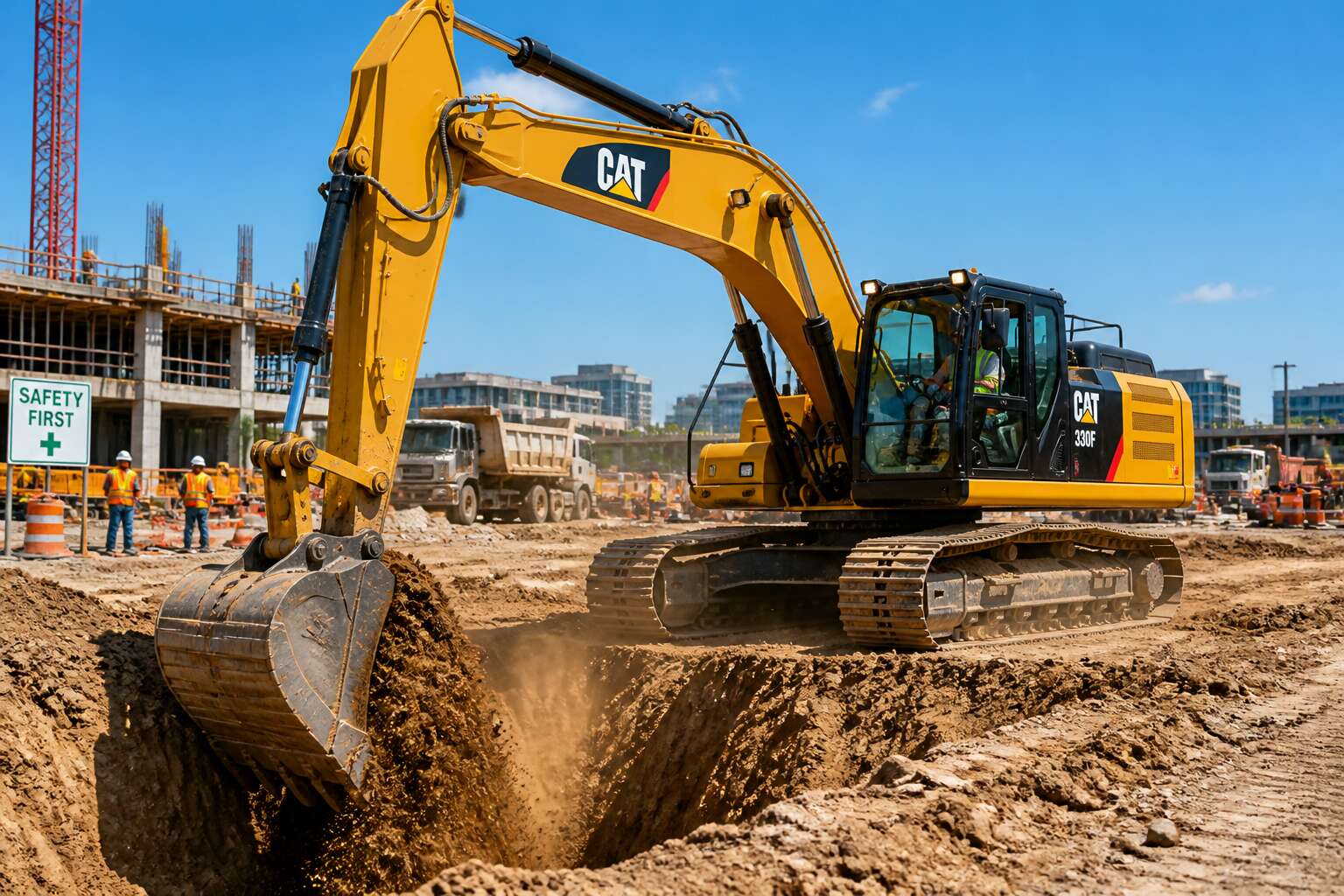
One mid-size excavator can shift 2,500 cubic metres of earth in a day. That is a useful number when defining this machinery. So, excavator what does it do? It digs, lifts, and loads material through hydraulic force. No other piece of plant matches its reach and precision.
The machine’s core anatomy is straightforward. The undercarriage provides stability. The cab houses the operator. The articulated arm, with its boom and bucket, performs the work. South African sites use this equipment for reliable ground handling.
Common jobs include:
- foundation trenches
- demolition
- hauling rubble into trucks
The excavator remains essential from Johannesburg to the Northern Cape. It is the machinery that turns raw land into usable space.
Core Mechanical Components
The answer to excavator what does it do lies inside its mechanical core. A diesel engine drives hydraulic pumps that pressurise oil to around 300 bar. This fluid moves through valves and hoses to cylinders, converting pressure into linear force that moves the boom, arm, and bucket with precision.
Three groups of components matter most:
- Main pumps and control valves managing flow and direction.
- Cylinders that extend and retract with measured force.
- Final drives and swing motors turning flow into motion.
Rotary actuators turn the cab, while planetary gears in the final drives convert hydraulic power into traction. Every component depends on filtration. A single grain of silica can score a spool valve and cost hours of downtime.
Operators on South African sites rely on this system daily. When you ask excavator what does it do, the honest answer: it multiplies hydraulic pressure into raw, manageable power.
Operational Principles
Operating an excavator is a sequence of coordinated movements. The operator’s joystick inputs tell the hydraulic system which cylinders to pressurise and in what order. A typical digging cycle follows a clear sequence:
- Boom lowers and the bucket angles into the material.
- The arm retracts, pulling the bucket through the ground.
- The boom lifts as the cab swings toward the dump target.
- The bucket opens, releasing the load.
The swing back to the face starts the next pass. This loop repeats hundreds of times per shift. So, excavator what does it do in operational terms? It translates one person’s commands into a smooth cycle of digging, lifting, swinging, and dumping. Each cycle takes seconds, yet productivity depends on matching movements to ground conditions. The operator reads the site, anticipates resistance, and adjusts depth on the fly. That feedback loop, from eyes to hands to hydraulics, is the honest answer to excavator what does it do.
Common Construction Tasks Performed by Excavators
Site Preparation and Grading
About 15% of any building schedule vanishes during site preparation, according to the Construction Industry Development Board. That is where an excavator what does it do becomes a financial question. You are paying for precise dirt, not brute force.
On a South African plot, the excavator strips the black topsoil, which offers no load-bearing value. Then it yanks out old roots and buried rubble. Grading follows, where the bucket blade trims the subgrade to within centimetres of the design elevation. Typical tasks include:
- Stripping the organic topsoil to reach stable strata.
- Excavating soft or mottled clay pockets that would sink under a foundation.
- Shaping cut and fill zones so the final grade drains properly.
Without this groundwork, the most sophisticated machine on site becomes a very expensive hole digger. Grading is where the excavator what does it do justifies its diesel bill, turning a rough plot into a flat plane that your surveyor actually approves.
Trench and Foundation Digging
In trench and foundation digging, the excavator what does it do becomes a matter of millimetres. The operator cuts a narrow slot for the foundation beam, working against a laser level on a Free State farmstead or a Cape Town infill plot. Walls must stay plumb, or the concrete pour demands more material than the engineer priced.
The excavator also manages the spoil, casting it clear of the working area so the trench does not collapse under its own weight. Clay, dolomite, and loose sand each require a different bucket angle.
- Cutting service trenches for water and sewer lines.
- Digging pile caps and ground beams to exact dimensions.
- Cleaning out collapsed sections before the concrete team arrives.
That last task saves hours! A hand crew would struggle with shovels, but the excavator reopens the trench quickly. This is the excavator what does it do in practice.
Demolition Work
Demolition changes the question of excavator what does it do from digging to dismantling. On a Johannesburg office block retrofit, the machine works floor by floor, using a hydraulic breaker to crack concrete slabs while the bucket sorts rebar from rubble. The operator reads the building’s stress points through the cab’s vibration.
The excavator takes down walls, separates salvageable materials, and loads debris trucks. Three tasks come up often:
- Punching openings in load-bearing masonry before structural engineers approve shoring.
- Pulling steel frames with a grapple after oxy-fuel torches cut the welds.
- Crushing concrete on site to reuse as base fill for the new slab.
This is where the excavator what does it do shifts with each attachment and every material’s behaviour. Brick crumbles, but reinforced concrete resists. An experienced operator sees that difference in seconds.
Heavy Material Lifting
Lifting heavy materials changes the answer to excavator what does it do. Instead of digging, the machine becomes a precise hoist. A hook block or lifting sling replaces the bucket. Operators lift precast concrete panels, steel girders, and even entire pump stations. On a Durban port project, I saw an excavator manoeuvre a 12 metre pipe into a trench without damaging the concrete collar. The hydraulic system provides micro adjustments that a crane cannot match. Common lifts include:
- Pipes for water and sewer lines
- Precast culverts
- Transformer pads
The operator reads the load’s swing and wind direction. Each lift requires steady hands and a calm eye. Control matters more than force.
Excavator Applications in Mining and Quarrying
Surface Mining Operations
South Africa’s mineral wealth lies buried beneath millions of tonnes of overburden. The excavator what does it do in this harsh reality? It acts as the primary extraction agent, digging into benches and loading haul trucks with broken rock. Each pass removes material to expose valuable seams.
The excavator what does it do when faced with hard rock? It fractures blasted material, working alongside drilling rigs and crushers. A single large machine can fill a 100-tonne truck in four passes, an efficiency that drives modern quarrying in Mpumalanga coal fields and Free State granite quarries.
On any surface operation, the excavator performs several functions:
– Loading blasted material onto haul trucks
– Cleaning spillage around crushers
– Building protective berms along pit edges
– Digging drainage channels to prevent flooding
The operator reads the ground, adjusting digging angles to match material density. This human judgement, combined with hydraulic power, transforms raw earth into economic value.
Loading and Hauling Duties
A haul truck pulls alongside, and the excavator what does it do? It swings into action! The bucket fills with fractured rock, pivoting to drop the load into the waiting bed. Each pass is counted against the truck’s capacity, the operator reading the weight through the joysticks.
Hauling duty demands synchronisation. A truck waiting under the bucket costs money. An overflowing truck wastes it. I have watched operators who never glance at the truck; they feel the swing and know when the bucket is empty. They adjust the rhythm across dusty South African quarry floors.
The sequence rarely changes:
- Spot the truck
- Fill the bucket
- Swing and dump
- Return to the face
The excavator what does it do for the wider operation? Its swing speed and breakout force determine the hourly output, the figure that decides profit in the Western Cape and Limpopo alike.
Drilling and Blasting Support
Before the blast, the bench must be clean. Loose material on the face absorbs energy meant for the rock. The excavator what does it do here? It scales the face, strips soft seams, and cuts a clean floor for the drill rig to traverse. A drill pattern is only as good as the surface it sits on.
The machine’s role extends beyond preparation:
- It moves stemming material into the blast crew’s reach.
- It clears the muck pile after the shot.
- It separates oversize boulders from material the crusher can accept.
These tasks demand a different touch. I have watched blasters curse a poorly prepared bench, then praise an operator who leaves a level floor. This support work is unglamorous, but it controls the schedule for the entire pit. Fewer misfires, less secondary blasting, and a steady flow of rock to the crusher.
Tunnel and Shaft Construction
Underground work changes how you read a machine. At a tunnel face, the excavator what does it do becomes a matter of survival. The operator scales the roof under unproven ground, listening for the crack that says the rock is moving. I have watched men refuse to work until the machine made the ground safe. The reach and articulation matter more than raw power.
Shaft sinking adds its own constraints. The excavator mucks the bottom in a circle barely wider than the machine. It loads kibbles while hanging from a winch. It also:
- moves steel sets into place for the liner
- clears water and slurry from the sump
- rips soft ground where blasting is restricted
- sets concrete forms shut with hydraulic pressure
The difference from surface work is the absence of escape. You cannot swing an unaware angle. Every pass of the bucket is a negotiation with the rock mass itself.
Sand and Gravel Extraction
South Africa’s aggregate demand never pauses. In the quarry, the excavator what does it do becomes visible in every stockpile. It strips overburden from fresh limestone, loads 50-ton haulers, and feeds the primary crusher without rest. I have watched operators work the bucket edge with almost surgical patience, isolating usable gravel from waste clay.
Sand extraction shifts the job entirely. The machine wades into saturated pits, mucking sand from beneath the water table. It also:
– cleans overloaded settling ponds
– builds berms against flash floods
– blends sand grades for concrete contracts
– keeps haul roads passable through summer storms
The work is repetitive, but the ground changes daily. A skilled operator reads the material on every pass.
Excavator Uses in Landscaping and Agriculture
Pond and Water Feature Construction
A single excavator can shift 400 tonnes of soil in a day, yet its most delicate work happens in gardens and farms. When considering excavator what does it do, look past construction zones. It carves ponds for livestock and digs water features for estates. The long arm scoops earth, sculpts banks, and places stone.
Typical tasks in landscaping and agriculture:
- Forming terraces to stop soil erosion
- Excavating planting holes for indigenous trees
- Creating swales for rainwater harvesting
For a farm dam, the excavator removes overburden and compacts the floor. It then shapes spillways to manage overflow. In smaller gardens, the same machine digs koi pond basins and levels surrounding lawns. This dual purpose serves rural and suburban South Africa.
Land Clearing and Leveling
On a smallholding in the Western Cape, an excavator can clear an acre of wattle and rooikrans in a single morning. That is the practical answer to excavator what does it do when the question comes from a farmer, not a contractor. The machine rips out invasive root systems, piles brush for burning, and hauls away rocks that would wreck a plough.
Leveling follows clearing. A paddock that slopes too steeply for a centre pivot needs a patient operator and a laser-guided bucket. The operator cuts high spots and fills low ones, working in passes that leave the soil loose enough for reseeding. In landscaping, excavator what does it do comes down to preparing a level lawn or sports field.
Common land clearing tasks include:
- Removing alien vegetation and stumps
- Extracting embedded rocks and boulders
- Stripping topsoil for stockpiling or replacement
Pipe and Drainage Installation
A farmer’s entire herd depends on a single buried waterline in the Karoo. The excavator that lays it must follow a laser grade exactly. For a landscaper in Cape Town, excavator what does it do for drainage? It carves French drains and stormwater channels with millimetre accuracy. The bucket’s tilt and the operator’s touch decide whether rainwater flows away from a foundation or straight into it.
A typical installation sequence for agricultural pipework involves:
- Opening a pilot trench along a laser set grade
- Bedding the pipe in fine sand or crushed stone
- Covering the line and compacting in thin lifts
When laying irrigation mains, the excavator’s ability to pivot on its tracks eliminates the need for multiple machines. The backfill is done in layers, with the bucket pressing each lift to prevent future settling. Positioning the excavator correctly saves hours of manual labour.
Specialized Excavator Roles Across Industries
Underwater Dredging and Salvage
Underwater work is not for the faint of hearted machine. A standard excavator, fitted with sealed hydraulics and a lengthened dipper arm, becomes a submerged specialist for dredging harbours and clearing shipping lanes. These machines remove decades of silt, broken concrete, and discarded cargo from port floors.
The question, excavator what does it do, finds its most demanding answer in salvage operations. Operators working from sonar screens grapple with sunken vessels, cut through tangled steel, and hoist wreckage to the surface where visibility is a memory. The work treats patience as a mechanical virtue.
Common underwater duties include:
– Clearing navigational channels in busy ports
– Recovering submerged vehicles and equipment
– Excavating trenches for subsea pipeline installations
South African coastal projects depend on this precision, especially where swell and current punish hesitation. The marine environment corrodes everything it touches, which makes maintenance schedules as crucial as the machine itself.
Forestry and Logging Operations
Mechanical extraction in forestry requires a different lens on the question, excavator what does it do. In South African timber plantations, these machines transform from digging tools into mobile processing units. They load harvested logs onto trucks, stack timber at roadside landings, and feed debarking machines with relentless consistency. The hydraulic reach that once carved trenches now positions heavy pine trunks with surgical control.
Forestry operations often demand a machine that can navigate steep terrain and tight tree spacing. Excavators fitted with grapple attachments meet this requirement, clearing brush and sorting timber by grade or destination. A single operator can manage tasks that historically required several workers and draught animals. This efficiency changes the economics of small-scale logging operations across the country.
Work in this sector typically includes:
– Loading and sorting harvested timber
– Building and maintaining forestry roads
– Clearing firebreaks and invasive vegetation
Fire prevention adds another layer of responsibility. Excavators carve strips of bare earth through plantations, creating barriers that slow the spread of veld fires. These machines also construct water points and access routes for emergency crews. The work is seasonal but critical, often performed in sweltering heat when the fire risk peaks. Forestry excavators earn their keep during these months, proving their value extends well beyond the traditional construction site.
Waste Management and Recycling
South Africa generates over 120 million tonnes of waste annually. The question excavator what does it do finds a clear answer in this sector. Excavators keep waste moving through recovery facilities and landfill sites, sorting, pushing, and loading refuse at a scale no crew could match by hand.
In recycling yards, excavators with grapple or magnet attachments handle scrap metal and bulky items. They feed conveyor belts, clear clogged sorting lines, and manage stockpiles of recyclable material. This reduces manual labour and keeps operations running without interruption.
Common waste management duties include:
- Loading waste into transfer stations
- Sorting recyclables from general refuse
- Compacting and covering waste at landfill cells
Operators also shape daily cover layers and maintain access roads, which extends the usable life of each landfill site. For these workers, excavator what does it do is not an abstract question. It is a daily routine performed under harsh sun and tight deadlines.
Snow Removal and Emergency Response
When snow seals a mountain pass in the Drakensberg, the excavator what does it do becomes a matter of survival. Fitted with snow blades and chains, these machines carve through drifts that strand entire communities. They push snow aside, load it into trucks, and reopen routes that keep hospitals and supply chains alive.
- Clearing landslide debris after heavy rain
- Breaking through collapsed structures during rescue operations
- Building temporary flood barriers with sand and rock
In emergency response, the excavator what does it do is measured in hours saved. After a storm, operators dig drainage channels and lift wreckage from roads. They move with urgency, turning raw hydraulic power into practical action. This is not machinery for show. It is a tool for restoring normal life when normal life has stopped.
Railroad and Infrastructure Maintenance
On railway corridors, the excavator what does it do becomes a question of precision. These machines replace worn sleepers, clear ballast, and stabilise embankments without halting adjacent lines. Operators work in narrow windows between passing trains, reading the track bed for signs of settlement.
Key duties include:
– Renewing culverts beneath track beds
– Re-grading drainage ditches that protect rail foundations
– Positioning concrete barriers along erosion-prone cuts
– Rebuilding catch fences on mountain passes
Infrastructure maintenance depends on the same reach. The excavator what does it do is measured in intact bridges and unblocked culverts. Its boom lifts precast sections into place, while its tracks hold firm on loose gravel. South African rail networks use these machines to repair storm damage, replace aging pipes, and keep freight moving across the country.
Advantages of Modern Excavator Technology
Ask any plant manager and the answer will surprise you. The excavator what does it do today would be unrecognisable to a 1990s operator. Attachments now drive sheet piles, split boulders, and densify soil. On contaminated land sites, operators run excavators by remote control, using clamshell buckets to lift hazardous soil without human exposure. The same machine becomes a masticator for clearing brush along power line servitudes.
Modern technology extends these roles. GPS machine control cuts a slope to millimetre accuracy without a single survey stake. Telematics send real-time hydraulic oil analysis to a fleet manager’s phone, catching contamination before a pump fails. Electric excavators now work indoors in factories and tunnels where diesel exhaust is banned. Quick-couplers let a single operator switch from bucket to auger to breaker in under a minute.
For contractors across South Africa, the excavator what does it do question gets a different answer every month. That adaptability is the point!



0 Comments