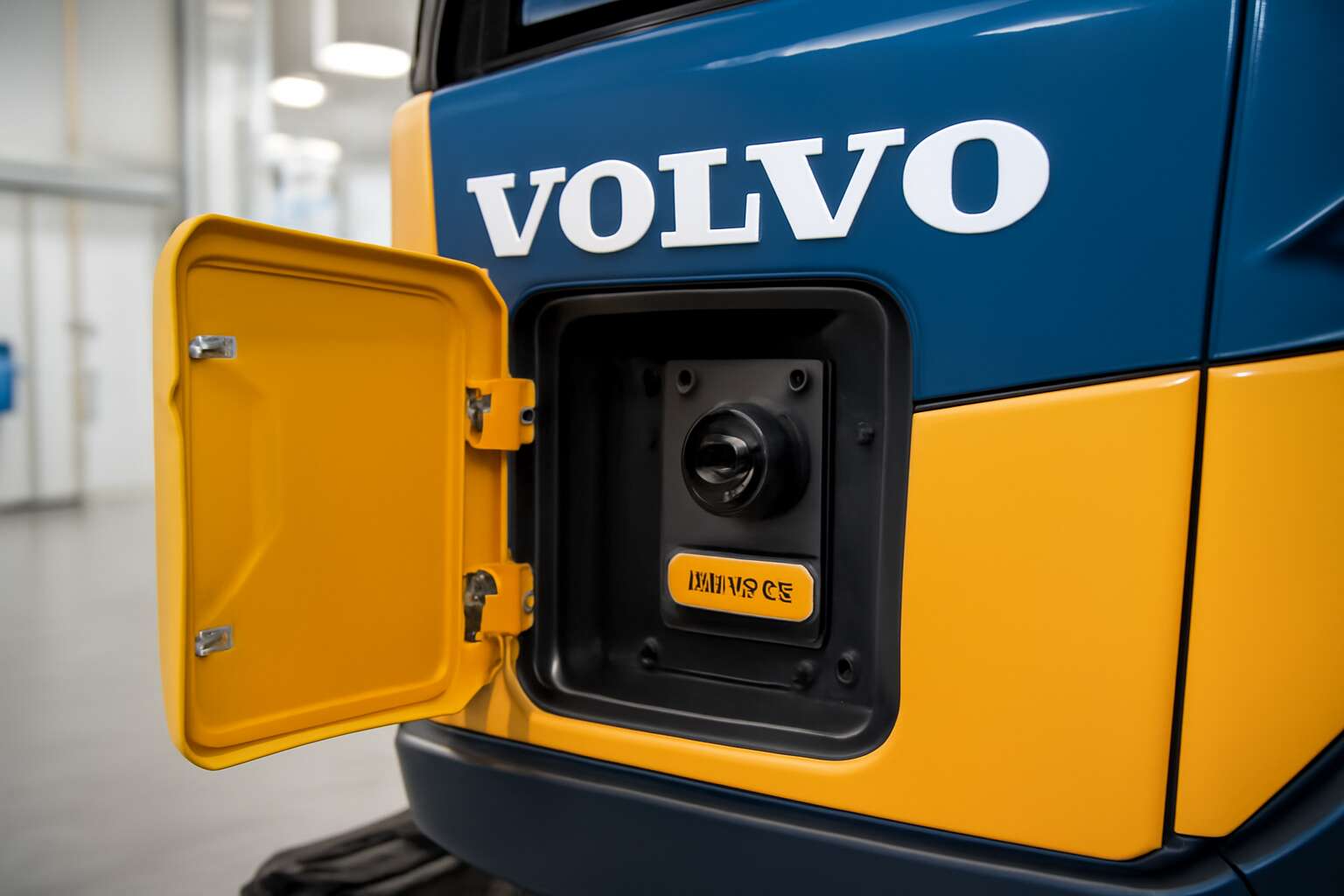
Volvo Excavator Diagnostic Port Location Overview
What is the diagnostic port and why it matters
From the dim corner of our workshop, the engine’s pulse becomes legible through the volvo excavator diagnostic port location. It isn’t a mere hole in metal; it is a doorway to the machine’s memory, where fault codes murmur and live data glows in the gloom.
Understanding this port is more than curiosity; it anchors the care of heavy iron.
- Hidden behind a panel adjacent to the operator’s console
- Uses standardized connectors familiar across Volvo machines
- Feeds fault codes and live sensor data into the diagnostic tool
When the dashboard sighs, the port speaks back, guiding the observer through an unseen narrative of wear in South Africa’s workshops.
Typical locations across Volvo excavator families
In the rhythm of South Africa’s heavy workshops, the volvo excavator diagnostic port location glows with quiet purpose. It is a doorway to the machine’s memory, a hinge where fatigue and fault signals meet a patient reader in the workshop light.
Across Volvo excavator families, the port hides behind panels and within accessible service hatches. The exact spot shifts with the model, yet the principle remains: a compact gateway kept clean and reachable.
- Behind the panel near the operator’s console
- Under a service hatch on the cab’s side
- Inside a recessed panel near the cab’s right side
Knowing the diagnostic port location isn’t just practical; it makes maintenance sing, letting technicians read fault codes and live data through standardized connectors.
Understanding port types and connectors you may encounter
In the rhythm of South Africa’s busy workshops, a quiet truth hides behind panels: the diagnostic port is the machine’s memory, a doorway to its heartbeat. A veteran fitter calls it the port’s whispering heart, guiding patient technicians through fault codes with calm hands.
Understanding volvo excavator diagnostic port location means skimming the map of port types you may encounter. Some models hide a compact data link beneath the operator console; others open behind a cab-side panel. The aim is a clean, accessible gateway to live data.
- Standardized data link connectors used on Volvo networks
- Service hatch interfaces tucked behind operator panels
- Removable shields for quick harness access
Keep it clean, keep it accessible, and the machine tells its story with confidence.
Safety considerations before accessing the port
In South Africa’s bustling workshops, the volvo excavator diagnostic port location sits like a quiet oracle, waiting to reveal the machine’s pulse. It is a doorway to live data, a map of decisions etched in codes and sensor whispers; a veteran fitter may call it the whispering heart, guiding patient technicians with calm hands through fault codes and quiet checks.
- Personal protective equipment and a safe work area
- Certification and authorization to access diagnostic interfaces
- Respect for data integrity and secure handling
Safety considerations before accessing the port anchor the moment in the workshop; calm, controlled preparation keeps both data and people safe. Ensure the machine is immobilised by authorized personnel, respect hot surfaces and stored energy, and maintain a focused, distraction-free space so the data stream can be read with confidence.
How diagnostic ports support maintenance and on-board diagnostics
The volvo excavator diagnostic port location sits as the quiet gateway to live health data for South Africa’s busy workshops, turning scattered fault codes into a coherent story of engine, hydraulics, and electronics. It’s where technicians follow a pulse—ECU snapshots, sensor whispers, and error codes—that translates into actionable insight rather than guesswork.
- Faster fault identification through real-time data streams
- Coherent maintenance history and trend tracking
- Compatibility with Volvo on-board diagnostics and trusted third-party tools
In this role, the port location underpins maintenance and on-board diagnostics by consolidating data from the machine’s network, enabling informed decisions and smoother workflows for busy service bays.
Common Diagnostic Port Locations by Volvo Excavator Model Series
Volvo EC and EW compact series port locations
Morning fog lifts over the Karoo as a service crew faces a stubborn fault. A field veteran once said, ‘Every door to a fault is a door to time saved.’ That door is the volvo excavator diagnostic port location for EC and EW compact models.
For the EC and EW compact series, the diagnostic port location is typically tucked behind a slim panel on the machine’s right-hand side, near the cab. This arrangement makes the volvo excavator diagnostic port location approachable from ground level and keeps cables tidy for SA workshops.
- Right-hand side service panel near the cab
- Under the access door beside the operator’s step
- Rear engine-compartment panel (model-dependent)
Knowing these spots helps minimize downtime and keeps South African crews moving through harvest and roadwork with less fuss.
Volvo mid-size EC and EC Plus series port locations
In the field, the volvo excavator diagnostic port location for EC and EC Plus mid-size machines is a quiet edge—accessible yet unobtrusive. A slim panel near the cab on the right-hand side keeps the port within reach at ground level, avoiding cable chaos and bolstering fault tracing in SA workshops during harvest and roadwork seasons.
- Right-hand side access panel adjacent to the cab
- Under the operator’s step access
- Rear-engine compartment panel, vary by model
Being fluent in this volvo excavator diagnostic port location across EC and EC Plus variants keeps South African crews moving through the day with fewer interruptions.
Volvo large EC and EX series port locations
Across South Africa’s fleet sheds, nearly 70% of downtime comes from chasing the wrong diagnostic port rather than diagnosing the fault.
For Volvo large EC and EX series, the volvo excavator diagnostic port location is typically tucked behind a weather-sealed service panel on the right-hand side near the cab, or beneath the operator’s step. Some models hide it in the rear-engine compartment, so model-specific manuals guide you to the exact door.
- Right-hand side service panel near the cab
- Under the operator’s step access
- Rear engine compartment access panel (model dependent)
These patterns reflect Volvo’s practical approach to diagnostics—keep ports accessible, and the road gets a little shorter for SA crews.
Volvo specialty and long-reach excavators port locations
Across South Africa’s busy fleet yards, downtime often climbs when mechanics chase the wrong diagnostic door. The culprit is a simple misplacement: the volvo excavator diagnostic port location—and it varies by model but stays practical for field crews.
For Volvo specialty and long-reach excavators, the common doors align with the cab side, the stepping area, or the rear engine bay—each opening designed for quick hook-up and minimal crawling.
- Behind a weather-sealed service panel on the right-hand side near the cab
- Under the operator’s step access
- Rear engine compartment access panel (model dependent)
Model-specific manuals are your compass—some machines tuck the port in the rear engine bay, others hide it under the stairs. Either way, the pattern remains pragmatic: access, seal, diagnose, and move on.
Knowing these doors isn’t just trivia; it slashes fault-finding time and keeps SA crews productive under hot sun and cold mornings.
Accessing the Diagnostic Port: Tools, Safety and Step-by-Step Guide
Required tools and equipment for port access
South Africa’s workshop tempo is ruthless, and timing is everything. The diagnostic port acts as the hinge where a stalled machine can regain its rhythm, turning a tense moment into steady momentum in the field.
- Diagnostic interface compatible with Volvo machinery
- Personal protective equipment (PPE)
- Adequate lighting and a stable surface
- Service manual or approved digital reference
Safety first shapes the night shift: engines off, lockout-tagout in place, and all hydraulic pressure respected. Maintain distance from rotating components and stay mindful of battery and fuel lines. Clear communication with teammates keeps risk outside the workshop door.
Step-by-step, at a high level: Stage one focuses on preparation and the manual’s guidance; Stage two emphasizes environment and observation; Stage three is aligning with manufacturer guidance or your dealer for any anomalies. For the volvo excavator diagnostic port location, expect it to reside behind accessible panels near the operator area, but variations exist across models; rely on the Volvo service manual and your local dealer for precise guidance.
Pre-access safety checklist and personal protective equipment
In the workshop’s quiet hum, a single port becomes the lifeline—the volvo excavator diagnostic port location, a doorway to rhythm restoration when power returns and gauges settle. I feel the hinge between stall and momentum, where technicians translate error codes into corrective tempo and keep the field singing.
Pre-access safety checklist keeps the night shift safe.
- Engine off and secured
- Lockout-tagout applied
- Hydraulic pressure relieved
- PPE and lighting in place
Step-by-step, at a high level: Stage one is prep with the manual’s guidance; Stage two checks the environment and observes; Stage three aligns with manufacturer guidance or your dealer for anomalies. Access points sit behind panels near the operator area; models vary.
In South Africa, steady communication and disciplined safety keep diagnostics flowing as the tempo shifts in the field.
Locating the port quickly: step-by-step walkthrough
In a South Africa workshop, a quiet doorway becomes the heartbeat of reliability—the volvo excavator diagnostic port location, a doorway to rhythm restoration when power returns and gauges settle. It is the hinge between stall and momentum, where technicians translate error codes into corrective tempo and keep the field singing.
A disciplined calm accompanies this moment: the right PPE, steady lighting, and a respect for the machine’s memory. Good lighting and secure surroundings turn a routine check into a confident ritual—ready for the data sprint that follows!
- Identify the port’s panel near the operator area; model variations mean checking the manual.
- Ensure a calm environment with no active hydraulic movement before approaching.
- Connect the diagnostic tool securely and verify a clear data signal.
Common mistakes to avoid during access
In South Africa’s bustling workshop floor, downtime bites hard—unplanned stoppage can cost a fleet operator dearly. The volvo excavator diagnostic port location is the doorway to answers, a gateway to return-to-work speed. With the right tools and calm, technicians translate codes into tempo and keep the machine singing.
Tools and safety go hand in hand: a compatible diagnostic scanner, the right adapters, the service manual, and clean, steady lighting. Don the PPE, approach the panel with care, and let the machine settle before you begin.
- Not isolating hydraulic and battery power before accessing
- Overlooking model variations that alter port type or location
- Forcing connectors or using the wrong cable
- Ignoring data signal verification or misreading the display
Think steps, not speed: locate the port, confirm power-down, attach the tool securely, verify data, and document findings.
Troubleshooting and Diagnostics Through the Port
Interpreting diagnostic codes and typical meanings
On a busy South African site, the engine hums and a fault code flashes. The volvo excavator diagnostic port location becomes the first pin on your map, guiding you toward what the dashboard suspects is wrong.
Interpreting codes is about pattern recognition, not panic. Look for recurring fault families—engine, hydraulics, or electronics—and read them in the context of the machine’s history.
- Engine management faults signal sensor or ignition issues.
- Hydraulic codes point to pressure or flow irregularities.
- Electrical/CAN-bus errors reveal communication problems.
These categories stay consistent across Volvo excavator lines, helping you prioritize inspection and service conversations with technicians.
A code is a whispered clue—context and documentation finish the confession.
Using Volvo VIDA and compatible software with the diagnostic port
On a bustling South African site, one blinking fault code can halt a shift in seconds; Volvo VIDA turns that moment into insight. The diagnostic port becomes a compass, translating engine whispers into a narrative technicians can trust.
With VIDA and compatible software, technicians connect through the volvo excavator diagnostic port location and summon live data streams—RPM, pressures, and temperatures—then compare them against learned patterns. Using the volvo excavator diagnostic port location ensures you access the right data channel.
- Real-time data streams
- Fault code interpretation and pattern matching
- Historical trend analysis for maintenance planning
Reading the chassis’s memory in context makes sense of symptoms, guiding conversations with technicians and guarding against drift in diagnosis.
Recording data logs for maintenance and repairs
On a bustling South African site, a single fault code can stall a shift. Recording data logs through the volvo excavator diagnostic port location transforms noise into evidence: live streams of RPM, hydraulic pressures, and temperatures become something you can trust. That data tells the story behind the symptom and guides the troubleshooting conversation.
During maintenance and repairs, keep a running log that captures context:
- Timestamped fault codes and ECU identifiers
- Key parameter values at fault onset
- Duration of anomalies and sequence of events
- Pre- and post-repair readings to confirm restoration
With these logs, diagnostics stay anchored and repeatable, reducing drift and rework on site.
Best practices for clearing fault codes safely
Troubleshooting through the diagnostic port requires calm, methodical nerve and a respect for the story the data tells. The volvo excavator diagnostic port location is more than access; it’s a doorway to fault histories and real-world behavior. When codes appear, the goal is to clear them without erasing evidence or triggering unintended resets. Maintain the discipline that every cleared code should be followed by observation of live data streams and post-clear checks.
- Consider preserving diagnostic context by capturing fault codes, ECU identifiers, and time stamps before any reset.
- Cross-check with live streams (RPM, hydraulic pressures, temperatures) to confirm anomalies and ensure consistency after clearance.
- Retain fault history for trend analysis, rather than simply eliminating error flags.
- Follow up with post-repair verification and targeted tests to confirm restoration beyond code absence.
In South Africa’s busy sites, this approach anchors diagnostics in verifiable evidence, reducing drift and unplanned downtime while keeping crews aligned with the machine’s true condition.
When to seek dealer or support services
Diagnostics through the port is not a hurried checkbox; it’s a patient recital of machine health. The volvo excavator diagnostic port location is more than access—it’s a doorway to fault histories and the machine’s real-world whispers. Codes speak clearly when listened to with calm, method, and a reverent respect for the data’s truth.
Should signs point toward external help, consider these moments to seek dealer or support services:
- Fault codes persist after a reset, while live data streams tell a different story
- Unfamiliar ECU identifiers surface or the software behaves erratically
- On-site capabilities are stretched and the issue demands vendor tools or deep diagnostics
On South Africa’s busy sites, this disciplined approach anchors diagnostics in verifiable evidence, reducing drift and downtime while keeping crews aligned with the machine’s true condition.
Maintenance, Security, and Best Practices for Volvo Diagnostic Ports
Port security and access control to prevent tampering
Maintenance teams benefit when volvo excavator diagnostic port location is known and consistent. It minimizes downtime, reduces wear from repeated rummaging, and keeps data flowing during scheduled checks. In practice, routine inspections keep connectors free of dust and corrosion, while clear change logs help technicians trace port activity back to the right service window.
Security begins with clear access controls and auditable visibility, a must for South Africa’s high-scrutiny fleet operations. Limiting credentialed touchpoints, maintaining tamper-evident seals, and keeping diagnostic data on a protected network guard against tampering while preserving data integrity across the fleet.
Best practices for Volvo diagnostic ports mirror prudent fleet governance and staff training.
- Limit access to authorized personnel
- Maintain audit trails and monitoring
- Regular policy reviews and staff training
Cable management and environmental protection
Maintenance is a quiet ritual that keeps the machine breathing. Cable routes deserve clean air—no crush points, no wandering loom. The volvo excavator diagnostic port location benefits from tidy pathways and weatherproof sleeves. Dust, moisture, and heat are thieves; guard them with seals and clearly labeled connectors.
Security is the shadow that never sleeps. Limit touchpoints, vault diagnostic data on a protected network, and seal portals with tamper-evident tags. An auditable trail renders the port a guardian rather than a breach, especially across a fleet in South Africa’s demanding landscape.
- Tamper-evident seals on connectors
- Protected network zones for diagnostic devices
- Documented interactions with the port
Best practices knit governance with careful habits: gatekeepers, change logs, and crews trained to treat every port as a fragile device, sheltered from sun and spray.
Software updates and compatibility considerations
In South Africa’s sun-baked job sites, uptime is the real asset—and software discipline is the fuel. Maintenance means syncing VIDA or OEM diagnostic software with the volvo excavator diagnostic port location, installing firmware updates, and validating compatibility before they roll out across the fleet. Backups, tidy cable routing, and clearly labeled connectors keep the doorways to diagnostics clean and quick to access!
Security is the shadow that never sleeps. Limit touchpoints, seal connectors with tamper-evident labels, and route diagnostic data through a protected network. An auditable trail—who accessed what, when, and why—turns the port into a guardian rather than a breach, especially on a multi-machine SA fleet.
Best practices knit governance with careful habits. Gatekeepers, change logs, and crews trained to treat every port as a fragile device ensure reliability under sun and spray. Emphasize software compatibility checks, align update schedules with maintenance windows, and tailor procedures to South Africa’s rugged operators and diverse Volvo families.
Documentation and record-keeping for diagnostics
On South Africa’s sun-baked sites, downtime costs fleets tens of thousands of rand per hour. Maintenance means disciplined documentation of diagnostic activity, backups, and tidy cable routing. For the volvo excavator diagnostic port location, teams maintain a standardized log—what was accessed, by whom, and when—paired with timestamped data dumps and verified backups so every event is reproducible.
Security is the shadow that never sleeps. Limit touchpoints, seal connectors with tamper-evident labels, and route diagnostic data through a protected network. The data trail should record access, devices used, and outcomes, turning the port into a guardian rather than a breach.
Best practices knit governance with careful habits. Gatekeepers, change logs, and crews trained to treat every port as a fragile device ensure reliability under sun and spray. Consider a concise checklist:
- Documentation discipline with version control
- Tamper-evident labeling and access audits
- Software update alignment with maintenance windows
Routine inspections and signaling when the port needs service
Maintenance on Volvo diagnostic ports isn’t glamorous, but it keeps fleets rolling. In a typical South African operation, a single hour of downtime costs tens of thousands of rand. Routine inspections catch loose pins, frayed cables, and seal failures before dust or rain sneaks in. The volvo excavator diagnostic port location should be treated like a living map—tracked, logged, and ready for swift service signaling.
- Tamper-evident labeling and access controls
- Proper cable routing and shielding against sun and spray
- Auditable logs that timestamp every check and intervention
Security and best practices go hand in hand. Limit touchpoints, route data over protected networks, and train crews to treat each port as a fragile gear. When routine signaling shows wear, plan maintenance at the next window and keep the logs pristine.




0 Comments