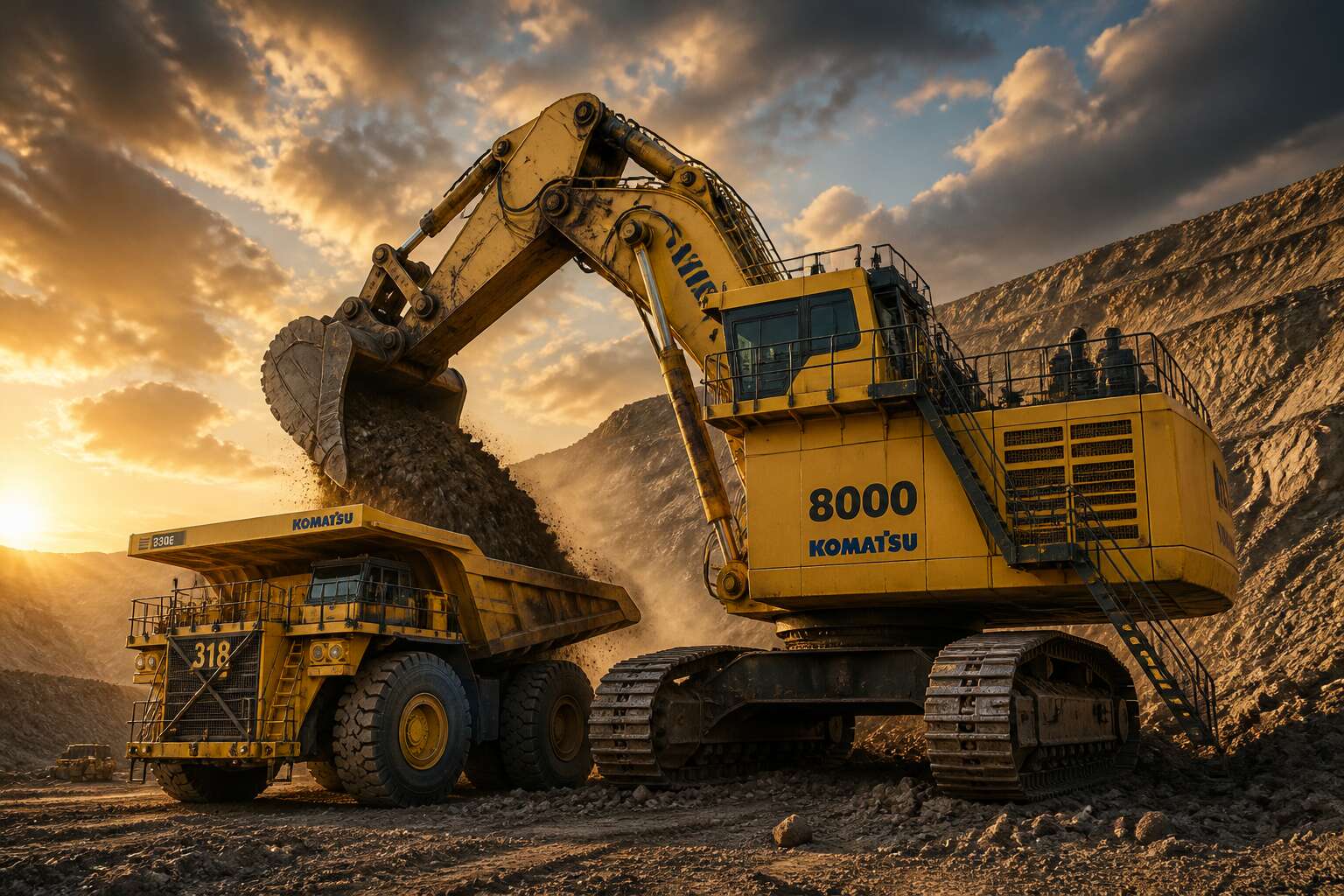
Excavator 8000: An Overview of Capabilities and Design
Main Design Features
The excavator 8000 emerges from the blueprint as a study in controlled force. Its main design features prioritize durability over ornamentation, with a reinforced boom and a counterweight that anchors every swing. The hydraulic system operates at pressures that would rupture lesser machines, yet it responds to the operator’s hand with calm precision.
- a lattice boom built to absorb torsional strain
- independent track motors for uneven terrain
- a cab sealed against dust and noise
Each component serves the machine’s singular purpose: moving earth that has stood still for millennia. No excess, no flourish, just the work of excavation.
Key Specifications and Dimensions
At 810 tonnes, the excavator 8000 does not whisper its arrival at a worksite. It announces itself through mass and hydraulic force, carrying a bucket capacity that invites comparison to a small house. This machine is a response to material that resists conventional equipment, a single pass defined by its cutting teeth and the pressure behind them.
The mechanical heart of the excavator 8000 is its twin-engine configuration. Power delivery is directed through independent swing drives, allowing simultaneous rotation and digging cycles that reduce cycle times on hard bank materials.
Core physical credentials include:
1. Operating weight of approximately 810 tons with a standard reach configuration
2. Tare weight exceeding 650 tons, requiring modular transport logistics
3. Maximum digging depth of 9.5 meters at a 40 degree angle
4. Drawbar pull rated at 1,250 kilonewtons for gradeability
The undercarriage spreads that weight across a broad footprint, a boon for the brittle shale and weathered dolerite common in South African opencast operations. Operators sit inside a cab mounted on viscous isolators, a layer of separation between human intent and mechanical outcome. When the boom swings, it does so with controlled momentum, each degree of rotation measured by the hydraulic accumulators. This machine does not chase speed; it prioritizes penetration and bite. For mining houses looking at overburden ratios, the excavator 8000 represents a calculated investment in sustained output.
Engine Power and Hydraulic Performance
Two engines on the excavator 8000 combine for 3,280 kilowatts of installed power! The twin power plants feed independent hydraulic circuits, so the operator can hoist the boom and swing the house simultaneously without robbing one function to feed another.
Seven variable displacement pumps deliver 4,200 litres per minute at 320 bar. That flow feeds the boom cylinders, where breakout force at the bucket teeth approaches 900 kilonewtons. Accumulators damp shock loads, protecting seals and hoses in hard bank conditions.
- Main pump flow: 4,200 litres per minute
- Relief pressure: 320 bar
- Bucket breakout force: 898 kilonewtons
The cooling system on the excavator 8000 matters just as much. Two oil coolers with individually driven fans hold hydraulic temperature steady through summer overburden shifts in the Mpumalanga coalfields. Viscosity swings change cycle times, and cycle times decide whether a mine hits its daily tonnage target.
Operator Comfort and Cab Features
Twelve hours in a confined space can turn precision into guesswork. I have watched veteran operators make avoidable mistakes after long shifts, and the cause often lives in the cab. The excavator 8000 treats fatigue as a design problem. The air-suspension seat filters low-frequency vibration before it reaches the spine. Independent climate control holds a steady temperature through Mpumalanga’s summer heat and the Highveld’s colder nights.
The cab of the excavator 8000 reduces the body’s daily micro-strains:
- A flat floor lets the operator shift position while the boom cycles
- Low-effort joysticks keep wrist fatigue from building before mid-shift
- Pressurized filtered air keeps coal dust from settling on the operator’s skin
Sightlines shape an operator’s judgement. The elevated cab and tapered boom give a direct line to the bucket teeth, so the operator reads the bank without leaning forward. The excavator 8000 camera system covers the rear swing radius, removing the constant neck rotation that compounds over months.
Primary Applications and Industry Use Cases
Heavy Construction and Earthmoving
South Africa’s construction sector shifts over 300 million cubic metres of earth each year, and the excavator 8000 carries a significant share of that burden. On large highway interchanges and open cast mining sites, this machine performs the heavy lifting that smaller units cannot attempt. Its reach and bucket capacity allow operators to move material in fewer passes, which directly reduces project timelines.
Typical applications include:
- Bulk excavation for dam foundations and reservoir basins.
- Overburden removal in coal and chrome mines.
- Cut and fill operations for industrial park developments.
The excavator 8000 also supports pipeline trenching across rocky terrain, where its hydraulic force compensates for hard ground conditions. For contractors managing large scale earthmoving contracts, this machine becomes the primary production asset.
Mining and Quarrying Operations
South Africa’s mining houses operate on a scale that demands machinery with a singular focus on output. The excavator 8000 has become a cornerstone for open-cast operations, where the speed of overburden removal directly impacts the bottom line. Its purpose is measured in tonnes moved per hour, and the machine rarely disappoints. In these environments, the daily grind is relentless. The machine provides the hydraulic force required to break through compacted strata and load haul trucks with surprising efficiency.
Mining and quarrying operations rely on the excavator 8000 for several critical tasks. The machine handles the heavy end of the production cycle, ensuring the extraction process runs on schedule.
– Stripping weathered rock layers to expose valuable mineral seams.
– Digging below the water table for aggregate extraction in river quarries.
– Loading blasted ore into ultra-class haulers with precise swing angles.
The durability of the excavator 8000 in this sector is what truly separates it from smaller models. When you are working against the clock to meet export deadlines, downtime is not an option. The machine’s robust undercarriage handles the sharp, abrasive footing of a quarry floor, while the boom design absorbs the shock of digging into solid rock. Operators find that the machine retains its digging power even at depth, a critical factor when the target seam sits low. This capability allows mining operations to extend the life of their pits, digging deeper with confidence. It is the kind of reliability that earns its keep, day in and day out, on the unforgiving frontline of the mining industry.
Demolition and Material Handling
The excavator 8000 does not just break concrete; it negotiates the chaotic aftermath of a collapse. In demolition, the machine’s true skill is finesse under pressure. I have watched operators use the precise stick control to peel away steel rebar from crushed slabs, sorting debris streams on the fly. The attachment compatibility transforms the unit from a brute-force tool into a surgical instrument.
This heavy equipment becomes a self-contained recycling plant on a busy site. The hydraulic flow management ensures the shear or magnet attachment runs at peak efficiency, reducing the need for secondary machinery. Common tasks include:
1. Separating ferrous metal from brick and masonry rubble for scrap recovery.
2. Crushing concrete foundations into reusable aggregate for backfill.
3. Loading processed material into trucks from hard-to-reach sections of the demolition site.
Material handling with the excavator 8000 involves more than moving weight. It is about logistics, specifically the rhythm of feeding a crusher or stockpiling raw aggregate. The machine’s cycle times keep the downstream process fed without starving the system. Its reach allows it to stack material high, maximizing yard storage capacity. The result is a smoother workflow where the machine acts as the central nervous system of the operation, adapting its attachment to the demand of the hour.
Utility and Underground Work
Utility and underground work demands a machine that can handle narrow trenches and deep excavation. I have seen the excavator 8000 work in trenches barely wider than its tracks, a common deployment on South African infrastructure projects from urban water reticulation to fibre optic cable installation. Its precise swing control lets operators work close to existing services without damage.
A typical pipe-laying operation follows a clear sequence:
1. Trenching to exact depth specifications, even in rocky ground.
2. Lifting and placing concrete pipes or culverts into position.
3. Backfilling and compacting layers of material in confined spaces.
The excavator 8000 maintains steady hydraulic pressure at low engine RPM, which saves fuel during long utility shifts. Operators value the clear sightline to the bucket edge when working alongside live cables or water mains.
Agriculture and Forestry Tasks
In agriculture and forestry, the excavator 8000 takes on tasks that demand both reach and control. On South African farms, it digs new dams and rejuvenates old ones, cutting into clay layers that retain seasonal rainfall. It also clears invasive bush and reshapes contour banks to slow water runoff across sloped fields.
Forestry operations rely on the same machine to open access routes through dense timber stands. Its undercarriage handles steep gradients, while the boom reaches over young saplings without damaging them. A typical day might include:
- Constructing firebreak lines along plantation boundaries.
- Excavating drainage channels to keep root zones dry.
- Loading harvested logs onto trailers in tight landings.
Operators appreciate how the excavator 8000 balances breakout force with featherlight touch, making it equally effective ripping out stumps or placing a log bed beside a muddy trail.
Evaluating Performance and Operating Efficiency
Fuel Efficiency and Consumption Rates
The excavator 8000 demands attention to its fuel ledger. Consumption rates in South African conditions, from Highveld altitude to coastal humidity, remain steady. Every litre spent returns measurable output, and the machine does not waste effort on unnecessary revs.
Operating efficiency shows itself through telemetry. I have watched fleet managers compare cycle times against fuel burn, and the excavator 8000 consistently delivers more tonnes per litre than older machines. The gap widens over a full shift.
- Litres per hour at idle versus working load
- Fuel burn during swing versus dig cycles
- Regeneration intervals that affect uptime
These figures expose where money disappears. The hydraulic system recovers energy that older units lose to heat, keeping the consumption curve flat under sustained load. That consistency matters more than any brochure promise.
Lifting Capacity and Reach
Lifting capacity and reach define the excavator 8000’s social standing on any site, much like a firm handshake. In the cut and thrust of South African earthworks, the machine’s geometry dictates what is possible. Its boom and arm configuration offers a generous working envelope, yet the real measure is how that reach translates into precise placement. You can spot a seasoned operator from afar, one who understands that empty reach is just a longer way to incur fatigue.
The lift chart, often a dry document, becomes a narrative of balances and counterweights. At full extension, the numbers reveal a machine that remains composed, refusing to become a seesaw. A few things worth observing during a demonstration:
– Rated load at maximum boom height versus ground level
– Stability on a downward slope with a full bucket
– The counterweight’s contribution to a smooth swing
This data shows where the hydraulic pressure meets the physical world. The excavator 8000, when fitted with a heavier attachment, still maintains a fluid motion. It does not strain; it simply repositions its centre of gravity. That quiet efficiency is what turns a daily task into a seamless routine, and it makes the accountant’s ledger look respectable.
Hydraulic System Response
The hydraulic system in the excavator 8000 responds to the joystick with a precision that makes ordinary machines feel sluggish. I have watched operators complete a delicate trench in half the usual time because the boom does not lag or overrun. That responsiveness is the first thing to evaluate when judging performance.
To measure operating efficiency, focus on the pump’s reaction under sustained load. A weak system will lose pressure as the oil heats up, producing jerky movements. The excavator 8000 maintains a steady flow even after hours of demanding work. Observe the following during a live test:
- Time from joystick input to full bucket curl.
- Swing smoothness when carrying a loaded bucket uphill.
- Hydraulic temperature rise after fifteen minutes.
These three points reveal whether the machine’s hydraulic response remains consistent in real conditions. For South African sites, where heat and altitude affect performance, this consistency is the true marker of efficiency.
Track vs. Wheeled Configurations
When evaluating the excavator 8000 on a South African site, the choice between track and wheeled configurations shapes every performance metric. Tracks distribute weight across soft ground, allowing the machine to operate where tyres would sink. Wheeled units offer faster movement between job locations on hard surfaces, reducing downtime during road transfers.
Operating efficiency depends on matching the undercarriage to the terrain. On rocky or uneven ground, tracks provide stability and traction. On paved or compacted sites, wheels deliver speed and lower ground pressure per contact point.
- Tracked models excel in muddy or loose conditions.
- Wheeled models suit urban and roadwork applications.
The excavator 8000 delivers different results depending on the chosen configuration, and the evaluation of performance must account for these variables.
Maintenance, Safety, and Longevity
Preventive Maintenance Schedule
The excavator 8000 is often perceived as an indestructible force, but its true lifespan is determined long before the engine turns over. It is built in the daily decisions of the operator and the discipline of the site manager. A machine left to accumulate dust and debris will eventually betray you, not with a dramatic failure, but with a slow decline in performance that becomes a costly habit. The psychological shift from reactive repair to proactive care is the first step toward true longevity.
Adopting a strict preventive maintenance schedule is the only way to protect your investment. This is not about ticking boxes on a checklist; it is about understanding the machine’s rhythm. The excavator 8000 demands attention to its fluid levels and filtration systems, especially in the harsh South African climate where dust is a silent adversary.
Core checks for the excavator 8000 should include:
1. Daily inspection of the undercarriage for track tension and wear.
2. Weekly lubrication of all pivot points and boom joints.
3. Bi-weekly analysis of hydraulic oil for contamination.
4. Monthly verification of all safety shut-off mechanisms.
Neglecting these protocols does not just shorten the machine’s life, it compromises the operator’s safety. A worn pin or a leaking hose can turn a routine task into a catastrophic event. You must treat the machine’s maintenance as an operational priority, not an administrative afterthought. This discipline enhances its resale value and ensures it remains a reliable tool for years.
Common Mechanical Issues and Troubleshooting
The excavator 8000 rarely fails without warning, but the signals often get ignored. Hydraulic drift, for instance, usually stems from a worn spool or a contaminated relief valve. When the boom sinks under load, check the cylinder seals first; a slow weep from the rod end points to a simple packing replacement, not a full overhaul. Similarly, erratic swing motion traces back to a sticking swing brake solenoid or a low charge pressure in the swing motor. Clean the solenoid, verify the pressure with a gauge, and you avoid an expensive teardown.
Electrical gremlins plague every big machine, and the excavator 8000 is no exception. A sudden loss of throttle response often means a faulty pedal position sensor or a corroded harness connector near the cab floor. Dielectric grease and a multimeter settle most of these issues in under an hour. Track issues demand immediate attention. A loose track that slaps the undercarriage accelerates sprocket wear. Adjust the tension only when the track is cool, and inspect the idler springs for cracks.
- Check the main hydraulic pump for cavitation noise, which indicates a clogged suction strainer.
- Test the pilot pressure at the manifold; a drop below spec signals a worn pilot pump.
- Inspect the final drive for metal shavings in the drain plug during oil changes.
When the engine overheats, the culprit is usually a blocked radiator core from dust buildup. Blow it out with compressed air from the backside, not the front. Do not assume a thermostat failure without first feeling the upper hose for a temperature difference. These troubleshooting steps, practiced with consistency, keep the excavator 8000 working through the harshest Highveld summers and the wettest coastal shifts. The machine’s longevity depends on your willingness to diagnose quiet symptoms before they become loud failures.
Safety Features and Operator Training
An excavator 8000 operates with significant force, and its safety architecture reflects that reality. The ROPS cab, backup cameras, and proximity sensors give the operator a full picture of the work zone. Hardware alone does not prevent incidents, though. Training programs that simulate high-angle digging and blind-side loading build the coordination that keeps crews intact. In South Africa, where sites range from open-pit mines to tight urban trenches, a well-trained operator extends the machine’s life through smoother control inputs and fewer shock loads.
Safety inspections become second nature when tied to operator performance reviews. A pre-shift walkaround that checks hoses, pins, and alarms takes fifteen minutes. I have watched this habit prevent costly downtime. The excavator 8000 rewards this discipline.
- Verify the swing brake engages before starting.
- Test the emergency stop from the cab.
- Confirm the seat belt latch is clean.
Repeated daily, these checks keep a fleet running and a crew safe. Longevity follows from consistent training and vigilance.
Track and Undercarriage Care
Morning frost settles on red laterite dust across the Highveld. That abrasive layer tests every component of the excavator 8000 before the engine even warms. The undercarriage bears the brunt. Pins, bushings, and rollers grind against grit that moves like sand.
Undercarriage repairs consume more budget than any other wear item. A track that slips costs fuel and time. I have seen a neglected sprocket ruin a week of production. A quick inspection changes that outcome.
Pre-shift care focuses on three points:
- Check track tension with the bucket raised.
- Look for leaks around final drives.
- Remove packed mud from idlers.
Proper tension prevents premature wear. The excavator 8000 rewards attention with longer service life and stable operation on steep slopes.
Hydraulic Fluid and Filter Maintenance
The excavator 8000’s hydraulic system is a closed circuit of pressure and precision, but that entire network depends on one thing: clean oil. The red dust of the Highveld does not stay outside the machine. It seeps into grease fittings and around wiper seals, and over time, it compromises the fluid. Dirty hydraulic oil is a silent killer. It scores valve spools and erodes pump pistons. The cost of a rebuilt pump is a hard lesson in maintenance.
Filter changes are not a suggestion. They are a contract with the machine. A clogged return filter creates backpressure that robs the excavator 8000 of its speed and power.
– Check the sight glass for froth or discoloration before the morning start.
– Replace the breather cap filter, which is the first line of defense against airborne grit.
– Inspect the main pressure filter for signs of metallic paste, which signals imminent component failure.
That metallic shimmer in a filter element is the only warning you get. Once the damage is audible, the hydraulic pumps are already shedding shavings into the circuit. A fluid sample sent to a lab can tell you if the oil has lost its viscosity or if water has condensed inside the reservoir. For a machine this size, a 400-hour change interval is the standard, but dust shortens the window. I have seen operators stretch the life of their excavator 8000 by a decade simply by respecting the hydraulic system. They treat the fluid as blood, and cleanliness as the heartbeat.
Cold Weather and Extreme Condition Upkeep
When Highveld frost settles overnight, the excavator 8000 needs preheating. Diesel waxes below freezing, so use a block heater and check the coolant mixture before first start. Cold batteries lose cranking power, and a sluggish spin damages the starter ring gear.
Extreme heat brings its own abuse. The cooling system works harder, dust cakes on radiator fins, and rubber hoses crack. Operators should inspect belts and replace glazed or frayed sections. In sandy or corrosive environments, rinse the undercarriage daily.
- Verify coolant to -35°C
- Use winter-grade diesel and anti-gel
- Check battery terminals weekly
Longevity depends on adjusting the daily walk-around. The excavator 8000 responds to the season. The machine that shrugs off a midday Karoo heatwave will struggle at dawn in a Sutherland frost. Let idle time warm the hydraulics and rotate the turntable before working. That discipline is the difference between lasting and weakening.
Cost Analysis and Buying Considerations
New vs. Used Excavator 8000 Pricing
New or used? The price gap between a fresh unit and a second-hand machine can exceed 40%, yet South African contractors often ignore the hidden liabilities. For the excavator 8000, the decision hinges on your operational cycle, not the sticker price. A new unit brings full warranty and emissions compliance, but the initial cash outlay stings.
Used units demand a forensic pre-purchase inspection, focusing on pumps, swing gear, and undercarriage. Consider these variables:
- Residual value retention over five years
- Financing rates for used versus new stock
- Immediate repair budget for pins and bushings
In my experience, a low-hour excavator 8000 from a reputable dealer often outperforms a dormant new machine. Calculate the cost per tonne moved! That number reveals the truth. Downtime risk alone on an excavator 8000 can erase any savings in a week.
Operating Costs and ROI Calculation
Every hour an excavator 8000 sits idle, it silently consumes capital through standing charges and stalled project timelines. The real metric that matters for your balance sheet is the cost per tonne moved, a figure that strips away the emotional allure of new machinery and reveals the brutal arithmetic of your operation. South African contractors often anchor their budget on the purchase price alone, yet the true financial weight rests on fuel burn, service intervals, and the endurance of the undercarriage components.
For the excavator 8000, ROI calculation begins after 1,500 operational hours when the initial novelty fades and the machine starts demonstrating its actual worth. I have witnessed operations where a well maintained second hand unit outperformed a showroom fresh model because the operator understood the machine’s hydraulic rhythm perfectly. Your financing structure should mirror the seasonal cycles of your industry, otherwise you pay for capacity during dormant months.
The cost categories for your financial model are deceptively simple:
Diesel consumption at varying load factors
Hourly wage for the operator
Wear parts such as teeth, tracks, and filters
Scheduled maintenance and unscheduled breakdowns
These variables fluctuate with site conditions, so a fixed hourly rate is a myth. You can only calculate the true cost per tonne when you track actual production volumes against total expenditure over a quarter, not a week.
Financing rates for the excavator 8000 in South Africa hinge on the machine’s age and your proof of consistent workflow. A lending institution looks at your historical project pipeline with more scrutiny than the machine’s spec sheet. If you budget for a bucket capacity that you rarely use, your cost per tonne rises sharply. The ROI equation also includes the residual value you recoup in five years, and that figure depends on how meticulously you preserve the machine’s structural integrity.
Consider the downtime risk embedded in every working day. A single hydraulic pump failure on the excavator 8000 can cost you the equivalent of two weeks of operator wages in repair parts alone. When you project your cost per tonne, factor in the probability of such events based on the machine’s service history. The calculation becomes a question of how much risk you can carry on your books, not just what you pay per month. The real financial wisdom lies in matching your machine’s capacity to the density of the material you move, ensuring you never haul empty buckets across a quarry.
Financing and Leasing Options
An excavator 8000 acquired through the wrong financial vehicle burdens the balance sheet immediately. South African contractors typically choose between a conventional bank loan, a full maintenance lease, or a rent-to-own agreement. Each alters your tax position and your working capital. A lease pegged to machine hours suits those who face unpredictable project pipelines. Your depreciation allowance under SARS rules only helps if you hold the asset on your books.
Three considerations dominate the decision:
- Interest rate fixed or variable
- Residual value guarantee
- Early termination penalty
Compare how the financier handles a mid-term break and whether settlement penalties scale with the machine’s residual value. Some structures let you swap the excavator 8000 for a newer unit after three years, which protects you from escalating track and hydraulic maintenance costs.
Warranty and Dealer Support
The warranty on an excavator 8000 sits between you and the inevitable. In South Africa, where equipment works hard and parts travel far, dealer support transforms a mechanical failure from a crisis into an interval. A warranty without a dealer network behind it is merely paper.
When you compare machines, ask what the warranty excludes. Undercarriage components. Hydraulic hoses. Wear items. The excavator 8000’s major systems should be covered for at least two years or 5,000 hours. Some dealers offer extended coverage that follows the machine, not the owner.
I have watched operators buy on price and regret it by month six. The dealer’s response time matters more than the initial discount. Consider:
- Distance from the nearest dealer branch to your site
- Availability of service technicians with excavator 8000 training
- Parts stock levels for common replacement items
- Loaner provision during warranty repairs
A dealer who carries your model in their rental fleet will often prioritise your downtime differently.


0 Comments