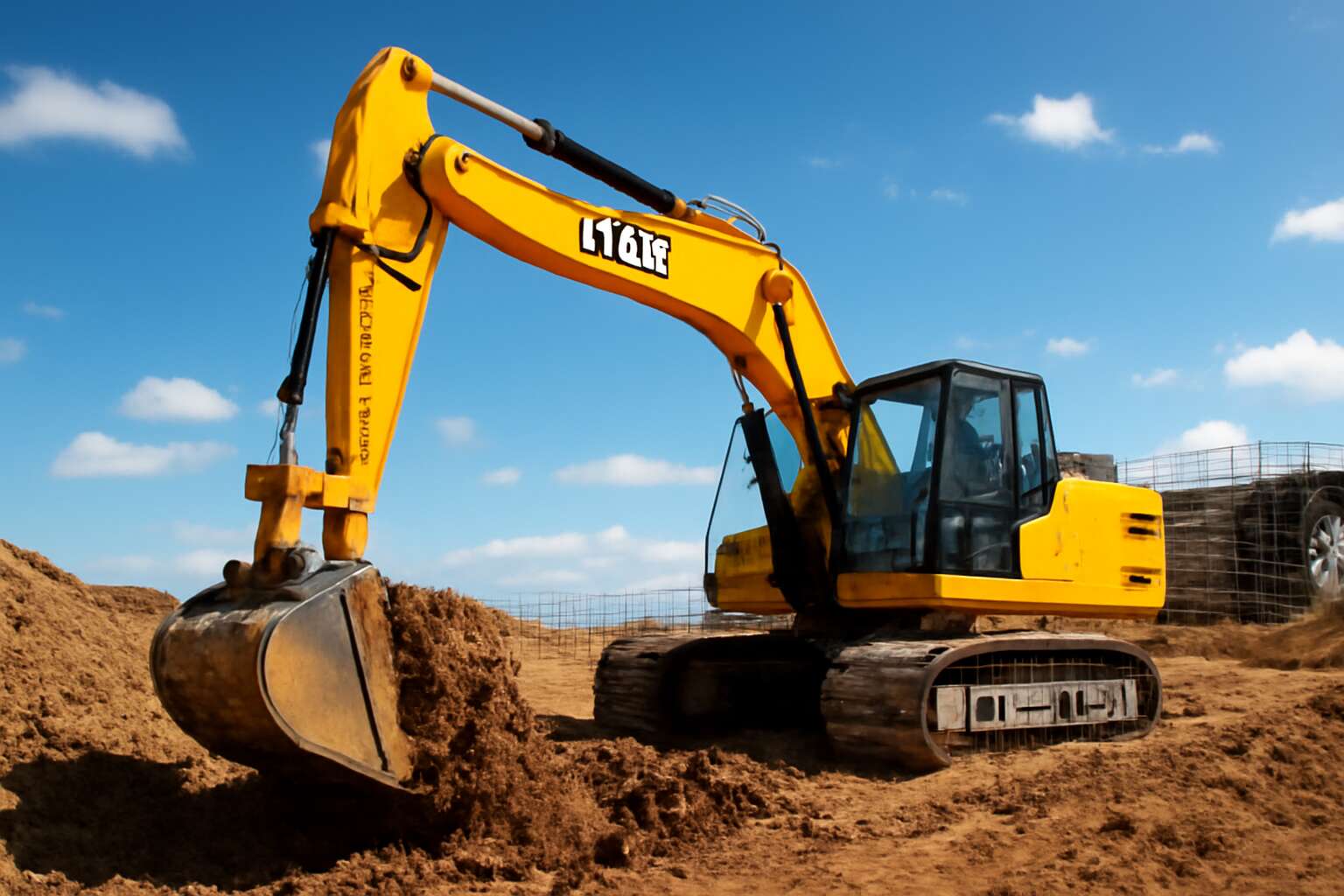
Overview of excavator jcb
What defines a JCB excavator and its typical uses
On South Africa’s busiest sites, one excavator jcb can move more than 1,000 cubic meters of earth in a single shift. The machine blends raw power with precise hydraulics, and its modular attachments let it tackle digging, lifting, and site prep with equal ease.
A JCB excavator is defined by a compact, robust chassis, a high-pressure hydraulic system, and quick-change attachments that swap tasks in minutes. Typical uses on-site include:
- Trenching and utilities
- Site grading and leveling
- Material handling and loading
I’ve seen projects run smoother when uptime and parts availability are guaranteed. In South Africa, a strong service network keeps crews productive, rain or shine. The machine proves its value day after day.
Core components and how they work
On South Africa’s busiest sites, a single excavator jcb can move over 1,000 cubic meters in a shift—a glint of power and precision that shapes rough ground into ready space.
- Engine and hydraulic pump—the beating heart
- High-pressure hydraulic system and cylinders—the limbs
- Boom, stick, and bucket—the sculptor’s tools
Quick-change attachments snap on in minutes, while electronics monitor pressure and temperature to keep performance steady.
Popular models and performance ranges
Power that moves mountains, bucket by bucket—this is the instinct behind the excavator jcb on South Africa’s most demanding sites!
The range spans compact units built for tight urban plots and formidable giants engineered for heavy earthmoving, each tuned to deliver precise breakout, smooth hydraulics, and reliable endurance in harsh conditions.
Here are the popular models and performance ranges you’ll encounter on top SA sites:
- Compact-class: nimble on tight plots, 0.3–0.6 m³ bucket, reach 4–6 m.
- Mid-range: 14–20 tonnes, 0.8–1.4 m³ buckets, reach 6–9 m.
- Large-scale: 20–30+ tonnes, 1.5–2.5 m³ buckets, reach beyond 9 m.
Such layering of capability lets crews tailor efficiency to task and terrain, much like the excavator jcb turning rough ground into progress.
How to assess project needs to match a JCB excavator
Across South Africa’s rugged job sites, the right excavator jcb can turn stubborn rock into reliable progress—every sweep writing a line in the weekend’s schedule. An overview of how this versatile machine fits a project helps crews map tempo, terrain, and triumph with clarity.
To assess a fit, lean on a few broad considerations that keep the machine aligned with site realities rather than chasing trends.
- Soil and ground conditions
- Access and space constraints
- Reach, depth, and breakout needs
- Hydraulic response and cycle time
- Support, maintenance, and service availability
From compact urban plots to sprawling quarries, the excavator jcb excels when reach, breakout force, and smooth hydraulics align with the task. Understanding these scales helps teams select the right model without overcommitting.
Performance and capabilities of excavator jcb
Digging depth and reach capabilities
From the first lift, you feel the heartbeat of an excavator jcb in your hands—relentless, precise, almost prescient. In South Africa’s dust and heat, depth is not a luxury but a requirement, and this machine coaxes it from the ground with a whisper of hydraulic power. On SA sites, crews report a 30% faster trenching pace with the right setup.
The digging depth and reach capabilities let crews trench, stockpile, and sculpt with fewer moves! The fluid boom choreography keeps lines clean and beds accurate, while stable swing ensures sidewalls stay forgiving, even in compact spaces.
- Significant digging depth that minimizes repositioning
- Long reach to maximize forward work without extra passes
- Consistent breakout and control across materials
On demanding sites, performance isn’t just strength—it’s rhythm, reliability, and the quiet confidence of a machine that reads the ground like a map.
Lifting capacity and stability features
The lifting performance of an excavator jcb hinges on balance as much as brute force. On South African sites, weight distribution, reinforced booms, and responsive hydraulics translate lift capacity into controlled, safe moves—even when space is tight and loads are heavy.
Key stability features keep cycles predictable and productive:
- Optimized counterweight and wider undercarriage for improved load stability
- Load moment indicator (LMI) and precise boom kick-out to maintain safe lift angles
- Proportional, load-sensing hydraulics with relief valves to prevent overextension and sudden drops
Together, these elements reduce rehandling, cut cycle times, and give operators the quiet confidence to push the job through challenging terrain.
Fuel efficiency and engine options
On South Africa’s demanding construction frontier, the excavator jcb stands as a citadel of performance and economy. Its prowess isn’t merely raw power—it’s a disciplined balance that turns heavy lift and tight spaces into fluid, predictable cycles. When fuel efficiency is measured in liters per hour, modern engine options can trim consumption by as much as 15%, granting long days with uncomplicated maintenance and steady output.
Fuel efficiency and engine options on the excavator jcb are tuned for dusty SA sites, shifting loads, and changing weather.
- Stage V or equivalent diesel engines for cleaner combustion and longer service intervals
- Auto-idle, Eco mode, and programmable power curves to shave idle time
- Load-sensing hydraulics with efficient cooling to sustain steady performance under heavy loads
Across SA job sites—from coastal ports to inland mines—the excavator jcb proves its mettle on varied terrain, with power that follows the task and hydraulics that respond with restraint. Durability, ease of service, and engine options tuned for performance make every cycle feel purposeful and assured.
Attachments and versatility for different tasks
On South Africa’s demanding job sites, the excavator jcb doesn’t just lift—it’s a pulse of precision and power, turning heavy tasks into a rhythm you can trust. A recent on-site study notes up to 12% more cycles per shift when cycles are optimized, proving that efficiency and capability can walk hand in hand. Power with restraint—that’s the heartbeat of the excavator jcb!
A few trusted attachments unlock versatility across tasks and terrain for the excavator jcb:
- General-purpose bucket for versatile digging and loading
- Hydraulic breaker for breaking rock and concrete
- Tilt-rotator or grapple for precise handling and sorting
- Auger or trenching accessories to extend reach and depth
Across South Africa’s landscapes, the excavator jcb adapts with smooth cycles, durable build, and intuitive control—ready for coastal ports, inland mines, and everything in between.
Maintenance, reliability, and lifecycle costs for excavator jcb
Routine maintenance schedule and tips
On a South African jobsite, a single hour of excavator jcb downtime can derail a timetable and drain the purse. Maintenance isn’t glamorous, but it’s the quiet guardian of reliability. A well-kept machine runs cooler, saves fuel, and extends its lifecycle, turning everyday servicing into a strategic investment rather than a costly afterthought.
Here are high-level maintenance focuses that keep things humming without turning into a manual of doom:
- Fluid health, filtration, and coolant systems
- Hydraulic integrity and leak monitoring
- Undercarriage wear and structural integrity
These routines contribute to reliability and help manage lifecycle costs for the excavator jcb across diverse SA sites. A culture of proactive checks often yields lower total cost of ownership and preserves resale value, which is music to any project manager’s ears.
Common wear parts and replacement cycles
On sunburnt SA sites, downtime from worn components can gnaw away at productivity—some projects report up to 12% loss in daily rhythm. The excavator jcb, cherished for its quiet patience, stays reliable when kept in tune rather than left to chance.
Reliability blooms wherever checks meet sound judgement on wear. When lifecycle costs are measured in hours rather than dollars, preventive wear-part awareness keeps engines cooler, fuel leaner, and resale value steadier.
Common wear parts and replacement cycles include:
- Bucket teeth and adapters — 800–1,200 hours typical in moderate soil; up to 1,500 hours in lighter soils
- Undercarriage (track shoes, rollers, sprockets) — 1,000–2,000 hours; regular inspection and adjustment
- Hydraulic hoses and seals — 3,000–6,000 hours; monitor for leaks and wear
- Pins and bushings — 1,000–2,500 hours; check for play
This quiet stewardship translates into lower lifecycle costs and preserved resale value for your excavator jcb.
Diagnostics, service intervals, and downtime reduction
Maintenance is the quiet guard for the excavator jcb, turning potential failures into predictable performance. Diagnostics capture the health of the machine before a problem writes its own headline, and disciplined service intervals transform wear into predictability rather than surprise downtime. In the South African context, where harsh sun and dusty work sites strain components, this approach isn’t optional—it’s essential.
- Daily on-site checks of fluids, hoses, and undercarriage condition
- Scheduled service intervals aligned with hours and workload
- Monitoring hydraulic pressure and sensor readings to catch anomalies
- Record-keeping to track wear parts and anticipate replacements
When maintenance is woven into the workflow, lifecycle costs stay measured in hours rather than rand spent fixing surprises. The excavator jcb remains reliable, with resale value steadier and downtime smaller, a testament to disciplined diagnostics and timely care.
Longevity, resale value, and total cost of ownership
Across South Africa’s rugged sites, downtime is not a cost—it’s a bottleneck. Field operators report that downtime can shave up to 6–8% from yearly output on demanding projects.
- Downtime impact on productivity and margins
- Parts availability and service network
- Fuel efficiency and operating costs
- Residual value in the SA market
Maintenance isn’t a chore; it’s a performance warranty. For an excavator jcb, disciplined upkeep turns wear into predictable spend and protects resale value as sun and dust keep the machine honest!
When maintenance is woven into daily workflow, lifecycle costs stay disciplined in hours rather than rand spent fixing surprises. The excavator jcb proves its longevity, with steadier resale and a tighter total cost of ownership.
Warranty coverage and manufacturer support
In the field, warranty coverage is not a safety net but a partner for performance. The excavator jcb earns trust by standing behind its work with a network that travels light, delivering on-site support and swift access to parts across South Africa’s demanding landscapes. When the sun burns and dust swirls, reliability becomes a daily rhythm rather than a gamble.
- Factory-backed diagnostics and remote monitoring
- Prompt parts supply and authorised technician access
- Clear escalation paths for service and warranty claims
Manufacturers’ support turns routine upkeep into a strategic asset, smoothing lifecycle costs and preserving resale value. With an excavator jcb warranty that travels with the machine, operators sleep easier knowing wear becomes data-driven, predictable spend, and performance endures long after the initial burst of project work.
Buying, renting, and financing excavator jcb
Choosing between new, used, or rental options
“Every hour of uptime is an epic of progress,” a South African site manager likes to say. In a landscape where delays compound fast, the excavator jcb stands at the crossroads of performance and practicality, shaping timelines and margins with quiet certainty.
Choosing between new, used, or rental hinges on project horizon and financing outlook. New machines offer peak reliability and factory warranties, used units balance cost with service history, while rental delivers nimble capacity for seasonal peaks without long-term commitments. Financing options—leases, hire purchase, and facility loans—help spread cost while preserving working capital.
- New machines: strongest warranties and latest hydraulics
- Used units: lower upfront price with documented history
- Rental: predictable costs and immediate readiness
In South Africa, dealer support, parts availability, and service networks tip the scale toward a well-supported choice that minimizes downtime and sustains productivity.
Budget, financing, and leasing considerations
A single decision on buying, renting, or financing can rewrite a site’s timeline. The excavator jcb sits at the crossroads of uptime and budget, a quiet counterweight to volatile market cycles. In South Africa, dealer support and parts networks tilt the balance toward the right option.
New machines offer the strongest warranties and latest hydraulics. Used units reduce upfront costs yet need a careful service history. Rental delivers predictable costs for seasonal peaks, with no long-term commitments.
Key budget levers include:
- Upfront cost versus total cost of ownership
- Maintenance, service intervals, and parts availability
- Financing terms: leases, hire purchase, and facility loans
Warranty terms, delivery, and service contracts
Uptime is the invisible backbone of every build. In South Africa, choosing between buying, renting, or financing a machine can reset a project’s timeline. The excavator jcb sits at that crossroads, where dealer support and a strong parts network tilt the balance toward reliability and predictable costs. Warranty terms, delivery windows, and service contracts are guardrails on busy sites.
Key terms to confirm include:
- Warranty scope: parts, labour, on-site support
- Delivery and commissioning: lead times and on-site handover
- Service contracts: preventive maintenance and uptime guarantees
In South Africa, a dealer with a nationwide network often translates to faster parts access and more predictable service.
Where to source parts, service, and support networks
Purchasing, renting, or financing an excavator jcb isn’t merely a budget decision—it’s a timetable shaper. In South Africa, the right choice can shorten downtime and extend productive hours on site. It stands at the crossroads, where ownership meets flexible capacity and predictable costs.
Where to source parts, service, and support networks? In SA, a dealer with a nationwide footprint translates into faster parts access and steadier service. Consider these sources for peace of mind:
- Authorized JCB dealers with nationwide coverage
- Original parts distributors and regional stock hubs
- On-site field teams, workshops, and 24/7 helplines
Financing options range from outright purchase to rental-to-own and various plans. Look for dealer-backed finance, hire purchase, or bank facilities, and assess bundled maintenance packages that guard uptime as closely as a warranty. Align the choice with project cadence, risk tolerance, and cash flow, and you’ll keep the machine turning with confidence.


0 Comments