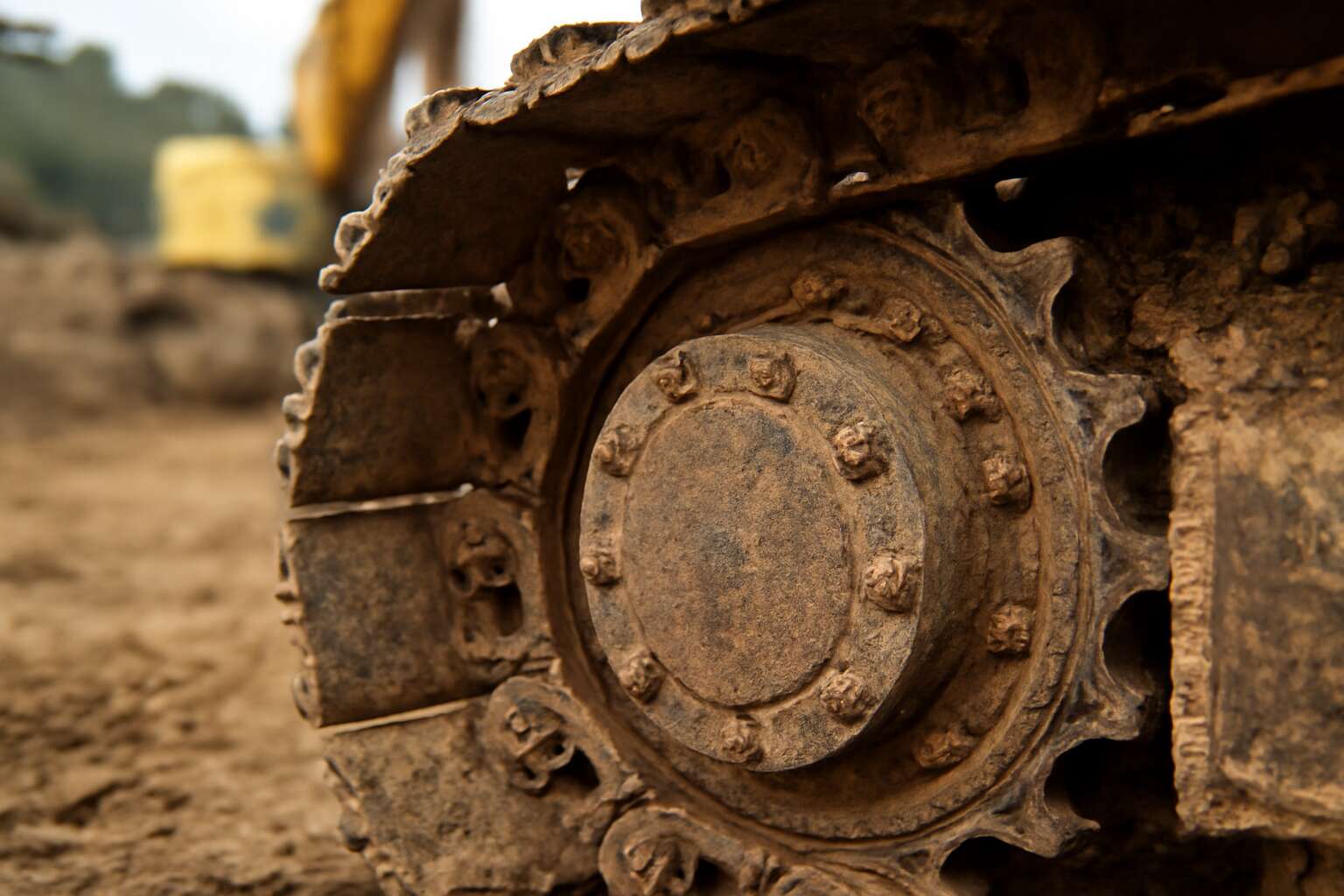
Undercarriage Sprockets: Roles and Importance
What is an undercarriage sprocket and its function
In busy South African sites, downtime from undercarriage wear can account for up to 40% of total machine downtime, a sobering reminder that the devil is in the details. “The chain is only as strong as its sprocket,” a veteran operator likes to say.
Undercarriage sprockets are the teeth that mesh with the track drive, converting engine torque into controlled movement. They guide the track, distribute load, and preserve the tension that keeps the excavator sprocket engaged with every stride across sand, gravel, or clay.
Key roles include:
- Load distribution
- Precise chain engagement
- Wear resistance
- Maintenance indicators
When the excavator sprocket remains smooth and properly aligned, power translates to traction, keeping operations efficient without unnecessary stress on the undercarriage.
Drive system interactions with sprockets
South Africa’s busiest construction yards run on a simple truth: a little misalignment costs big time. The excavator sprocket is at the heart of that truth, turning engine torque into controlled stride. When the teeth mesh cleanly with the track, power translates into traction and predictability across sand, gravel, and clay—no drama, just traction. A smooth, well-aligned sprocket keeps the entire undercarriage singing and the operator smiling.
Its roles are practical and plain, though easy to overlook in the shed. Drive system interactions with the sprockets shape performance:
- Load distribution
- Precise chain engagement
- Wear resistance
- Maintenance indicators
When everything lines up, the sprocket is the quiet workhorse that turns spin into progress—without screaming downtime or unexpected squeaks.
Sprocket configurations across excavator sizes
In the quiet clamor of South Africa’s worksites, the undercarriage keeps time with the earth. The excavator sprocket is the patient metronome, turning engine torque into a measured stride that grips resistance without drama.
Configurations across sizes are a study in balance: tooth form, pitch, bore, and width tuned to weight and soil.
- Mini and compact machines: lighter, quicker responses for tight yards
- Standard mid-range units: robust engagement for trenching and site work
- Heavy-duty giants: reinforced teeth and wider pitch for sustained, brutal digging
Common materials and design variations
Uptime on South Africa’s tough sites is powered by one quiet hero—the excavator sprocket. When soil bites back, this patient tuner translates torque into a measured, gripping stride. In the long, dusty hours of a shift, its role is less flashy but utterly essential.
Roles and importance extend beyond bite and wear. Common materials and design variations shape durability and service life for the excavator sprocket across climates and soils.
- Cast steel: a practical option for the excavator sprocket in lighter-duty tasks.
- Forged steel: higher fatigue resistance, preferred in demanding climates.
- Hard-facing: coats teeth edges to resist abrasion in abrasive soils.
- Alloyed steel variants: tuned for balance between toughness and weight.
The blend of material science and geometry is what keeps the undercarriage singing through seasons of sand and shale. In South Africa’s dust and heavy clay, the right excavator sprocket doesn’t merely endure—it defines the machine’s longevity.
Materials and Design of Sprockets
Sprocket materials and metallurgy
In the forge-lit hush of our workshop, materials and design cohere like magic. In our tests, the right alloy can extend service life by up to 27%, a truth that makes metal feel intentional. The excavator sprocket is more than steel; it bears the memory of pressure, heat, and the African landscape it faces daily.
Metallurgy and geometry ride hand in hand, balancing hardness with resilience. To shape a durable partner for demanding work, we look at three guiding cues:
- Tooth profile and angles that shed mud while preserving bite
- Bore design and keyway alignment for smooth transmission
- Surface treatment and corrosion resistance for dusty South African conditions
From alloy choice to controlled hardening, the design keeps the excavator sprocket in motion when the going gets gritty. In South Africa’s busy sites, this blend of craft and science translates to steady work and fewer interruptions.
Heat treatment and hardening methods
Heat treatment is the quiet engine behind a durable excavator sprocket. On South Africa’s tougher sites, the right hardening recipe can boost wear life by up to 30% and trim downtime. The art lies in pairing surface hardness with a resilient core, harmonizing metallurgy with the gear’s working rhythm.
Heat treatment and hardening methods shape the tooth skin with precision, leaving the core unshaken by the heavy lifting of daily cycles. Consider these pathways:
- Induction hardening for targeted surface hardening without warping
- Carburizing (case hardening) to create a hard outer shell while keeping core toughness
- Quenching and tempering to dial hardness and impact resistance
- Surface nitriding for extra wear and corrosion resistance in dusty SA environments
When these methods are matched to the excavator sprocket’s geometry, the result is steadfast performance through grit, heat, and relentless meshing—keeping the bore true and the bite ready for the next shift in South Africa’s demanding landscapes.
Surface coatings for wear resistance
South Africa’s toughest sites test metal and mettle. A well-chosen surface coating can slash wear by up to 40%, keeping the excavator sprocket biting longer between service. The dance between coating and substrate matters—a thin, tough shell that respects the core keeps the bore true. That matters out in the veld!
Coating options include:
- Chromium nitride (CrN) and other transition-metal nitrides for a hard, smooth skin.
- CVD/PVD ceramic-like coatings such as Al2O3, TiN, or TiAlN for heat and abrasion resistance.
- Diamond-like carbon (DLC) coatings to lower friction and wear.
Beyond coatings, design harmony matters: tooth edges, land thickness, and seal interfaces all sip from the same endurance cup. When coating and geometry align, the excavator sprocket stands guard through grit and heat. We see this on South Africa’s farms and quarries, where resilience keeps fleets turning.
Design variations by machine class
On South Africa’s busy quarries, a mechanical edge matters more than a flashy feature. A single well-chosen material and geometry combo can extend service life by around 5-10% in tough digging conditions, keeping fleets moving instead of idle in heat and dust!
Materials and design choices for the excavator sprocket must account for class-specific demands. For compact machines, focus on reduced mass and tighter tolerances; for mid-range machines, balance tooth geometry with stronger lands; for large-scale rigs, prioritize heavy-duty seals and thicker bore walls to resist impact and abrasion. For the excavator sprocket, material and design must align with duty cycle to keep pace with the job.
- Compact class: lighter weight, tighter bore, easy upkeep.
- Mid-range class: balanced tooth profile and reinforced lands.
- Heavy class: thick bore walls and robust seals for brute wear.
In all cases, compatibility with other drive components and standardization across fleets keeps maintenance lean and predictable in South Africa’s terrain.
Wear, Maintenance, and Replacement
Signs of sprocket wear and failure
Wear gnaws at the teeth of the excavator sprocket, revealing rounded edges, chipped corners, and staggered wear patterns that betray a hard-working partner. A misaligned bite or uneven engagement drums a quiet rasp in the undercarriage as steel conversations turn to groan and grind!
Maintenance signs surface in rust speckles, pitting, and grime wedged between teeth. Debris and sand abrade surfaces, while creeping play in the hub or misalignment whispers that lubrication and proper tension have slipped from routine care.
Replacement signs demand attention: cracked teeth, severe wear, or elongated mounting holes. When the harmony of the chain becomes discordant, the excavator sprocket may demand a retirement sooner than the machine itself.
- Cracked or severely worn teeth
- Tooth shape is chipped or hooked
- Excessive lateral play in the sprocket hub
Inspection best practices and schedules
In South Africa’s rugged sites, wear shouts from the chain! The excavator sprocket shows clues—rounded teeth, chips, uneven wear—that tell you something’s worked hard. Set a formal wear cadence: log hours, compare profiles, and note misalignment or odd chatter.
Maintenance must be part of every service window. Monitor rust, pitting, grime between teeth, and hub play. Use a simple checklist:
- Lubrication status and grease condition
- Tension and drive engagement
- Debris removal and surface cleanliness
Replacement hinges on cracks, severe wear, or elongated mounting holes. When the drive line goes out of harmony, address the sprocket promptly to guard the undercarriage and uptime.
Replacement timing and part numbers
Rugged sites demand discipline. An excavator sprocket tells you when the machine is under duress—efficiency fades, noise rises, and power drops. On South African sites, wear can sneak up; monitor for gradual changes in drive response and chatter as clues.
Maintenance belongs in every service window. Keep a formal cadence: observe lubrication quality, drive tension, debris removal, and surface cleanliness. If you spot rust or pitting between teeth or hub play, schedule attention promptly.
- Model and serial number
- Tooth count and pitch
- Hub bore diameter and mounting hole geometry
- Cross-check with OEM catalogs for exact part numbers
Replacement timing hinges on cracks, severe wear, or elongated mounting holes in the excavator sprocket. Using OEM guidance ensures uptime and protects your undercarriage.
Impact of alignment and tension
On tough South African sites, misalignment is the silent efficiency killer: a tiny tilt can turn a smooth push into extra drag. The excavator sprocket bears the brunt—load concentrates on a few teeth, wear speeds up, and fuel economy dips as the drivetrain groans louder than a tired diesel.
Maintenance may not win a trophy, but it buys uptime. Proper alignment and correct tension keep torque flowing, reducing hub wobble and tooth galling. Expect a calmer drive, fewer vibrations, and longer life for the sprocket and its mates as they continue their stubborn dance beneath you.
- Uneven wear on teeth
- Increased drive noise and vibration
- Chatter or jerky drive response
Replacement impact: when alignment and tension drift, wear escalates and gaps in mounting holes creep open. OEM guidance should steer replacement timing to defend the undercarriage and uptime. Done right, the excavator sprocket stays in rhythm with the track, delivering consistent power across South African sites.
Buying Guide and Longevity Strategies
Assessing machine specs and compatibility
In a field where a single faulty tooth can stall a project for days, a well-chosen excavator sprocket becomes the quiet backbone of performance. A fleet audit shows machines with resilient sprockets reporting 12% less downtime and longer service intervals. When buying, assess how the component harmonises with your undercarriage and drive system, and imagine the hours of steady, unglamorous work ahead.
- Fit and compatibility with your existing drive and undercarriage
- Material balance and heat treatment for expected load
- Availability of parts and service support in South Africa
- Endurance under local wear patterns and moisture conditions
With that buying guide in hand, longevity strategies come into sharp focus. Assessing machine specs and compatibility becomes a rhythm that sustains a fleet through South Africa’s demanding terrains.
Pitch, bore, and chain compatibility explained
On South Africa’s rugged job sites, uptime is not negotiable. A fleet audit shows machines with bore-ready engagement logging up to 12% less downtime and longer service intervals—an insistence on reliability that pays for itself in quiet, busy weeks.
Buying guide essentials hinge on bore compatibility and chain pitch. The excavator sprocket must seat precisely on the mounting bore and the chain must mesh with the teeth at the correct pitch and width. When those elements align, wear disperses evenly and noise fades.
- Bore diameter and tolerances
- Chain pitch, width, and engagement
- Local parts availability and service in SA
Longevity strategies flow from this alignment: material balance and heat treatment tuned to expected load, plus endurance under South Africa’s dust and moisture. The excavator sprocket becomes a quiet backbone, sustaining the drive through unglamorous hours.
OEM vs aftermarket considerations
On South Africa’s rugged sites, uptime is currency. The buying guide hinges on compatibility and a reliable support network—OEM or aftermarket, you want seats that align with confidence and warranties that stand tall. The excavator sprocket should feel like a natural extension of the machine, keeping vibrations quiet and service disruptions rare.
- OEM options offer guaranteed fit and consistent service standards
- Aftermarket choices balance cost, lead times, and warranty coverage
- Local SA parts availability and responsive technical support
Longevity follows when the selection harmonizes metallurgy, coatings, and maintenance with SA’s dust and humidity. Whether you choose OEM or aftermarket, durable surface protection, thoughtful heat load management, and a responsive local supply chain shorten downtime and extend the life of the excavator sprocket in everyday grit.
Cost-benefit and lifecycle planning
On South Africa’s toughest sites, uptime is currency. The buying guide for the excavator sprocket centers on total cost of ownership: upfront price, spare parts availability, lead times, and the real cost of downtime when a missed shift bites hard. A careful choice harmonizes compatibility with a responsive local support network, smoothing service disruptions and keeping warranties robust.
A well-chosen excavator sprocket resists wear, minimizes vibration, and complements the drive system—quietly extending the life of the undercarriage in dusty, humid conditions. The emphasis is on predictable performance: balanced heat, robust coatings, and a lifecycle plan that aligns maintenance windows with production schedules.
- Total lifecycle cost visibility
- Downtime risk assessment
- Spare parts availability and support speed
Longevity strategies turn cost into value. Align metallurgy, coatings, and maintenance cadence with SA’s dust and humidity. That mindset keeps the excavator sprocket performing season after season, while a disciplined lifecycle plan protects resale value and stabilizes maintenance budgets.




0 Comments