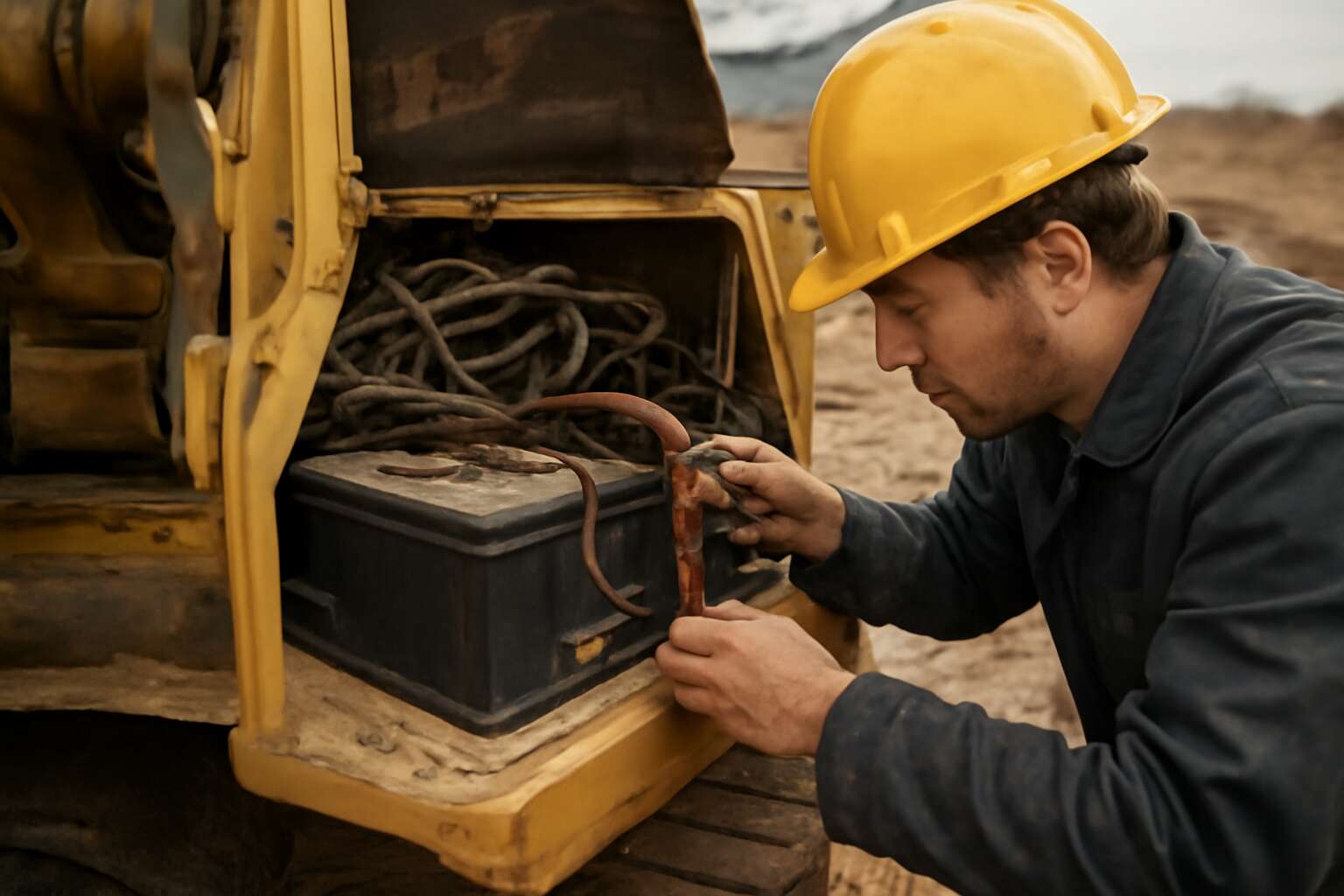
Understanding Start Issues in Excavators
Overview of Common Starting Problems
On South Africa’s bustling sites, every minute matters. Idle machinery drains profits, with idle time costing up to 2 hours a day per machine. When the excavator not starting becomes a bottleneck, crews fall behind and schedules slip fast.
- Battery and electrical circuit faults
- Fuel delivery and filtration issues
- Engine sensors, wiring harnesses, and safety interlocks
- Starter motor or solenoid failures
Their root causes sit in plain sight on site: aging batteries, clogged filters, corroded terminals, or a misbehaving stop/start switch. Recognizing these symptoms helps operators anticipate downtime before a full stall, preserving uptime on heavy‑duty jobs and protecting project momentum.
Symptoms That Signal a Start Issue
On South Africa’s bustling sites, a stubborn excavator not starting can derail a whole shift. Time that should be spent digging slips away as crews circle the wagons, muttering and hoping for a miracle. In practice, 15–20 minutes per machine per shift vanish into the morning fog before momentum is restored.
Symptoms that signal a start issue arrive as a chorus of tell-tale signs, not a single scream. When the indicator lights flirt, when the starter clacks, or when the engine coughs and refuses to fire, the pattern is discernible:
- Crank turns sluggishly, then stalls before ignition.
- A faint click or grinding noise from the starter area.
- Dashboard lights flicker and die as attempts fail.
- Engine coughs or backfires, only to go quiet again.
Early recognition turns a mystery into a dataset—the kind that keeps operations honest and momentum intact, even on the most stubborn job sites.
Why Modern Excavators Struggle to Start
On South Africa’s sites, a stubborn start isn’t just a hiccup—it can steal minutes and shape outcomes. In many yards, 18 minutes pass before the first bite of compression, a cost that compounds into hours. The phrase excavator not starting lingers like a riddle that tests more than engines; it tests faith in equipment and in people.
Modern machines fuse diesel, electronics, and software, turning starting rituals into a choreography of sensors and sequences. I’ve watched that misread signal stall a cascade, leaving crews reading gauges and second-guessing every click of the key!
- Battery health and charge cycles
- Fuel delivery timing and quality
- Sensor networks that miscommunicate under strain
Understanding the layers—the human factor, recurring wear, and the design choices that endure long after the paint has peeled—helps managers glimpse the next horizon of reliability.
Diagnostic Roadmap for Excavator Start Problems
Safety First: Before You Begin
On South Africa’s busiest sites, a single hour of idle equipment can ripple into millions of rand in delays. The moment the excavator not starting interrupts the rhythm, the site loses its tempo and a heartbeat of possibility.
Safety First: Before You Begin, the assessment is anchored to people, PPE, and lockout-tagout. The moment a machine shows reluctance, caution becomes the loudest engine, for clarity on a worksite means life and limb saved and projects kept on track.
To guide the inquiry, the roadmap considers these domains:
- Electrical integrity, from connections to battery health
- Fuel delivery and air intake considerations
- Interlocks, sensors, and safety circuits
This is the language of progress that respects both craft and conscience, a compass for a country built on resilience.
Immediate Checks You Can Do
On SA construction sites, downtime isn’t a forecast—it’s a cash flow emergency. The moment the excavator not starting rears its head, productivity stumbles and the budget starts chasing its own tail. One missed cycle can echo through a shift and turn a plan into a paperwork trail.
This diagnostic roadmap is anchored in three sober arenas—electrical health, fuel delivery and air intake, and the safety brain of interlocks and sensors. It’s a high-level sweep, not a translation of every fault code, aimed at lighting the path to a confident restart while keeping people safe and the tempo intact. Sometimes the culprit behind an excavator not starting is a loose connection or a clogged filter, so the review stays practical, not dramatic.
Approach it with a calm, curious eye and a touch of practicality—the rhythm of a well-tuned machine loves steady hands and clear thinking more than heroic guesswork.
Electrical System Diagnostics
On South African sites, even a 10-minute electrical hiccup can cascade into hours of downtime. In the realm of electrical system diagnostics, the goal is clarity, not mystification. When the excavator not starting stares back, teams listen for the subtlest whisper of a healthy circuit and map a safe path to restart!
Think of the electrical spine as the story’s heart. A high-level review keeps hands steady and minds calm:
- Battery health and cable integrity
- Wiring harness continuity and terminal condition
- Sensor chatter and ECU communication
By grounding the check in this triad—health, connection, and communication—the diagnostic roadmap stays practical, avoids drama, and preserves the tempo of the job. It is a guide that speaks to maintenance teams and operators alike, in clear, respectful terms.
Fuel and Combustion Checks
Across South Africa’s dusty sites, downtime haunts every project. Industry data show downtime from a single start issue can stretch into hours per machine. When the excavator not starting, the moment becomes a fuel-and-combustion riddle that invites calm, precise thinking.
Fuel and combustion checks rest on three pillars: quality, delivery, and ignition timing. The following high-level overview keeps the focus on facts, not drama.
- Fuel quality and water separation: diesel cleanliness and filter condition.
- Air/fuel delivery integrity: lines, fittings, and potential air ingress that mute combustion.
- Combustion timing and injector health: ignition pattern and spray consistency.
By grounding checks in these pillars, teams keep conversations with the engine practical and the job moving ahead in field conditions.
Hydraulic and Engine Oversight
Across South Africa’s busy sites, a stubborn starter can turn a single shift into a long encore of frustration. The excavator not starting can cost a whole crew their coffee—and sanity, and one hour of downtime from a start issue can cascade into a minor saga for the fleet. The diagnostic roadmap for excavator start problems places hydraulic and engine oversight on equal footing, avoiding the blame-game trap and focusing on the machine’s physiology.
Ultimately, it maps how hydraulic readiness and engine signals speak to each other—ignition timing, sensor chatter, and pressure feedback becoming a single conversation rather than competing complaints.
- Hydraulic readiness: reservoir level, pump priming, and filter condition
- Engine oversight: ECU fault codes, injector timing, and sensor health
- Inter-system communication: wiring integrity and CAN bus status
The result is a narrative approach that dignifies the machine and respects the crew, turning a fraught moment into a controlled diagnostic dialogue.
Using Onboard Diagnostics and Codes
Across South Africa’s dusty sites, a single excavator not starting can turn a tense morning into a slow crescendo of delay. Fleet data from busy yards shows downtime spiraling when one starter fails, echoing through the crane lines and break room chatter.
Onboard Diagnostics and codes act as the machine’s translator, turning whispers of sensors, pressure, and timing into a readable script. No bravado, just a measured chorus—digitized intuition guiding a technician toward understanding rather than guesswork.
The roadmap treats faults as conversations to be read, not battles to be won. In this dialogue, every code is a word, every threshold a breath, and the excavator not starting becomes a riddle solvable by patient listening.
Step-by-Step Troubleshooting by Symptom
Engine Cranks but Won’t Start
On South African sites, an excavator not starting costs more than time; downtime erodes productivity and budgets. When the starter turns but the engine stays quiet, the culprit is often in plain sight—fuel delivery, electrical health, or a stubborn safety interlock. That happens on site, more often than managers admit!
Step-by-step troubleshooting becomes a disciplined ritual. When the symptom is cranks but won’t start, consider these diagnostic angles:
- Battery connections, charge status, and the alternator’s health
- Fuel supply, filters and air cleanliness
- Safety interlocks and relays that may block a start
These high-level checks keep the process grounded, converting a frustrating moment into a methodical diagnostic story.
Engine Turns Over Slowly or No Crank
Across South Africa, startup snags steal hours and budgets more than minutes. When the engine turns over slowly or stalls, the scene is all too familiar: a trainee’s glare, a ticking clock, and a stubborn starter refusing to cooperate. The clues are usually clear—fuel delivery, electrical health, or a safety interlock fighting a hidden war. Step into the diagnostic moment with intention; the moment demands calm, not panic.
Consider these diagnostic angles when the excavator not starting presents itself:
- Battery connections, charge status, and the alternator’s health
- Fuel supply, filters, and air cleanliness
- Safety interlocks and relays that may block a start
Those checks stitch the narrative together, turning a stumble into a solvable riddle.
No Fuel or Fuel Delivery Issues
On South African sites, the excavator not starting can turn a brisk morning into a waiting game. A tiny air pocket in the fuel line or a valve left closed can silence the diesel heartbeat, and the clock becomes a patient witness to shouts, slamming doors, and another cup of coffee!
Consider these diagnostic checks when fuel delivery is suspected:
- Fuel level and quality: confirm tank gauge and inspect for water or sediment.
- Fuel lines and connections: look for leaks, kinks, or collapsed hoses.
- Filters and water separator: ensure clean, unblocked flow.
- Primer or pump operation: verify the system can draw and deliver fuel.
These signs guide the mind through a riddle, turning stagnation into insight rather than frustration.
Electrical Noises or Dash Warn Lights
On a chilly South African dawn, the silent engine can feel like a riddle waiting to be solved. When the excavator not starting, the first clues arrive as electrical noises—the soft click of a relay, a faint whirr that dies, or a dashboard light that flickers. Those signals turn a stubborn start into a puzzle begging for calm and a careful ear.
- Listen for the sequence of sounds: quick click, slow grind, or steady whine.
- Note dash warning light patterns—single flash, repeating codes, or a persistent glow.
From this careful ledger, a technician can map symptoms to a likely culprit, turning uncertainty into narrative rather than guesswork. The journey of clues—signals, timing, and the quiet language of its electrical heart—prepares the reader for what comes next.
Starting System Component Failures
When the excavator not starting on a chilly South African dawn, the yard falls into a hushed, ominous pause. A rule of thumb rings true: roughly six in ten starting failures trace to the starting system—the battery, cables, or the hidden loops of the starter relay.
Step-by-step troubleshooting by symptom begins with listening: the quick click, the slow grind, the surrendered whine. Map each clue to a system component, then let the story unfold rather than guesswork. The reader learns to read the electrical heart, a small orchestra in the dark.
- Quick click: suspect battery or solenoid
- No turn over, just a dull click: starter relay or wiring fault
- Slow crank with dim dash lights: aging or discharged battery
- Engine turns but fails to catch: fuel timing or glow/ignition system connection
Repair, Maintenance, and Preventive Tips
Common Repairs for Start Failures
On a sunbaked South African site, downtime costs more than labour—fleet efficiency is the prize. Field data show up to 40% of start failures trace to batteries and loose connections. If you hear excavator not starting, the fix often begins with the simplest checks.
Repair and maintenance focus on those basics that quietly keep power flowing, like small rituals that wake a sleeping motor. Start with the obvious: clean battery terminals, secure connections, and a healthy starter circuit.
- Check battery terminals and charge
- Inspect starter wiring and relay for wear
- Drain moisture from the fuel filter and ensure fuel quality
Preventive tips: schedule regular servicing, protect the battery bay from dust and heat, and use quality diesel and filters. A disciplined maintenance rhythm minimizes surprises when the machine is needed most.
Fuel System Maintenance
Fuel systems bear the burden when engines refuse to wake. On a sunbaked South African site, a single poor-quality drop can dampen a day’s production. If the excavator not starting, the ghost in the lines is often moisture, varnish, or a weary lift pump—mysteries that bite when fuel has to scream through the injectors. The moment the system finds its tempo, the machine breathes easy again.
- Fuel quality and contaminants shaping combustion stability
- Moisture management and water separator integrity
- Filter condition and seal integrity across the fuel path
- Fuel delivery consistency and injector timing alignment
In the realm of fuel system maintenance, a steady discipline pays off. Opt for quality diesel and compatible filters, maintain clean storage practices, and respect moisture risks that hide in the drums. When these details are guarded, the machine remains a steadfast partner rather than a source of suspense.
Electrical System Maintenance
On a sunburnt South African site, an excavator not starting can stall a day quicker than a traffic light at peak hour. The culprit often hides in plain sight: a tired battery, a frayed harness, or a terminal that won’t kiss tight.
In repair and maintenance, electrical health is the quiet steward of productivity. We chase disruptions with onboard diagnostics, check alternator health, and respect the rhythms of the machine’s control system.
- Battery health and clean terminals
- Wiring integrity and corrosion control
- Protection devices and fuse status
- Onboard diagnostics and ECU health surveillance
With preventive attention, the excavator not starting isn’t the plot twist it once was; it’s a routine risk managed with quiet confidence and a morning check that respects the machine as partner.
Battery and Charging System Upkeep
South Africa’s sun bakes equipment and downtime costs money fast—a taxi ride on Friday. On sites, an hour of idle excavator time can drain the budget quicker than a fuse pops. The battery and charging system are the quiet stewards—when they blink out, productivity takes a nosedive.
With Battery and Charging System Upkeep in focus, we keep the machine healthy and its brain responsive. When an excavator not starting becomes a regular nuisance, the idea is simple: a reliable charging circuit and a battery free of strange quirks prevent the most common start glitches. When those systems cooperate, the excavator starts with the confidence of a well-timed drumbeat.
In practice, this is about reading the machine’s mood: gauges, lights, and the whine of the starter. Maintenance isn’t a drama, it’s a ritual—quiet and deliberate, done at dawn when the machine smiles. Reliability rides shotgun, and the workday stays on track.
Preventive Maintenance Schedule
Across South Africa, one hour of idle excavator time can cost your project thousands of rand, turning time into money in the blink of a relay switch. Repair, Maintenance, and Preventive Tips converge in a disciplined Preventive Maintenance Schedule that keeps machines awake and ready for action. When an excavator not starting becomes a regular nuisance, you’re reading weather signs on the machine’s skin—brisk, telling, and solvable.
Repair isn’t drama; it’s a quiet craft, a belief that reliability compounds like stories around a campfire. With a steady rhythm, the routine reveals a simple truth: a starting issue is often the result of small neglects that accumulate into a bigger fault.
On South African sites, maintenance becomes part of the workday’s dawn chorus—calm, methodical, and precise, turning potential setbacks into smooth, predictable progress.
Safe Handling and Lockout/Tagout
On South African sites, time is currency and idle hours can siphon thousands from a project before sunrise. When an excavator not starting halts the rhythm, the tale shifts from drama to discipline—the quiet craft of Repair, Maintenance, and Preventive Tips weaving reliability into every gauge and hose.
Safe Handling and Lockout/Tagout stand as guardians of downtime, quiet sentinels that keep workers safe and components protected. A few high-level tenets keep the machine in balance:
- Respect for energy isolation and authorized personnel
- Clear communication and documented practices
- Regular inspection of tags, hasps, and padlocks
When maintenance follows a steady cadence, even stubborn starting issues drift away like misfired thunder, and the fleet feels like a well-rehearsed chorus rather than a chorus of misfires.
When to Call a Professional and Replacement Considerations
When to Seek Prompt Professional Help
When an excavator not starting becomes a daily obstacle, it’s time to call in a professional. A qualified technician can read onboard codes, confirm fuel and electrical integrity, and test the starting system without risking further damage on the job site. In South Africa’s rural yards, downtime bites hard—repairing the issue quickly often means keeping livelihoods moving.
Consider these signs that you should escalate or start replacement discussions with your dealer:
- Safety risk increases after repeated failed starts and exposure to high-voltage components.
- Ongoing repairs pushing past the machine’s current value or its expected service life.
- Downtime costs outweigh the price of a newer unit with better reliability.
- Warranty or service plans may require OEM diagnostics and authorized repair work.
Replacement considerations: If the machine is near the end of its life or performance is slipping, replacement can be more economical than endless fixes. A newer excavator often brings better fuel efficiency, improved dust sealing for SA conditions, and lower maintenance costs—critical when every hour on site matters. Consult your local dealer on options and total cost of ownership.
Cost Considerations and ROI
When the machine stalls and the yard falls quiet, an excavator not starting becomes more than a hiccup—it’s money on the table. In rural South Africa, downtime bites hard, and every hour on site counts!
Deciding to call in a pro should come when basic checks fail to restore reliability under pressure. A qualified technician can interpret onboard codes, verify fuel and electrical integrity, and test the starting system without risking further damage.
Replacement considerations shift the balance when repairs stack up against the machine’s value or expected life. A newer excavator can deliver better fuel efficiency, tougher dust sealing for SA conditions, and lower maintenance demands—factors that influence cost considerations and ROI over time.
In the end, the choice hinges on observed value: if reliability slips and downtime escalates, replacement may offer a clearer path to long-term profitability.
Used vs New vs Rebuilt Engines
On South Africa’s rugged rural sites, downtime is more than a nuisance—it gnaws at margins. When the excavator not starting stalls a day’s work, every hour costs money and stretches timelines, turning a routine job into an expensive detour.
Deciding to call a professional should occur when basic checks fail to restore reliability under pressure. A qualified technician can interpret onboard codes, verify fuel and electrical integrity, and test the starting system without risking further damage.
Replacement considerations grow when repairs approach the machine’s value or remaining life. We often compare used, new, and rebuilt engines as practical alternatives. Consider these paths:
- Used engine: lower upfront cost and quicker procurement, but higher risk of hidden wear and shorter overall life.
- New engine: maximum reliability, latest seals and configurations, longer warranty—yet a steeper upfront investment.
- Rebuilt engine: a middle ground that balances cost and reliability, dependent on rebuild quality and parts used.
Ultimately, observed value and downtime economics guide the decision, aiming for long-term profitability rather than short-term savings.
Choosing a Service Provider
Across South Africa’s dusty job sites, every idle hour costs money. A real-world shocker: downtime can shave significant margins in a single shift. When the excavator not starting disrupts a planned trench, the clock becomes a merciless opponent, and decisions sharpen fast.
Call a professional when basic checks fail to restore reliability under pressure. A qualified technician reads onboard codes, validates fuel and electrical systems, and tests the starting circuit without courting collateral damage.
Replacement considerations hinge on long-term value. Choosing a service provider blends trust with technical fluency. Consider these criteria:
- Local availability of skilled technicians
- Clear warranty on workmanship and parts
- Transparent pricing and turnaround expectations
When the right team aligns, uptime returns to the site.
Warranty and Documentation
On a South African site, every hour lost to a stubborn machine cuts into wages and the day’s progress. When the excavator not starting won’t respond after basic checks, call a professional. A qualified technician reads onboard codes, validates fuel and electrical systems, and tests the starting circuit, protecting both the machine and the crew from collateral damage.
Replacement decisions hinge on long-term value. A reputable team backs their work with warranties and clear documentation, turning uncertainty into a plan. Here are the essentials to expect:
- Warranty on workmanship and parts
- Comprehensive service documentation: dates, serial numbers, part numbers
- Transparent pricing and turnaround expectations
With these safeguards, uptime becomes a tangible objective rather than a hope.




0 Comments