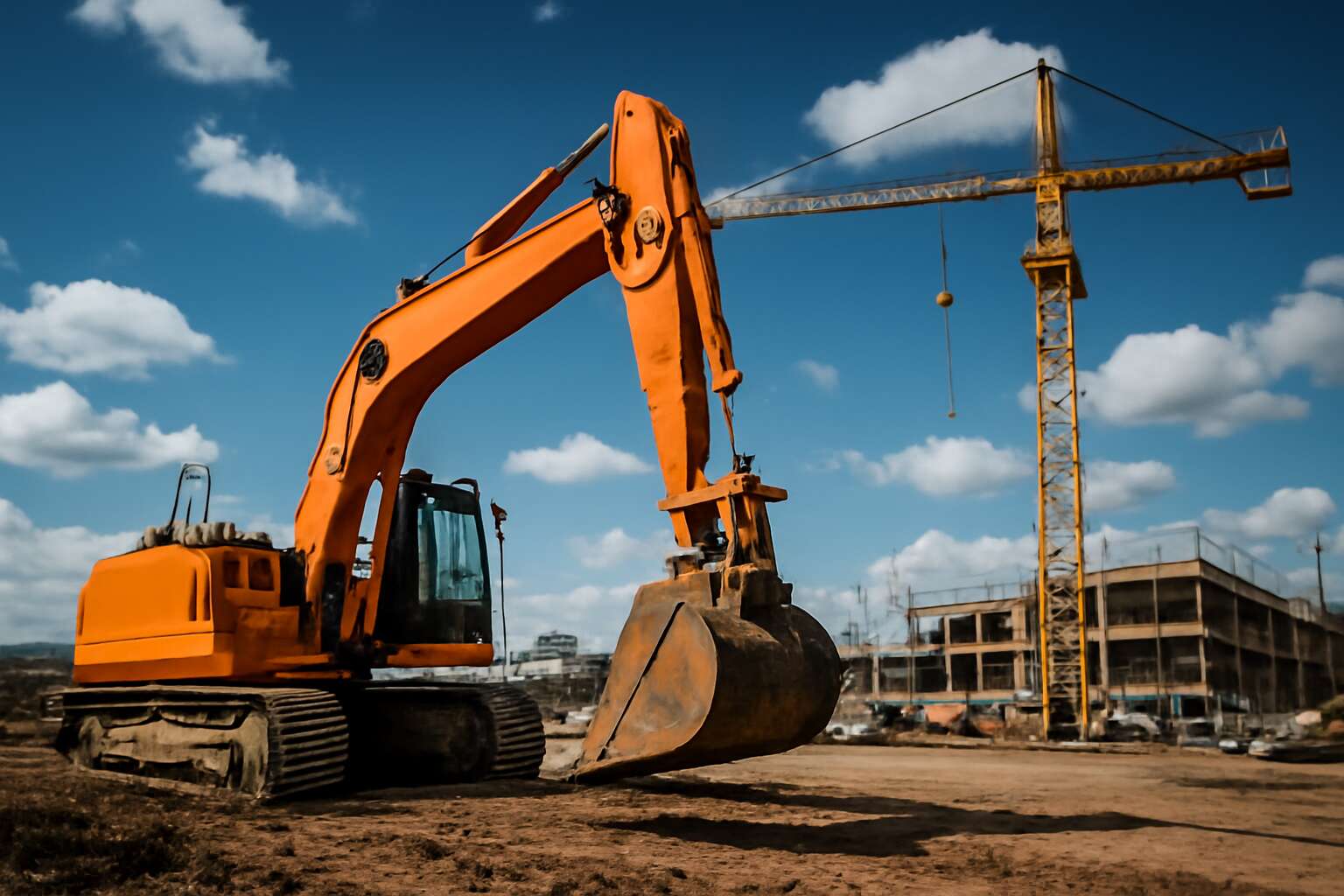
Excavation Equipment Comparison Guide
Excavation Equipment Fundamentals
On South Africa’s construction sites, the clock is king, and the wrong machine can turn minutes into costly hours. “Every hour spent wrestling with the wrong tool is a chapter of lost progress,” laments a seasoned foreman.
Excavation Equipment Fundamentals unfold like a quiet argument with gravity itself. Deciding between excavation gear and lifting gear hinges on reach, breakout force, and stability on variable ground. Understanding the nuance of an excavator vs crane helps teams tailor each task to the tool. Key considerations include:
- ground conditions
- load radius and height
- site access and manoeuvrability
- maintenance and fuel efficiency
Ultimately, the choice mirrors task gravity, ground truth, and safety. In practice, the excavator vs crane pairing often dictates tempo and risk on the ground. In the South African context, aligning capability with duty minimises downtime and maximises output, letting teams move with confidence rather than brute force.
Performance and Capability Comparison
On South Africa’s construction sites, the clock is king and the right tool keeps seconds from slipping away. The debate of excavator vs crane governs tempo, balancing reach, breakout power, and stability on uneven ground. “The right tool turns minutes into momentum,” notes a veteran foreman, and the line between task and tempo sharpens with every lift.
Performance and capability unfold like a compact duet—each machine singing to its strengths. To frame the choice, consider the lifting envelope, hydraulic speed, and control at height, and how the rig settles on variable surfaces.
- Reach and height capabilities across boom configurations
- Lift capacity, swing efficiency, and cycle times
- Stability and setup speed on uneven ground
- Maintenance needs and fuel efficiency for longer shifts
Across South Africa, the pairing of form and function dictates pace and safety, guiding teams toward harmony rather than brute force.
Applications and Use Cases
On South Africa’s construction sites, efficiency isn’t negotiable. Up to 30% of schedule slippage stems from lift planning, a gap the right tool can close. When teams weigh excavator vs crane, tempo hinges on reach, setup speed, and how quiet or steady a platform feels under load.
Applications stretch from trenching new utilities to placing long-span beams on tight pads. An excavator handles earthwork, sorting rubble, and heavy digging in uneven ground; a crane excels at precise lifts where ground conditions threaten stability, especially for modular components on wind-prone coastal sites—the excavator vs crane decision.
- Urban excavation and trenching in restricted spaces
- Structural steel and prefab modules on uneven pads
- Marine, mining, and remote-site lifting where access is limited
Choosing momentum and restraint is a human scale question dressed in steel.
Cost, Maintenance, and ROI
On South Africa’s sites, every rand spent on heavy equipment must work as hard as a mule in the sun. The excavator vs crane decision becomes a story of cost, upkeep, and ROI that keeps teams moving instead of stalling in dust.
Cost is more than the sticker price; it spans fuel, depreciation, downtime, and crew comfort. Maintenance windows and spare parts networks across SA shape uptime and ROI. Snapshot:
- Capital and operating costs aligned with scheduling needs
- Maintenance frequency, parts reach, and service networks
- ROI drivers: uptime, mobilization speed, and lifecycle cost
Ultimately, a well-chosen machine reduces rework and boosts morale; I’ve watched crews turn long, dusty days into steady progress. On coastal winds or uneven terrain, the right balance of reach and stability keeps crews moving and projects breathing.


0 Comments