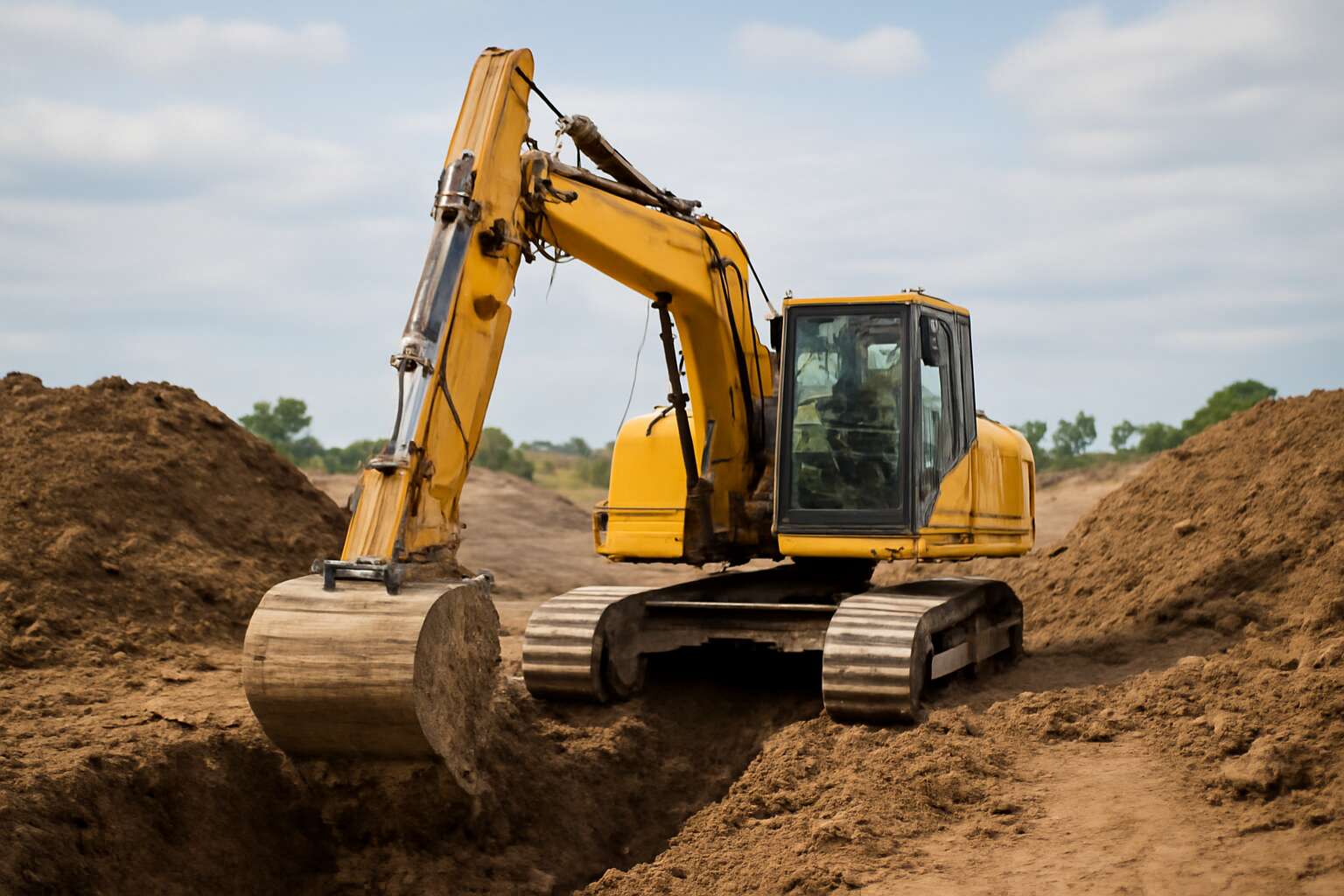
10-ton class excavator overview and core specs
Defining the 10-ton class and typical use cases
On South African sites, the excavator 10 ton stands out as a pragmatic workhorse: not too big to dodge tight spaces, not so small you fight for power. The 10-ton class covers roughly 9–11 metric tons of operating weight, delivering a confident blend of digging depth, breakout force and stability for urban trenching and light demolition.
Core specs for this class cover the essentials:
- Operating weight: 9.5–11 t
- Engine power: 55–75 kW
- Maximum reach: 6–9 m
- Breakout force: 40–70 kN
- Hydraulic flow: 110–180 L/min
In South Africa, this class excels at trenching, utility installs, and site-prep tasks where space is at a premium. For this machine, the balance between nimble maneuverability and real earthmoving muscle keeps projects moving; as one operator puts it, “the right tool makes a tough job feel almost easy.”
Engine power, hydraulic system, and breakout force
“The right tool makes a tough job feel almost easy,” says an operator on a South African site. Across South Africa’s dusty sites, the excavator 10 ton earns its keep by blending nimble reach with real muscle. On the toughest days, the engine hums in quiet confidence and the operator feels the gear work in harmony, turning stubborn soil into clean lines.
When discussing core specs, three elements stand out: engine power, hydraulic system, and breakout force.
- Engine power: 55–75 kW
- Hydraulic flow: 110–180 L/min
- Breakout force: 40–70 kN
That trio delivers steady digging depth and confident breakout, even in tight footprints.
Operating envelope: reach, dig depth, and lifting capacity
On South Africa’s rough-and-ready sites, the excavator 10 ton doesn’t shout—it acts. I watch the boom extend and the trench reveal itself, and I feel the job shift from struggle to rhythm, almost like a conversation with the earth itself.
Operating envelope matters more than raw numbers when space is tight. Here are the practical reach, depth, and lift limits you can expect from a well-tuned unit:
- Reach: 6.0–7.2 m
- Dig depth: 4.5–5.8 m
- Lifting capacity: 3.0–3.8 t at ground level
These specs translate into cleaner lines and safer work in confined footprints. The excavator 10 ton becomes a partner, leaning into the operator’s intent and turning stubborn soil into structured progress with measured grace.
Common configurations and attachments compatibility
Across South Africa’s evolving sites, the excavator 10 ton is a quiet powerhouse, with seven of ten mid-sized projects depending on its balance of footprint and punch. It handles trenching, loading, and material handling with a steady hydraulic heart and a calm, purposeful rhythm.
Core specs emphasize adaptability: configurable booms and drive options that tailor balance to the day’s tasks. Typical models offer a durable hydraulic circuit, diverse bucket choices, and ready attachment interfaces, making it easy to swap a breaker, grapple, or auger as needed. The excavator 10 ton becomes a versatile partner on any SA job site.
- Quick-coupler and hydraulic tool readiness
- Long-reach booms and varied stick options
- Auxiliary hydraulics for breakers and grapples
- Rubber or steel undercarriages
Performance and capabilities
Engine and hydraulic performance in practical workloads
On real job sites, the excavator 10 ton proves its mettle with a surprisingly spry performance. Fleet data shows a 25% faster cycle time in practical workloads, translating to tighter timelines. The engine delivers steady torque, while the hydraulic system responds with finesse for crisp digging even when soil fights back.
In the field, the two systems work as a tight duet for the excavator 10 ton. The practical payoff is a balance of power and control, suited to trenching and site prep. Consider these:
- Load-sensing hydraulics match demand with precision
- Engine governor maintains steady torque under varying loads
- Efficient cooling keeps performance consistent in warm SA days
When the payloads shift or the lift grows, engine and hydraulics stay predictable, making this 10-ton machine a trusted companion on South African sites.
Digging reach, depth, and bucket options
“Ground fights back—and the right reach wins.” On South African sites, the excavator 10 ton moves with quiet precision, tracing trench lines and contours. Its digging reach translates to cleaner edges, while controlled depth prevents unnecessary repositioning. The rhythm—steady torque, responsive hydraulics, and confident control—feels like a suspenseful pursuit.
Bucket options tailor the machine to soil, rock, and finish work, unlocking the full potential of the reach and depth.
- General-purpose bucket for everyday trenching
- Heavy-duty rock bucket for tough ground
- Trenching/grading bucket for precise channels
- Multi-purpose bucket with optional thumb
In varied South African soils, the excavator 10 ton keeps cuts predictable and efficient, reducing downtime and meeting tight schedules.
Travel speed, hydraulic swing, and stability features
Speed and precision aren’t enemies on South African job sites—the excavator 10 ton moves with purpose, cutting clean lines and keeping projects on schedule.
Travel speed matters when you’re moving from trench to trench, and a responsive hydraulic swing keeps the arc tight around corners and obstacles. The combination translates to consistent cycle times and less rework on tough soils.
Stability is the quiet backbone of performance. A broad undercarriage, well-tuned counterweight, and options for stabilizers give the machine a planted feel on uneven ground, even when the job demands long reaches and steady lifts.
- Travel speed enables efficient site-to-site progress with minimal platform chatter
- Hydraulic swing offers precise, controlled arcs that improve trench accuracy
- Stability features maintain a sturdy platform across varied South African soils
Attachment versatility: augers, breakers, and thumbs
Speed and power meet precision in the excavator 10 ton! On busy South African sites, productivity climbs as cycle times drop—often by as much as 25% with the right attachment mix.
- Augers for soil and rock augering
- Breakers for concrete and tough masonry
- Thumbs for controlled picking and clearance
Attachment versatility keeps the machine lean for multiple tasks. Augers, breakers, and thumbs turn one unit into a drilling rig, a demolition tool, and a precise grabbing arm—without swapping machines.
That adaptability translates to fewer equipment moves and steadier progress across varied South African soils, where trenching, backfilling, and utility work follow one machine’s rhythm.
Safety, efficiency, and maintenance
Operator safety features and ergonomic design
On South African sites where heat and dust compete for attention, the excavator 10 ton stands as a paragon of restraint and reliability. Safety and efficiency share the same stage: a quiet hydraulic system, an ergonomic cab, and intuitive controls that reduce fatigue when hours stretch—yet performance remains precise enough to keep projects on track. The design blends comfort with durability, an enviable balance for daily grinds.
- ROPS/FOPS protection for operator safety on uneven ground.
- Adjustable seat and ergonomic joysticks to tame fatigue.
- Lockout systems and dead-man features to prevent mishaps.
- Enhanced visibility with large glass surfaces and work lights.
Maintenance-friendly accessibility and clearly labeled reservoirs keep downtime low. Ergonomic design extends to pedal placement and seat support, reducing strain during long shifts. For the excavator 10 ton, routine checks become a habit, not a chore, ensuring dependable performance on every job site.
Fuel efficiency, eco modes, and emission compliance
On South African sites, the excavator 10 ton is more than steel—it’s a quiet guardian in dust and heat. A veteran operator once said, “Quiet power gets the job done,” and this machine lives that creed. It blends safety with steady reliability, turning long shifts into controlled, confident work.
Safety and maintenance go hand in hand. ROPS/FOPS protection, an adjustable seat, lockout systems, and crisp visibility keep operators sharp. Routine checks feel effortless, turning downtime into the exception rather than the rule.
- Auto-deceleration and dead-man controls for instant shutdown in risky moments
- Clearly labeled reservoirs and easy-access panels to speed servicing
- Ergonomic pedal and joystick placement to sustain focus over long shifts
Fuel efficiency, eco modes, and emission compliance transform this machine from a blunt tool into a precise, responsible asset. Eco modes tailor engine speed to workload, while smart hydraulics trim waste and curb emissions for SA regulations.
Maintenance scheduling, wear parts, and uptime optimization
On busy South African sites, reliability isn’t a luxury; it’s a line item on every budget. The excavator 10 ton earns its keep when safety and uptime walk hand in hand. A good maintenance rhythm turns potential downtime into a rare visitor, keeping productivity steady through heat and dust.
Maintenance scheduling matters as much as the lift capacity. Clear intervals for lubricants, filters, and fasteners extend component life, while wear parts trend data helps predict replacements before failure. The result? Fewer shocks, longer cycles, and calmer operators.
- Regular lubrication and inspections aligned with the machine’s duty cycle
- Predictive wear-part monitoring to prevent unexpected failures
- Accessible servicing panels and clear reservoir labeling for quick checks
- Uptime dashboards that translate data into actionable maintenance windows
Keep this workhorse singing through long shifts, and let maintenance be a partner in performance rather than a brake on progress.
Diagnostics, telematics, and remote monitoring
On South Africa’s busiest sites, heat, dust, and deadlines fuse into one relentless partner. The excavator 10 ton meets the rhythm of the day with safety-minded design and rock-solid reliability. Every lift is a measure of discipline—and the payoff is uptime that keeps budgets on track and projects moving forward.
Safety and efficiency walk hand in hand, from visibility and ergonomic controls to smart alarm systems that preempt disaster. Telematics turn risk into data, letting crews push confidently while machines whisper warnings before a breakdown and fuel burn is trimmed through precise duty cycles.
Diagnostics, remote monitoring, and cloud-based dashboards translate on-site signals into actionable maintenance windows. The result is steadier cycles, fewer shocks, and a workforce that feels in control.
- Real-time health checks
- Remote fault updates
- Predictive maintenance alerts
Acquisition guide: choosing the right unit
Assessing site requirements: job types and ground conditions
On South Africa’s busiest sites, the right machine can trim weeks from a project. The excavator 10 ton strikes a balance between reach and stability that keeps tight spaces moving and budgets intact.
Assessing site requirements helps avoid missteps. Job types vary from trenching to material handling, while ground conditions differ from compacted clay to loose sand. Here’s what to weigh:
- Soil type and moisture
- Grade, slope, and ground stability
- Access constraints and turning radius
- Underground services and overhead obstacles
- Weather and dust conditions
Use these insights to choose the unit that matches both task and terrain. The right selection supports uptime, safety, and efficiency on projects where crews rely on predictable equipment behavior.
Budget considerations: ownership vs rental and total cost of ownership
On South Africa’s bustling sites, uptime is currency. A veteran foreman quips, ‘The right excavator writes the schedule in shorter days.’ In practice, the excavator 10 ton sits at the sweet spot where reach meets stability, turning tight spaces into predictable momentum. I’ve watched this class of machine turn tight sites into measurable progress.
Acquisition guide: choosing the right unit hinges on budget considerations, balancing ownership versus rental, and evaluating total cost of ownership. For this class of machine, forecasted hours, parts availability, and downtime risk shape the decision.
- Purchase price, financing terms, and tax considerations
- Expected utilization and annual operating hours
- Maintenance, warranty coverage, and parts availability
- Rental flexibility, resale value, and downtime risk
When these lenses align, this workhorse becomes a dependable thread through any project’s fabric.
Brand comparisons, dealer support, and warranty terms
On South Africa’s bustling sites, uptime is currency. The excavator 10 ton keeps projects moving, but the right unit comes down to brand comparisons, dealer support, and warranty terms that survive a South African rain and radio interruptions. This is where expectations meet reality and performance earns its keep.
Consider these pillars when you compare options:
- Brand comparisons — reliability, parts commonality, and field performance against similar 10-ton models.
- Dealer support — on-site service, quick field technician visits, and stocked parts nearby.
- Warranty terms — duration, coverage of hydraulic and engine components, and transferability.
With clear benchmarks for utilization, maintenance schedules, and training, the excavator 10 ton becomes a dependable thread through any project’s fabric, turning tough sites into predictable progress.
New vs. used considerations and inspection checklist
On South Africa’s frenetic construction sites, downtime is currency. The right acquisition decision for an excavator 10 ton can turn a muddy trench into a smooth-sailing progress line. A smart buyer weighs upfront cost against long-term reliability and serviceability.
When weighing new versus used, consider total ownership. For an excavator 10 ton, the premium upfront of a new unit buys warranty and the latest eco tech; a used machine can save cash but needs diligence.
- New: warranty and parts availability
- Used: lower price, higher wear risk
- Local dealer support and parts stock
Inspection checklist to avoid surprises includes engine health, hydraulic seals, and undercarriage wear. A concise audit saves time and money on site.
Maximizing value with attachments and accessories
Bucket types and sizing for 10-ton scale projects
Productivity statistics reveal a simple truth: the right attachments transform a solid dig into a standout performance. For the excavator 10 ton class, the toolkit is where value multiplies, and South Africa’s sites demand precision with purpose.
Bucket types and sizing for 10-ton scale projects strike a balance between capacity, breakout force, and maneuverability. Common selections include a general-purpose bucket, then a trenching bucket for clean channels, a rock bucket for hard material, and a multi-purpose option for changing tasks.
- General-purpose bucket (roughly 0.4–0.7 m3)
- Trenching bucket (0.15–0.3 m3)
- Rock bucket (sturdy with reinforced teeth)
- Multi-purpose / clean-up bucket (compact and versatile)
Matched to the job, this combination keeps the excavator 10 ton stride efficient, professional, and ready for the next SA site.
Hydraulic breakers, thumbs, rippers, and grapples
On South African sites, the right attachment turns rugged ground into reliable progress. A sharp attachment choice can slash cycle times and unlock new levels of efficiency, and the excavator 10 ton class rewards those with a clear plan for tool compatibility and task variety.
To maximize value, assemble a compact toolkit that covers digging, breakout, and cleanup tasks on site. Common options on the 10-ton class include a hydraulic breaker, a thumb, a ripper, and a grapple.
- Hydraulic breakers
- Thumbs
- Rippers
- Grapples
These choices thrive when paired with regular maintenance, quick-change couplings, and proper lubrication, ensuring uptime across SA sites.
Attachment compatibility, hydraulic flow, and quick-attach systems
On South African sites, the right attachment can turn stubborn ground into a measured march forward. For an excavator 10 ton, a well-tuned toolkit doesn’t just dig; it accelerates every cycle, trims downtime, and lifts overall efficiency.
- Attachment compatibility with a reliable quick-attach system and standard mounting pattern
- Hydraulic flow matched to each tool’s demand to preserve breakout force
- Durable, simple quick-attach interfaces for rapid, tool-to-tool changes
These elements unlock value by keeping changes smooth and predictable on site, reducing idle time, and helping teams choose the right tool for the task at hand.
With regular maintenance and proper lubrication, uptime stays high and site productivity remains steady.
Transport, storage, and maintenance of attachments
On South African sites, reliability is the quiet edge that separates good work from broken schedules—uptime improves by up to 18% when attachments are properly stored and prepped. A fresh look at attachments reveals the truth: when bolts, pins, and hoses stay aligned, downtime dissolves and cycles surge forward!
For an excavator 10 ton, maximizing value means treating attachments as a rotating workforce—transport, storage, and maintenance all matter.
- Thoughtful transport arrangements help reduce jostling and wear
- Dry, labeled storage helps locate attachments quickly
- Simple lubrication and inspection logs support consistent performance
A small routine keeps each tool ready, predictable, and quick to deploy, slashing idle time.
Regular checks and weatherproof covers protect expensive tools and extend life.



0 Comments